In the flow of twentieth-century literature, there are works that not only mark an artistic turning point but also help shape the way humanity perceives history and itself. One Hundred Years of Solitude is such a case. When it appeared in 1967, this novel brought Latin American literature from a peripheral position to the center of global attention, while establishing Gabriel García Márquez as one of the most influential writers of the modern era.
One Hundred Years of Solitude does not merely recount the story of a family spanning multiple generations. Beneath the history of the Buendía lineage lies a chronicle of the formation, development, and decline of a community – a symbol of Latin America with its civil wars, economic booms, foreign interventions, and crises of identity. Through the technique of magic realism, Márquez constructs Macondo – a space both concrete and mythical, where past, present, and future do not exist in linear progression but revolve in a closed circle of fate.
It is precisely this combination of epic scope, philosophical depth, and distinctive narrative art that has made One Hundred Years of Solitude one of the most significant novels in world literature. The work not only raises questions about memory and history, but also probes the nature of solitude – as a condition of existence inseparable from human life in every era.
1. Overview of the Author and the Origins of One Hundred Years of Solitude
The Life of Gabriel García Márquez
Gabriel García Márquez was born on March 6, 1927, in Aracataca, a small town in the Caribbean region of Colombia. His childhood was closely tied to his maternal grandparents. His grandfather was a retired colonel who had participated in Colombia’s civil wars, while his grandmother was known for her style of storytelling that blended everyday events with supernatural elements. This combination of war memories, oral tradition, and folk imagination became the aesthetic foundation of Márquez’s literary world.

In 1947, he enrolled in the Faculty of Law at the National University of Colombia in Bogotá but did not complete his studies. Instead, he turned to journalism – a profession that profoundly influenced his prose style. His journalistic experience enabled him to develop a precise narrative voice rich in realistic detail, while maintaining an objective tone even when describing irrational or extraordinary events.
During the 1950s and 1960s, Márquez lived and worked in several countries, including Colombia, Venezuela, Cuba, and Mexico. His time in Mexico City was particularly significant, as it was there that he completed the manuscript of One Hundred Years of Solitude. In 1982, he was awarded the Nobel Prize in Literature in recognition of his outstanding contribution in blending the real and the fantastic to reflect the history and life of Latin America.
Literary Career
Before writing One Hundred Years of Solitude, Márquez had published several notable works such as Leaf Storm (1955), No One Writes to the Colonel (1961), and In Evil Hour (1962). However, these works only began to shape the world of Macondo – the fictional setting that would reach its full artistic realization in the 1967 novel.
Following the success of One Hundred Years of Solitude, he continued to produce significant novels and novellas, including Love in the Time of Cholera (1985), Chronicle of a Death Foretold (1981), and The Autumn of the Patriarch (1975). Nevertheless, One Hundred Years of Solitude is still regarded as the pinnacle of his artistic achievement and the most influential work of his career.
In terms of literary movements, Márquez is a representative figure of magic realism. In his writing, supernatural elements do not appear as exceptions but are naturally integrated into daily life, reflecting the way Latin Americans perceive reality – where myth, belief, and history coexist.
Context and the Creation of One Hundred Years of Solitude
The idea for One Hundred Years of Solitude took shape very early. Márquez once shared that he found the narrative voice for the novel when he recalled the way his grandmother used to tell stories – calmly, without distinguishing between the extraordinary and the ordinary. Another important source of inspiration came from his memories of Aracataca, his hometown, which had experienced both prosperity and decline due to the operations of foreign banana companies.
In 1965, while driving from Mexico City to Acapulco, he suddenly realized how to structure the entire story of the Buendía family. He turned the car around, returned home, and spent nearly two years writing continuously. During this period, his family had to pawn many possessions to sustain their livelihood while he devoted himself entirely to the manuscript.
The novel was first published in 1967 in Buenos Aires, Argentina, by Editorial Sudamericana. Within a short time, it sold thousands of copies and quickly spread throughout the Spanish-speaking world. To date, One Hundred Years of Solitude has been translated into dozens of languages and has sold more than 50 million copies worldwide.
Beyond its commercial success, One Hundred Years of Solitude is considered a major milestone of the Latin American “Boom” – the literary movement that brought writers from the region to the international market during the 1960s and 1970s. From that point on, Macondo became a cultural symbol, and One Hundred Years of Solitude became a classic text in world literature studies.
From the perspective of literary history, the publication of One Hundred Years of Solitude not only marked the peak of Gabriel García Márquez’s career but also established a new narrative model – one in which myth, memory, and political reality merge into a cohesive artistic whole of enduring vitality.
2. Summary of the Plot of One Hundred Years of Solitude – A Chronicle of a Lineage and the Fate of Macondo
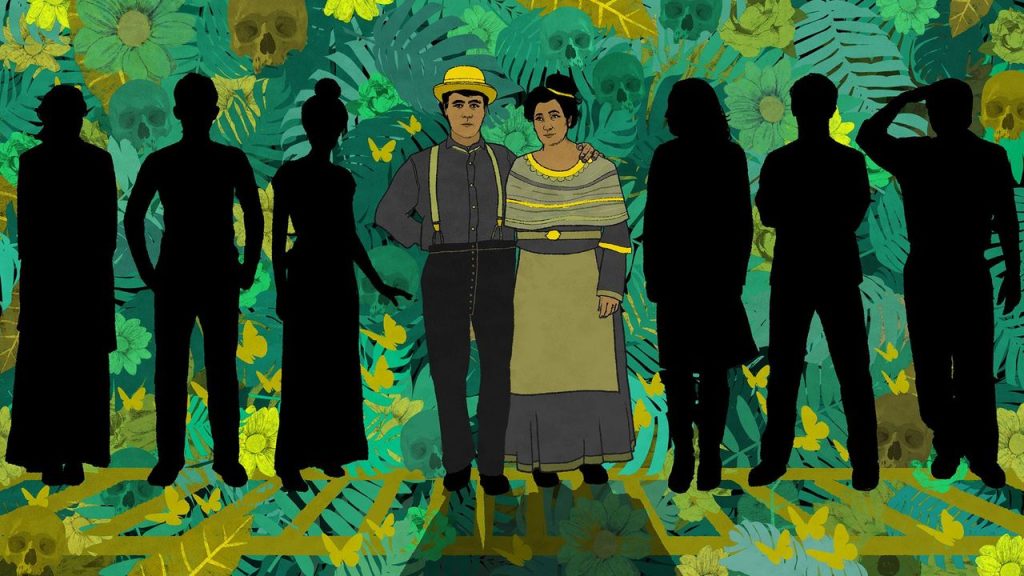
One Hundred Years of Solitude is structured as a genealogical record spanning exactly one century, revolving around seven generations of the Buendía family in the village of Macondo. The narrative does not unfold according to conventional linear chronology but moves according to the logic of memory and destiny – where past, present, and future often intertwine, repeat, and mirror one another.
The Founding of Macondo – The Origin of a Dream
The story begins when José Arcadio Buendía and Úrsula Iguarán leave their hometown after an incident involving family honor and rumors of incest. They lead a group of settlers through the forest in search of new land and establish Macondo – a village isolated from the outside world, where everything appears to exist in a primordial state.
In its early stage, Macondo is depicted as a space close to the “prehistoric age of memory,” where people lack clear concepts of objects and even have to label items with their names to avoid forgetting them. José Arcadio Buendía becomes fascinated by the strange inventions brought by the gypsy Melquíades: magnets, magnifying glasses, and ice. He believes that science can open the door to the secrets of the universe. However, his thirst for knowledge gradually turns into obsession, driving him into madness. In the end, he is tied to a chestnut tree in the courtyard – an image symbolizing the stagnation of an Enlightenment ideal that fails to find its way forward.
The Generation of War – Ideals and Disillusionment
The second generation of the Buendía family marks the transition from a period of founding aspirations to one of political conflict. Colonel Aureliano Buendía – the son of José Arcadio Buendía – becomes the central figure in civil wars between the Liberals and the Conservatives, directly reflecting nineteenth-century Colombian political history.
He participates in thirty-two uprisings and signs numerous armistice agreements, only to ultimately recognize the futility of violence. War, rather than bringing about ideal change, produces greater solitude and skepticism. Colonel Aureliano Buendía gradually withdraws into his private world, crafting little gold fishes and then melting them down to start again – an endless repetitive act symbolizing the deadlock of history.
Parallel to the wars are family tragedies: unfulfilled love affairs, illegitimate children, and forbidden relationships. Úrsula – the mother, grandmother, and guardian of memory – becomes the pillar who maintains stability within the Buendía household for decades.
The Infiltration of Capitalism – Upheaval and Massacre
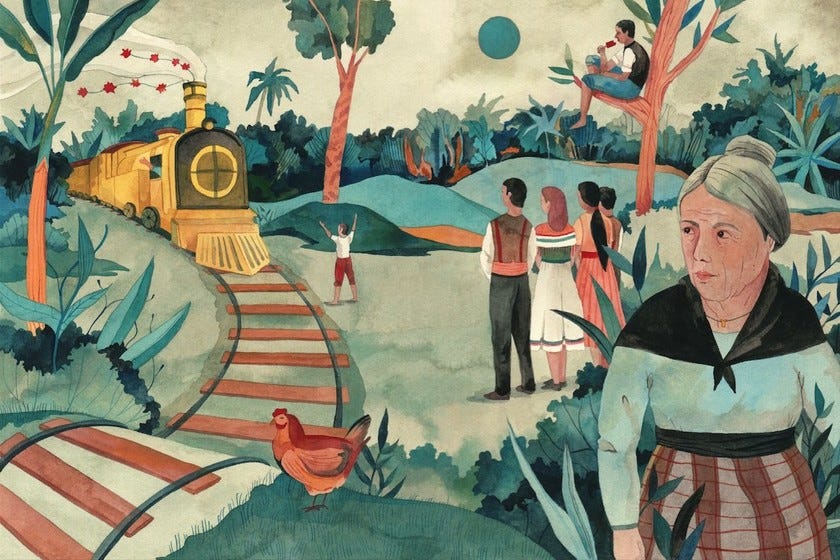
As Macondo gradually opens itself to the outside world, a foreign banana company arrives to exploit the land and labor. The arrival of the railroad, telegraph, and modern commerce brings a sense of artificial prosperity. Yet beneath it lies exploitation and injustice.
The workers’ strike culminates in a massacre – based on the real 1928 event in Colombia. Thousands of banana workers are shot at the train station, but the authorities deny that the event ever occurred. In the novel, only José Arcadio Segundo survives and carries the memory of the massacre, while the entire town sinks into collective amnesia. This is one of the most politically charged chapters of One Hundred Years of Solitude, revealing how power can manipulate historical memory.
After the massacre comes a rain that lasts nearly five years – a magical detail that simultaneously symbolizes a period of decay and deterioration. Macondo begins to enter its phase of decline.
The Decline of the Lineage – Repetition and Fate
In the final generations, members of the Buendía family become increasingly isolated within their own inner worlds. The repetition of names – José Arcadio and Aureliano – carries with it similar personality traits and destinies. Incestuous relationships and children born with abnormal signs (such as a pig’s tail) gradually actualize Úrsula’s original fear about the consequences of consanguineous marriage.
Aureliano Babilonia – the last member of the family – is the only one capable of deciphering Melquíades’ Sanskrit manuscripts. Upon reading the final section, he realizes that the entire history of his family had been foretold in advance, and that his act of reading the manuscript is itself the condition for the prophecy’s fulfillment.
The moment Aureliano Babilonia understands the fate of his lineage is also the moment a whirlwind rises and sweeps Macondo off the map of the world. The village – along with the Buendía family – disappears completely, as if it had never existed.
Circular Structure and Overall Significance
The entire plot of One Hundred Years of Solitude operates according to a circular structure. Beginning with a journey of foundation and ending in erasure, the novel evokes the sense that history repeats itself when human beings fail to learn from the past. Aspirations for knowledge, power, love, and freedom all lead to solitude when unaccompanied by communal connection and historical consciousness.
From a narrative perspective, One Hundred Years of Solitude does not merely tell a story but constructs a symbolic system: Macondo as a microcosm of Latin America; the Buendía family as an allegory of national generations; and the final whirlwind as a warning of self-destruction when memory is erased.
It is precisely the structural depth and multi-layered nature of its plot that make One Hundred Years of Solitude not merely a family novel, but a fictional chronicle of history, power, and the human condition within the cycle of destiny.
3. Values, Role, and Distinctive Features of One Hundred Years of Solitude
If the plot of One Hundred Years of Solitude captivates readers through its epic scale and magical quality, the true value of the work lies in its intellectual depth and its groundbreaking contribution to world literature. From historical, aesthetic, and philosophical perspectives, the novel inaugurates a new narrative paradigm while redefining the role of Latin American literature within the global sphere.
3.1. A Fictional Chronicle of Latin America
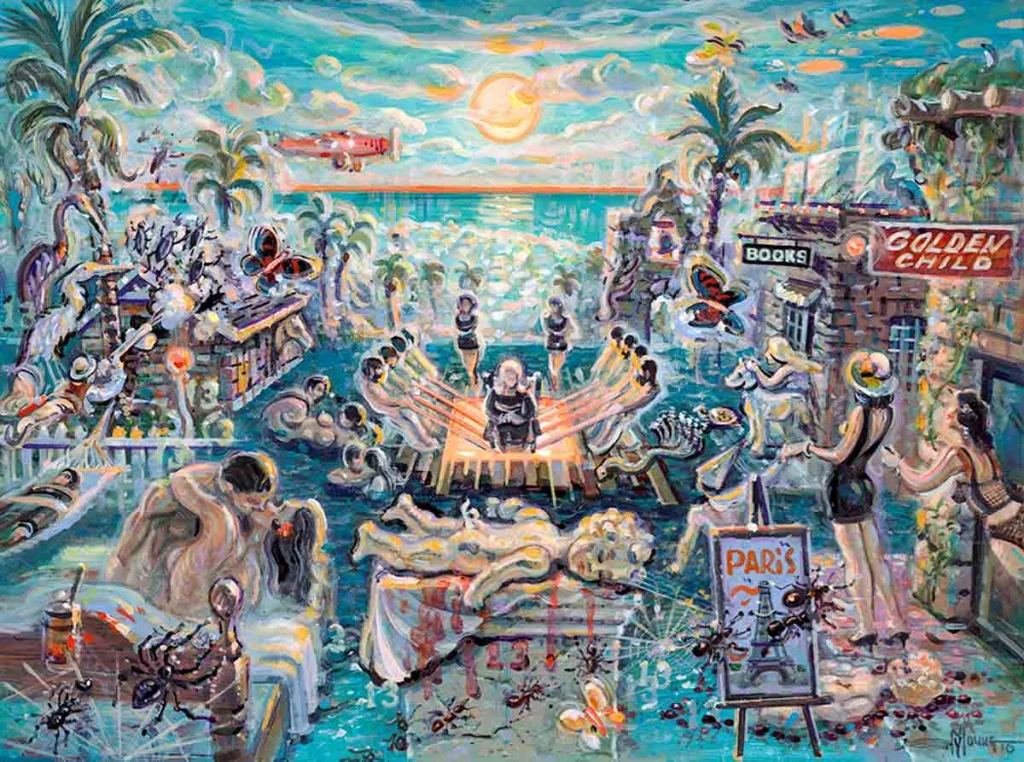
Macondo is not merely an imaginary village. It is an allegorical space representing the history of Latin America – from the era of exploration, civil wars, and dictatorship to the intrusion of foreign capitalism. Colonel Aureliano Buendía’s uprisings reflect the prolonged civil wars in nineteenth-century Colombia. The massacre of the banana workers in the novel is based on the historical event of 1928, when the Colombian army suppressed striking workers of an American banana company.
What distinguishes Márquez’s approach is that he does not reconstruct history in a documentary style but through magical and symbolic forms. The fact that the entire town of Macondo denies the existence of the massacre demonstrates how collective memory can be erased by political power. Literature here becomes a means of restoring concealed memory. For this reason, One Hundred Years of Solitude is not merely a family novel but also a literary record of forgotten history.
3.2. The Pinnacle of magic realism
Supernatural elements are not new in literary history. However, what makes One Hundred Years of Solitude revolutionary is the way reality and the marvelous blend seamlessly until no clear boundary remains. Irrational events – such as Remedios the Beauty ascending into the sky in broad daylight, the rain that lasts nearly five years, or the return of the dead to converse with the living – are narrated in a calm, almost objective tone.
It is precisely this composure that turns the extraordinary into an integral part of everyday life. This is a defining characteristic of magic realism, in which reality is expanded rather than denied. In One Hundred Years of Solitude, the marvelous does not serve to escape reality but to highlight the inherent absurdity of Latin American history and political life.
From an artistic standpoint, this technique allows Márquez to construct a world with mythic depth while remaining firmly rooted in social reality. This explains why the novel carries an epic quality while preserving poetic resonance and a sense of irony.
3.3. Circular Structure and the Philosophy of Time
One of the major contributions of One Hundred Years of Solitude lies in its reconfiguration of the concept of time. Time in the novel is not linear but cyclical. The Buendía generations repeat names, personalities, and mistakes. The José Arcadios often embody strong, impulsive instincts; the Aurelianos tend toward introspection and isolation. This repetition creates the impression of history trapped within a predetermined orbit.
The novel’s philosophy of time contains a warning: if a community fails to remember and critically examine its past, it will inevitably reenact old tragedies. When Aureliano Babilonia reads the final prophecy, he realizes that his family did not fail for lack of opportunity, but because it failed to learn from history. The circular structure, therefore, is not merely an artistic device but also a socio-political message.
3.4. Solitude as an Existential Condition
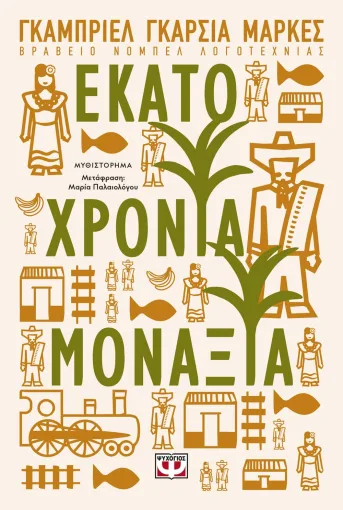
The title One Hundred Years of Solitude does not merely describe the psychological state of an individual but the existential condition of an entire lineage, even of a whole community. Each character embodies a particular form of solitude: solitude in the pursuit of knowledge, in political power, in unrequited love, in memory that is forgotten.
Colonel Aureliano Buendía is alone amid war and fame. José Arcadio Buendía is alone in his ambition to explore. Amaranta is alone because of her emotionally repressed choices. This solitude is not only the result of circumstance but also a manifestation of humanity’s tendency to detach itself from community and from history.
On a broader level, “solitude” can be interpreted as a metaphor for Latin America’s isolation within global history – a region rich in identity yet often dominated by foreign powers. For this reason, the theme of solitude in the novel operates on both personal and collective levels.
3.5. Contribution to World Literature
When published in 1967, One Hundred Years of Solitude helped shape the Latin American “Boom,” bringing writers from the region to the international market. The novel was quickly translated into dozens of languages and became one of the most influential works of the twentieth century.
In 1982, Gabriel García Márquez was awarded the Nobel Prize in Literature, and One Hundred Years of Solitude is often regarded as the work that most clearly exemplifies the reasons for the prize. Following its success, magic realism was no longer considered a regional phenomenon but became a universal concept in literary studies.
The novel’s influence extended across many literary traditions, from Europe and Asia to Africa. Its multi-generational structure, its blending of myth and history, and its construction of a richly symbolic fictional space became reference models for numerous postmodern writers.
3.6. Enduring Aesthetic and Humanistic Value
Beyond its historical significance and artistic innovation, One Hundred Years of Solitude possesses profound humanistic value. The novel raises fundamental questions: Can human beings escape fate? Can history change if memory is preserved? Is love powerful enough to redeem solitude?
Without offering simple answers, the novel concludes with the image of a whirlwind that erases Macondo – a reminder that communities lacking self-awareness will ultimately destroy themselves. Yet the very act of telling the story becomes an act of resistance against oblivion.
Therefore, the value of One Hundred Years of Solitude lies not only in its narrative artistry but also in its capacity to place humanity in dialogue with history. This is why the work continues to be studied, analyzed, and reread more than half a century after its publication.
4. One Hundred Years of Solitude – When the Novel Becomes a Labyrinth of Memory and Fate
Reading One Hundred Years of Solitude is not merely a matter of following a plot that extends across multiple generations, but of entering a complex narrative structure in which every detail has the potential to resonate on another level of meaning. It is a novel that demands intense concentration, as the dense system of characters, the repetition of names, and the non-linear timeline can easily lead readers into confusion. Yet it is precisely this complexity that creates a “labyrinth” effect – an aesthetic experience consistent with the themes of memory and fate that the work pursues.
4.1. The Reading Experience – From Confusion to Awareness
In the opening chapters, readers may feel overwhelmed by the successive appearance of generations named José Arcadio and Aureliano. The repetition of names is not merely a device that complicates reception but an artistic strategy. Once readers realize that each name is associated with a relatively fixed personality tendency, they begin to perceive the operating pattern of the Buendía lineage: the José Arcadios often lean toward instinct and impulsiveness, while the Aurelianos incline toward introspection and isolation.
The initial confusion gradually gives way to a sense of structural recognition. At that point, the novel no longer appears as a sequence of disconnected events but as a system governed by internal logic, in which every occurrence has its antecedent in the past. The reading experience thus becomes exploratory – readers both follow the story and participate in deciphering the structure of fate constructed by the author.
4.2. The Perception of Time and Memory
One of the most profound impressions when reading One Hundred Years of Solitude is the sense that time does not move in a progressive direction. Time in Macondo revolves, repeats, and at times overlaps. The characters seem unable to escape a predetermined trajectory. When Aureliano Babilonia reads Melquíades’ manuscript and discovers that his family’s history had already been recorded in advance, readers are compelled to ask: are human beings truly free, or are they merely fulfilling a prewritten script?
This perception gives the novel philosophical depth. One Hundred Years of Solitude does not assert that fate is absolute, but it demonstrates that a lack of historical consciousness leads humanity to reenact its mistakes. When collective memory is distorted – as in the massacre of the banana workers – the community loses its capacity for self-correction. On this level, the novel is not only a family story but also a warning against oblivion.
4.3. Solitude as an Existential Condition
The most haunting aspect of One Hundred Years of Solitude is not its magical elements, but the persistent isolation of its characters. Colonel Aureliano Buendía, after dozens of uprisings, returns home and withdraws into his goldsmith workshop, endlessly crafting little gold fishes. José Arcadio Buendía ends his life in madness, conversing with the ghosts of memory. Amaranta confines herself within an extreme form of chastity.
Solitude here is not merely the absence of others, but a rupture between the individual and the community. Each character carries a personal aspiration – knowledge, power, love – yet fails to achieve harmony with the surrounding environment. It is this separation that causes the Buendía family, despite its size, to sink into isolation.
On a broader level, “solitude” can be understood as the existential condition of modern humanity: amid scientific progress and political upheaval, human beings still fail to resolve crises of identity and their relationship with history.
4.4. Evaluation of Narrative Technique
From a technical standpoint, One Hundred Years of Solitude demonstrates the masterful narrative organization of Gabriel García Márquez. He employs an omniscient third-person narrator without intervening through direct commentary. The narrative voice maintains composure even when describing the most extraordinary events. This produces the effect of “normalizing the extraordinary” – a hallmark of magic realism.
In addition, the novel possesses a distinctive rhythm: the opening chapters are rich with the energy of foundation and discovery; the middle section is marked by political tension and tragedy; the final section is imbued with decline and foreboding. This shift in rhythm reflects the cycle of birth – growth – decay – extinction of both Macondo and the Buendía lineage.
Notably, the author combines humor and irony with tragedy. Situations that appear absurd often contain profound satirical implications regarding power and human ambition.
4.5. Contemporary Reception and Relevance
More than half a century after its publication, One Hundred Years of Solitude continues to maintain strong appeal. In the context of globalization and contemporary political upheavals, the story of a community that loses its collective memory and becomes trapped in a historical cycle remains strikingly relevant. Rereading the novel is not merely an act of literary appreciation but also an opportunity to reflect on the relationship between the individual and history.
From a critical perspective, One Hundred Years of Solitude demonstrates that the novel can simultaneously fulfill multiple functions: recording history, constructing myth, analyzing psychology, and offering political critique. It is precisely this multi-layered quality that ensures the enduring vitality of the work within the field of world literary studies.
5. Memorable Quotations in One Hundred Years of Solitude – When Language Becomes Memory and Prophecy
One of the reasons One Hundred Years of Solitude continues to sustain its vitality in both academic discourse and among general readers is the density of its highly symbolic sentences. Many passages in the novel possess not only aesthetic value but also philosophical reflections on time, history, and the human condition. These sentences often appear at pivotal moments – when one generation closes, when an illusion collapses, or when destiny is revealed.
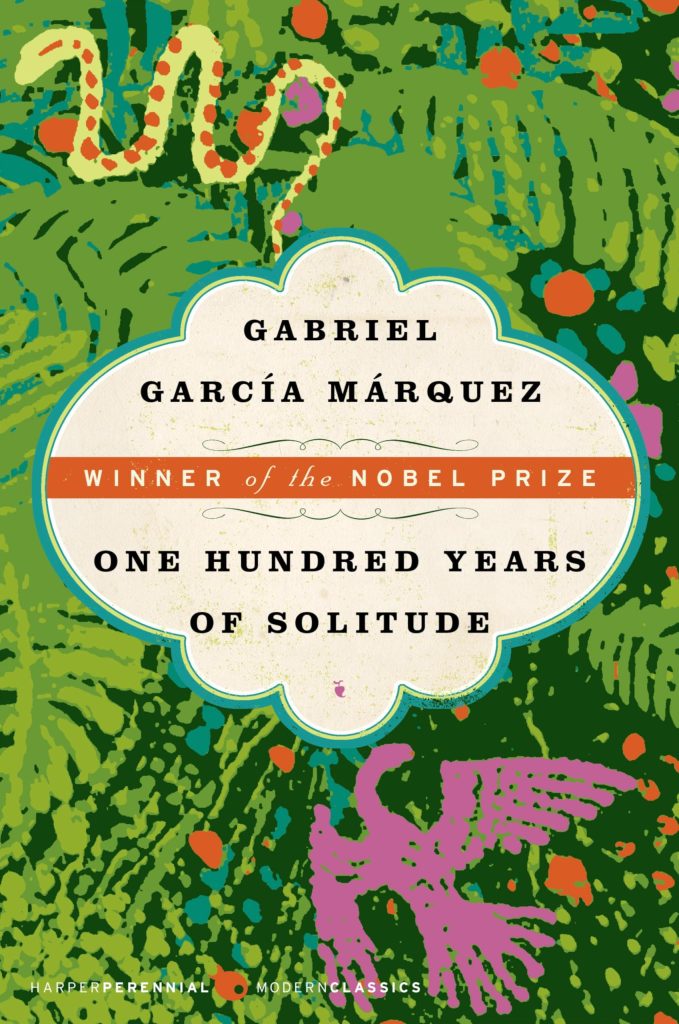
1. “The world was so recent that many things lacked names, and in order to indicate them it was necessary to point.”
→ This sentence describes the early stage of Macondo, yet at the same time evokes a pre-linguistic state of humanity. The fact that things “lacked names” is not merely an innocent detail but a metaphor for the process by which human beings construct reality through language. In that context, Macondo appears as a world in the act of creation.
2. “There is no loneliness worse than the loneliness of power.”
→ This statement portrays the tragedy of characters such as Colonel Aureliano Buendía. Power, instead of bringing connection and positive influence, becomes a force of isolation. Here, loneliness does not stem from the absence of people but from the spiritual distance between the one who holds power and the community. This is a profound political observation throughout One Hundred Years of Solitude.
3. “Time does not pass it turns in a circle.”
→ Although not always stated directly as a philosophical proposition, this idea runs throughout the novel. The history of the Buendía family repeats itself across generations with the same names, the same mistakes, and the same endings. This sentence can be regarded as a key to understanding the entire structure of the work: in Macondo, time does not progress but moves in cycles.
4. “People do not die when they are supposed to die, but when they are able to die.”
→ The conception of life and death in One Hundred Years of Solitude is not purely biological but symbolic. Many characters persist in memory or in the postponement of their fate. Death arrives only when a life has fulfilled its role within the structure of history. This statement demonstrates how Márquez blends existential philosophy with mythical elements.
5. “What frightens him is not the end of the war, but the end of illusion.”
→ For Colonel Aureliano Buendía, the war gradually loses its meaning. The most painful realization is not military defeat but the recognition that the original ideals were merely illusions. This sentence reflects the process of political disillusionment – a central theme within the historical context of Latin America.
6. “The lines written in Sanskrit had foretold everything, and the race condemned to one hundred years of solitude did not have a second opportunity on earth.”
→ This is the prophetic ending of the novel. When Aureliano Babilonia reads the final section of Melquíades’ manuscript, he realizes that the history of the family had been predetermined. The sentence conveys a clear message: a community that fails to learn from its past will destroy itself. “No second opportunity” is not only the conclusion for the Buendía family but also a universal warning.
6. The Enduring Value of One Hundred Years of Solitude and the Unresolved Question of History
After a century-long journey with the Buendía family, One Hundred Years of Solitude concludes not with liberation but with a whirlwind that erases Macondo from the map. Such an ending does not create a sense of closure in the traditional sense; instead, it opens a philosophical resonance: history can be erased from collective memory if it is not preserved and understood. When Aureliano Babilonia finishes reading Melquíades’ manuscript, everything is already too late. Awareness that comes after action no longer has the power to alter destiny.
From a broader perspective, One Hundred Years of Solitude is not merely the story of the decline of a single family. It is a spiritual map of a region that has experienced civil wars, dictatorship, foreign intervention, and profound economic upheavals. Through its circular structure and dense system of symbols, Gabriel García Márquez raises the issue of the responsibility of memory within the historical process. A community that loses its collective memory will repeat its mistakes; an individual who refuses to confront the past will fall into solitude.
The enduring value of One Hundred Years of Solitude lies in its ability to connect multiple layers of meaning. On the familial level, it presents the tragedy of personal aspirations unmoderated by the community. On the political level, it offers a critique of war and power. On the philosophical level, it reflects on time, destiny, and the limits of human freedom. The work demonstrates that material progress – railroads, telegraphs, the banana company – does not necessarily equate to moral progress or historical awareness.
More than half a century after its publication, One Hundred Years of Solitude continues to be reprinted, studied, and widely taught. Its vitality derives not only from magical realism or its epic scale, but from the universality of the question it poses: can human beings escape the cycle of destiny if they do not change their understanding of the past?
Macondo has disappeared, yet its story endures as a cautionary text. Upon closing One Hundred Years of Solitude, what remains is not only the impression of a magical world, but a reflection on the responsibility of each individual and community toward their own history.
And the final question still remains: if memory is the only key to breaking the cycle of solitude, are human beings lucid enough to preserve and learn from it before the whirlwind of time descends?