In the history of nineteenth-century European literature, when realism flourished and social issues were addressed with frankness, many works transcended the limits of ordinary storytelling to become enduring humanistic voices. Nobody’s Boy is one such work. Presented in the form of a children’s adventure novel, the book in fact opens up a vast realist landscape in which the fate of impoverished children, the question of labor, family bonds, and human dignity are placed within harsh and testing circumstances.
Nobody’s Boy does not leave its mark through extreme dramatic conflicts, but through the quiet yet persistent journey of a child searching for his place in life. Through Rémi’s wandering footsteps, the novel gradually reconstructs a portrait of nineteenth-century French society, marked by the dark realities of poverty and injustice, while affirming the values of education, labor, and self-respect as essential foundations for a life lived with dignity.
It is precisely this combination of social realism and profound humanism that has enabled Nobody’s Boy to become a classic, translated into many languages and touching generations of readers around the world.
1. Overview of the Author and the Nobody’s Boy
The Life of Hector Malot
Hector Malot was born on May 20, 1830, in La Bouille, in the region of Seine-Inférieure (now Seine-Maritime), Normandy, France. He grew up during a period when France was undergoing profound transformation under the impact of industrialization and successive political upheavals, from the Second Republic to the Second Empire and later the Third Republic. These shifts not only reshaped French society but also deeply influenced Malot’s perception of inequality, poverty, and the human condition.
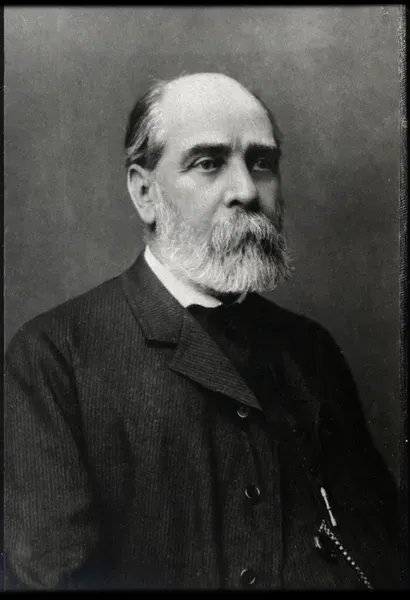
Initially, Malot studied law in Rouen and later in Paris, following his family’s expectations. However, instead of pursuing a legal career, he turned to journalism and literature. His time working as a journalist allowed him to encounter various social strata, from the urban middle class to impoverished laborers. These firsthand observations of social realities later became the foundation of his realist narrative style.
Although Malot was not primarily known as a literary theorist, he was a remarkably industrious writer. He devoted most of his life to writing and published continuously over several decades. He passed away in 1907 in Fontenay-sous-Bois, leaving behind a substantial literary legacy.
Literary Career
Over a career spanning more than forty years, Hector Malot published over seventy novels. In the early phase of his writing life, he mainly addressed adult readers with works characterized by social realism. Novels such as Romain Kalbris (1869) already demonstrated his interest in childhood and the process of growing up under conditions of hardship.
However, it was not until the publication of Nobody’s Boy in 1878 that Malot’s reputation gained widespread recognition. The novel was warmly received not only in France but also internationally. Its success encouraged him to continue exploring themes related to childhood, notably in En famille (1893), often regarded as a companion work to Nobody’s Boy.
A distinctive feature of Malot’s career lies in his ability to combine educational value with compelling storytelling. He did not idealize his characters but placed them within the concrete social realities of his time. In these contexts, characters must work, endure hunger and cold, suffer losses, and cultivate self-discipline. It is precisely this direct confrontation with reality that lends his works their enduring weight and credibility.
Although Malot is not always ranked among the great canonical figures of French literature such as Balzac or Hugo, he occupies a significant position in nineteenth-century children’s literature and realist fiction due to the lasting relevance of his works.
The Birth of the Novel
Nobody’s Boy was first published in 1878 by the Dentu publishing house in Paris. The novel emerged in the aftermath of the Paris Commune (1871), at a time when France was restructuring itself following political crisis and war. Rapid industrial development had intensified social stratification, widening the gap between rich and poor. Children in working-class families were often forced to labor at an early age and were frequently exploited in workshops and mines.
This social context provided the realistic material for the story of Rémi, a child sold away due to economic desperation. The very notion that a child could be treated as “property” reflects the legal and moral limitations of that era. Yet Malot did not frame the novel as a direct political indictment. Instead, he chose to narrate an adventure story, a wandering journey across different regions of France, through which he portrayed a multilayered social panorama.
Although initially categorized as children’s literature, critics soon recognized the novel’s psychological depth and social insight. The journey-based structure allows Malot to guide his protagonist through diverse settings, rural villages, urban centers, traveling performance troupes, and coal mines, thereby reconstructing the varied living conditions of nineteenth-century France.
The book was rapidly reprinted and translated into numerous languages. In Vietnam, Nobody’s Boy has become one of the most familiar foreign literary works for generations of readers, especially within the formal education system. Its enduring vitality demonstrates that the quest for family and personal identity transcends national borders and historical periods.
Taken as a whole, the publication of Nobody’s Boy not only marked a turning point in Hector Malot’s career but also helped shape a realist model of children’s fiction, one in which young protagonists are situated within specific social environments and mature through labor, loss, and self-reliance.
2. Summary of the Plot of Nobody’s Boy
At the center of Nobody’s Boy is the wandering journey and coming-of-age story of the boy Rémi – a child of unknown origin who grows up in poverty yet surrounded by affection in a peasant family in the village of Chavanon. From that seemingly peaceful starting point, Rémi’s life soon takes a different turn as the truth about his identity gradually comes to light.
Childhood and the Trauma of Being Sold
Rémi was taken in as a small child by Barberin, a stonemason. He grew up under the devoted care of his foster mother, Mrs. Barberin, who gave him sincere love and tenderness. In his early years, Rémi had no idea that he was an abandoned child. He believed he belonged to that family, even though their economic circumstances were always precarious.
The turning point comes when Barberin suffers a work accident and loses the ability to earn a living. The family falls into severe hardship. In desperation, Barberin reveals that Rémi is not his biological son and decides to sell him to a stranger – Signor Vitalis. That moment marks the first rupture in Rémi’s life: he loses not only his home but also his sense of belonging and certainty about his origins.
The Years with Vitalis’s Traveling Troupe
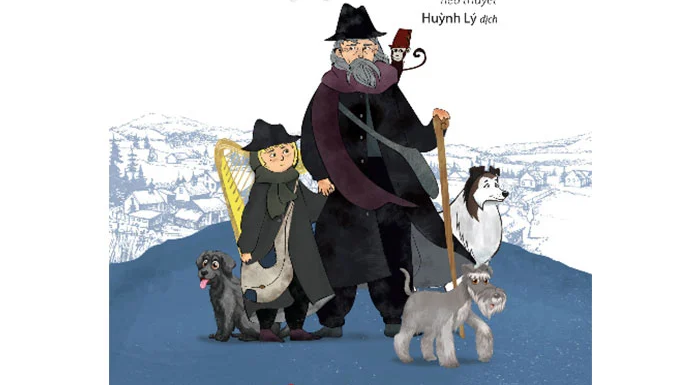
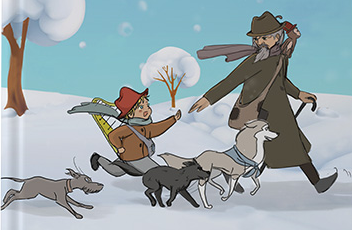
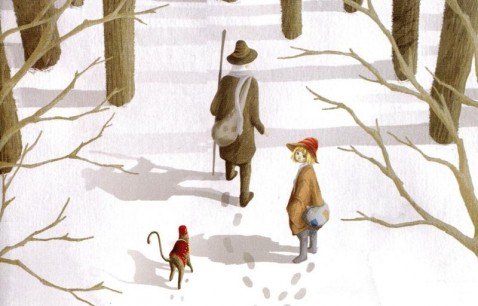
Vitalis is the leader of a small traveling performing troupe, consisting of three dogs – Capi, Dolce, Zerbino – and a monkey named Joli-Cœur. At first glance, life with the troupe appears unstable, dependent on the generosity of passersby. Yet it is here that Rémi begins his true education.
Vitalis teaches him not only how to perform but also how to read, write, and play music. He demands discipline, respect for labor, and an unwavering sense of self-respect. During performances in rural villages or town squares, Rémi learns how to stand before a crowd and how to endure disappointment when a show fails.
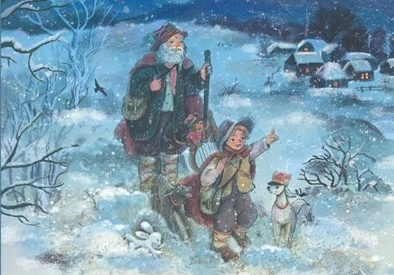
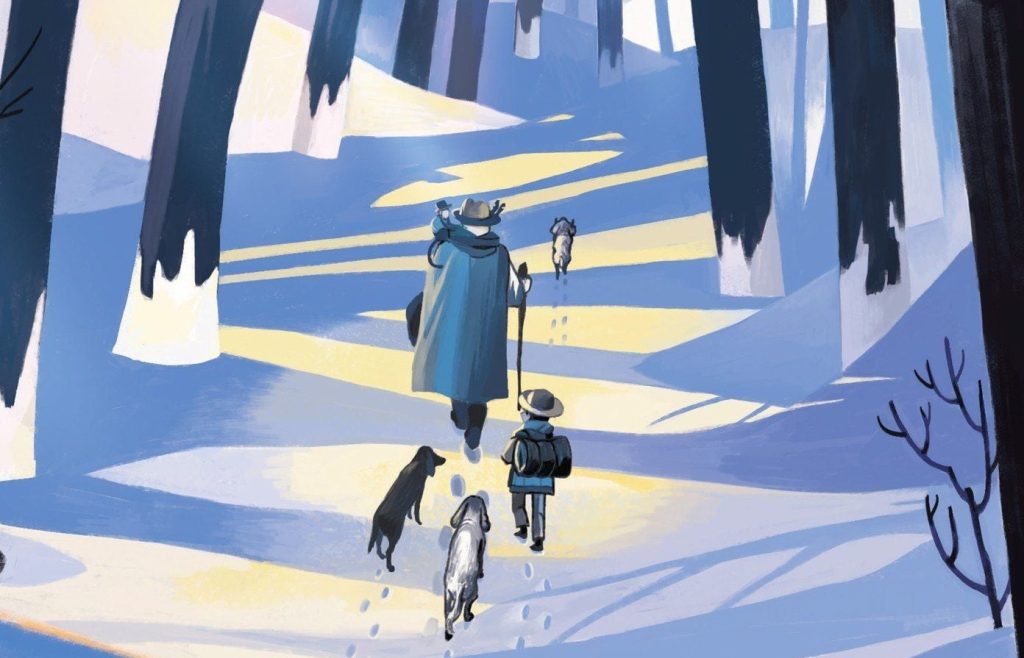
One of the harshest periods is the bitter winter when the troupe must continue performing in severe weather to survive. The death of Vitalis – caused by exhaustion and freezing cold – is the greatest shock of Rémi’s childhood. From that moment on, he truly becomes a child without protection or support.
Struggles for Survival and Tests of Endurance
After Vitalis’s death, Rémi is forced to find his own way to survive. For a short time, he is taken in by Mrs. Milligan’s family – a wealthy English family – but circumstances soon separate them. Later, Rémi works for a flower gardener in the countryside. There, he experiences a more stable life, yet jealousy and ulterior motives from those around him compel him to leave once again.
His time working in a coal mine marks another significant turning point. Rémi, along with several other children, must labor underground in unsafe conditions. A mine collapse traps him and the workers in darkness for days. This experience not only pushes him to the brink of death but also exposes the brutality of the labor environment of the time.
After this ordeal, Rémi meets Mattia, an Italian street musician. Intelligent, resourceful, and loyal, Mattia becomes his companion. The two boys perform together to earn a living. Their friendship serves as the most enduring source of emotional support throughout Rémi’s wandering journey.
The Search for Identity
Alongside his years of hardship, the question of Rémi’s origin quietly persists. Clues about his identity gradually emerge through various people he encounters. Eventually, after many misunderstandings and trials, the truth is revealed: Rémi was a child kidnapped from a wealthy English family. He is in fact the son of Mrs. Milligan – the very woman who once sheltered him.
The reunion does not occur immediately but unfolds through legal challenges and further misunderstandings. Yet when his identity is finally confirmed, Rémi is no longer the fragile child he once was. He returns to his biological family as someone who has matured – possessing skills, self-respect, and the ability to stand on his own.
The Meaning of the Journey
On the surface, the story concludes with a happy ending: Rémi finds his family and regains his rightful position. However, the depth of Nobody’s Boy does not lie in the improvement of material circumstances. What truly matters is the process of inner growth.
Rémi has endured poverty, loss, hard labor, and repeated brushes with death. These experiences shape his understanding of the value of work, friendship, and gratitude. When he finally reunites with his biological family, he is no longer merely seeking shelter; he has developed the capacity to define his own place in society.
The plot of Nobody’s Boy is therefore not merely a sequence of adventures but an educational journey – one in which each trial functions as a lesson in character formation and resilience.
3. Values, Significance, and Distinctive Features of Nobody’s Boy
When placed within the context of nineteenth-century European literature, Nobody’s Boy can be seen not merely as a successful children’s novel in terms of popularity, but as a text rich in social and humanistic layers of meaning. The work stands at the intersection of realist literature and educational fiction, while also expanding the concept of a “children’s story” into a deeper moral and social space.
Realist Value – A Portrait of Nineteenth-Century Society
First and foremost, Nobody’s Boy possesses a clear realist value. Through Rémi’s journey, readers are introduced to a panorama of French society encompassing multiple social strata – from impoverished peasants, itinerant performers, and coal miners to wealthy bourgeois families. These settings are not merely backdrops for an adventure narrative, but concrete representations of the social structure of the time.
In particular, the chapters depicting life in the coal mines reveal harsh working conditions and the fragility of human life in the face of industrial accidents. Children laboring underground is not a fictional exaggeration, but a reflection of realities that existed in many European countries during industrialization. In this way, the novel implicitly raises questions about social responsibility toward children and workers.
Rémi’s being sold due to economic desperation further exposes the absence of effective social welfare mechanisms. Children could become a “burden” and be transferred like property. This narrative choice is not intended to shock, but to reconstruct the legal and moral limitations that characterized the nineteenth century.
Humanistic Value – Faith in Human Dignity
If it were confined to harsh realism alone, Nobody’s Boy might become a somber chronicle. However, the distinctive strength of the novel lies in its profound humanism. Within a world filled with uncertainty, the characters retain compassion and a strong sense of dignity.
The character of Vitalis serves as a representative embodiment of this value system. Though poor and living by means of itinerant performances, he never accepts cheap pity. He insists that Rémi learn to read, understand music, and maintain self-respect in every action. Through Vitalis, the novel affirms that education and character can be cultivated even amid material deprivation.
The friendship between Rémi and Mattia is another clear expression of this humanistic spirit. Their bond is not based on self-interest, but on mutual empathy between two children forced into early independence. Their loyalty and mutual support demonstrate that one can find family within voluntary relationships, not solely through blood ties.
The novel’s humanistic value is also reflected in its conception of family. Nobody’s Boy proposes an open definition: family is not only the place of birth, but the place of nurture and protection. Foster mother Barberin, Vitalis, and Mattia all contribute to shaping Rémi’s “spiritual family” before he reunites with his biological relatives.
Educational Value – The Formation of Character
Nobody’s Boy can be read as a Bildungsroman – a novel of formation in which the protagonist matures through trials. Rémi’s journey is not a random sequence of events; each stage corresponds to a specific lesson.
– With the traveling troupe, Rémi learns discipline and the value of artistic labor.
– In the gardener’s household, he confronts jealousy and the limits of goodwill.
– In the coal mine, he faces mortal danger and understands the importance of solidarity.
– Beside Mattia, he learns about friendship and sharing.
These lessons are not delivered through didactic discourse. They are integrated naturally into actions and their consequences. The journey-based structure – continuous movement through different social environments – provides the conditions for this educational process to unfold convincingly.
Significantly, when Rémi reunites with his biological family, he is not “redeemed” by his new social status. His maturity has already been achieved beforehand. The reunion functions as confirmation, not as the cause of his character formation.
Narrative Artistry – Journey Structure and Emotional Rhythm
From a narrative perspective, Nobody’s Boy follows a linear journey structure, yet it avoids monotony. Each stage carries a distinct emotional tone: warmth in the rural village, uncertainty with the traveling troupe, tension in the coal mine, and hope as Rémi gradually uncovers his identity.
Hector Malot adopts a simple and restrained narrative voice, avoiding excessive melodrama. The death of Vitalis, for instance, is not portrayed through exaggerated dramatic climax, but through concrete, stark, and poignant details. This restraint creates credibility and a lasting emotional depth.
Moreover, the rich system of supporting characters broadens the novel’s social scope. Each character appears not only to advance the plot, but also to represent a particular facet of life. As a result, Rémi’s personal story extends beyond individual experience and reflects a broader social structure.
Role and Enduring Vitality of the Novel
Nearly a century and a half after its publication, Nobody’s Boy continues to be reprinted and adapted into various forms. This longevity indicates that the novel transcends its historical context. The issues it addresses – abandoned children, early labor, social inequality, and the need for love – remain relevant.
The novel’s role in children’s education is also noteworthy. Nobody’s Boy not only conveys moral messages but also encourages independence and gratitude. It demonstrates that a child can grow through adversity without losing innocence.
Taken together, the value of Nobody’s Boy lies in its balance between realism and humanism, between adventure and psychological depth, between entertainment and education. It is precisely this balance that has enabled the novel to maintain its place in literary history and in the memory of generations of readers.
4. Humanistic Depth and the Lasting Resonance of the Novel
When reading Nobody’s Boy, what lingers most deeply is not the dramatic incidents, but the sense of a coming-of-age journey shaped by loss. The novel does not construct Rémi as a hero in an extraordinary sense; he is simply a child forced to grow up too soon. It is precisely this “ordinariness” that gives weight to the story.
The Journey in Search of Identity
One of the central thematic axes of the novel is the question of personal identity. For most of his childhood, Rémi does not know who he is. He lives in a state of “rootlessness,” without a stable legal or emotional foundation. This absence means that his journey is not merely a struggle for survival, but also a quest to answer a fundamental question: where does he belong?
Notably, Rémi does not wait for his identity to be “bestowed” upon him in order to define his worth. Before reuniting with his biological family, he has already established his character through labor, education, and the way he treats others. When the truth about his origins is revealed, his social status merely confirms what has already taken shape within him: a person with a sense of responsibility and self-respect.
From this perspective, the novel advances a progressive idea: biological origin does not determine the entirety of personal value; it is the process of self-formation through circumstance that proves decisive.
Family – An Open and Flexible Concept
Nobody’s Boy deepens the concept of “family” by detaching it from purely biological ties. Foster mother Barberin loves Rémi without sharing blood with him. Vitalis – a wandering performer – serves both as teacher and spiritual father. Mattia is the companion willing to share even his few coins.
Here, family is formed through choice and responsibility. The novel suggests that a child can be “born” many times – not only by a biological mother, but by those who offer trust and guidance. When Rémi reunites with his biological mother, it does not negate these earlier relationships; rather, it completes a circle of connection.
This construction prevents the story from falling into a simplistic fairy-tale motif in which all problems are resolved by the discovery of noble birth. On the contrary, Rémi’s moral value has already been shaped during his years of poverty, long before he knows to which social class he belongs.
Labor and Human Dignity
Another powerful dimension of the novel lies in its treatment of labor. Rémi undertakes many kinds of work – performing in a troupe, tending a flower garden, working in a coal mine. Despite differing circumstances, the common thread is that he does not evade responsibility.
Nobody’s Boy does not idealize labor as an abstract concept; it shows that work can be harsh, dangerous, and unjust. Yet within those very conditions, human dignity is tested. Rémi is not corrupted by poverty, nor does he choose deception or dependency.
The message here is not one of accepting injustice, but of affirming that personal dignity can be preserved even in unfavorable circumstances. This is what enables the novel to maintain moral depth without descending into didacticism.
Emotional Rhythm – Restraint as the Source of Resonance
On an emotional level, one of the novel’s most valuable qualities is its restraint. Tragedies – such as the death of Vitalis or the mine accident – are not elevated into excessive melodramatic climaxes. Instead, they are narrated in a calm tone, close to realist observation.
This restraint produces a lasting effect. Readers are not swept away by momentary emotional outbursts, but gradually come to understand the meaning of each loss in Rémi’s process of growth. Pain is not displayed ostentatiously, yet it is sufficient to reveal the cost of maturity.
Enduring Value in the Modern Context
In the present day, when the world still faces issues such as abandoned children, labor migration, and inequality of opportunity, Nobody’s Boy retains its relevance. The story of a child forced into early independence serves as a reminder that the opportunity to learn and to be loved is not always guaranteed.
At the same time, the novel raises a broader ethical question: what is society’s responsibility toward children “without family”? Vitalis, foster mother Barberin, and Mattia represent individuals willing to share and support. They do not transform social structures, but they transform the destiny of a specific human being.
Overall Evaluation
Overall, Nobody’s Boy leaves its strongest impression through its humanistic depth rather than its adventurous elements. Rémi’s journey captivates not only because of successive events, but because of the gradual formation of inner resilience.
This is a work capable of reaching multiple age groups. Children may follow it as an emotionally engaging adventure; adults may read it as a realist social novel and a reflection on educational values. It is precisely this multilayered quality that prevents Nobody’s Boy from being confined to a single readership.
If one were to summarize its enduring strength, it lies in its affirmation that a person may be deprived of a home, but need not lose dignity; and that the search for family is, in essence, also the process of constructing oneself.
5. Memorable Quotations and Intellectual Depth in Nobody’s Boy
Within the narrative structure of Nobody’s Boy, many of the characters’ statements function not merely as dialogue but as expressions of the ethical principles that run throughout the novel. The quotations below are not simply emotionally resonant lines; they reflect the value system the work constructs – concerning labor, dignity, family, and personal identity.

Beneath each quotation is a brief analysis clarifying its ideological significance within the overall story.
1. “We must always maintain our self-respect, no matter how poor we are.”
This statement by Vitalis can be regarded as the central moral declaration of the novel. In the precarious circumstances of a traveling troupe, where daily survival depends on the generosity of others, self-respect becomes the final boundary protecting human dignity. Poverty here is not portrayed as shameful; what is truly troubling is the loss of one’s sense of worth.
2. “I have no family, but I still have people who love me.”
This realization marks an important stage in Rémi’s maturation. When he no longer defines family solely by blood ties, he begins to understand it as a spiritual structure – one formed by love and responsibility. This idea broadens the scope of the concept of “home” throughout the novel.
3. “Work does not degrade a person; laziness does.”
The message about labor is clearly affirmed in this line. In Rémi’s world, work may be exhausting and even dangerous, but it is the means by which personal value is affirmed. This conception reflects the realist spirit of the nineteenth century – a period in which industrial society placed labor at the center of social life.
4. “In hardship, one learns who truly is a friend.”
The friendship between Rémi and Mattia is tested through hunger, cold, deprivation, and danger. This statement carries not only practical wisdom but also emphasizes the importance of loyalty. In a world where everything can change rapidly, friendship becomes a stable point of support.
5. “I want to live by my own strength, even if it is only one small coin.”
Rémi’s aspiration for independence is clearly expressed in this line. It marks his transition from passivity – as a child who was sold – to actively shaping his own life. Independence is not measured by the amount of money earned, but by the awareness of personal responsibility.
6. “A child who is not loved will grow up with invisible wounds.”
This sentence reveals the psychological depth of the novel. Nobody’s Boy addresses not only material deprivation but also emotional absence. The “invisible wounds” serve as a metaphor for inner trauma – a force capable of shaping a person’s entire future.
7. “Happiness does not come from wealth, but from reunion.”
When Rémi reunites with his biological family, the emphasis is not placed on status or property, but on connection. This statement encapsulates the protagonist’s long journey: what he has sought throughout his life is not riches, but the feeling of belonging.
8. “Wherever we go, we must carry our conscience with us.”
This moral assertion reinforces the idea of personal responsibility. Throughout his travels across different regions and social classes, the one constant Rémi carries is the ethical standard formed through education and experience. Conscience becomes the “compass” guiding his actions.
6. Conclusion – The Enduring Value of Nobody’s Boy and the Remaining Question
Bringing Rémi’s journey to a close, Nobody’s Boy offers not only a reunification that provides emotional resolution, but also completes an inner process of maturation constructed throughout the novel. From a child sold because of poverty, Rémi passes through the harshest social environments – a traveling troupe, impoverished villages, dark coal mines – gradually forming resilience, self-reliance, and self-respect.
The core value of the work does not lie in the change of the protagonist’s social status, but in the shaping of his character before that status is confirmed. Rémi rediscovers his biological family, yet what ultimately determines his worth is not bloodline or inherited property, but the qualities forged through adversity: diligence, honesty, gratitude, and the capacity to love.
Nobody’s Boy therefore transcends the boundaries of a simple children’s novel. The work raises issues that remain meaningful in modern society: How should children be protected? What roles do labor and education play in the formation of human dignity? Is family defined by blood ties or by responsibility and love?
After nearly a century and a half, Rémi’s story continues to engage readers today. In a world where many children still grow up amid deprivation and uncertainty, his journey serves as a reminder that circumstances may take away one’s initial support, but they do not necessarily take away dignity or the opportunity for growth.
And what Nobody’s Boy ultimately leaves behind is not merely a happy ending, but an open question: if every person needs a home in order to grow, has our society truly done enough to ensure that no one must carry the feeling of being “nobody’s boy” in the midst of life?