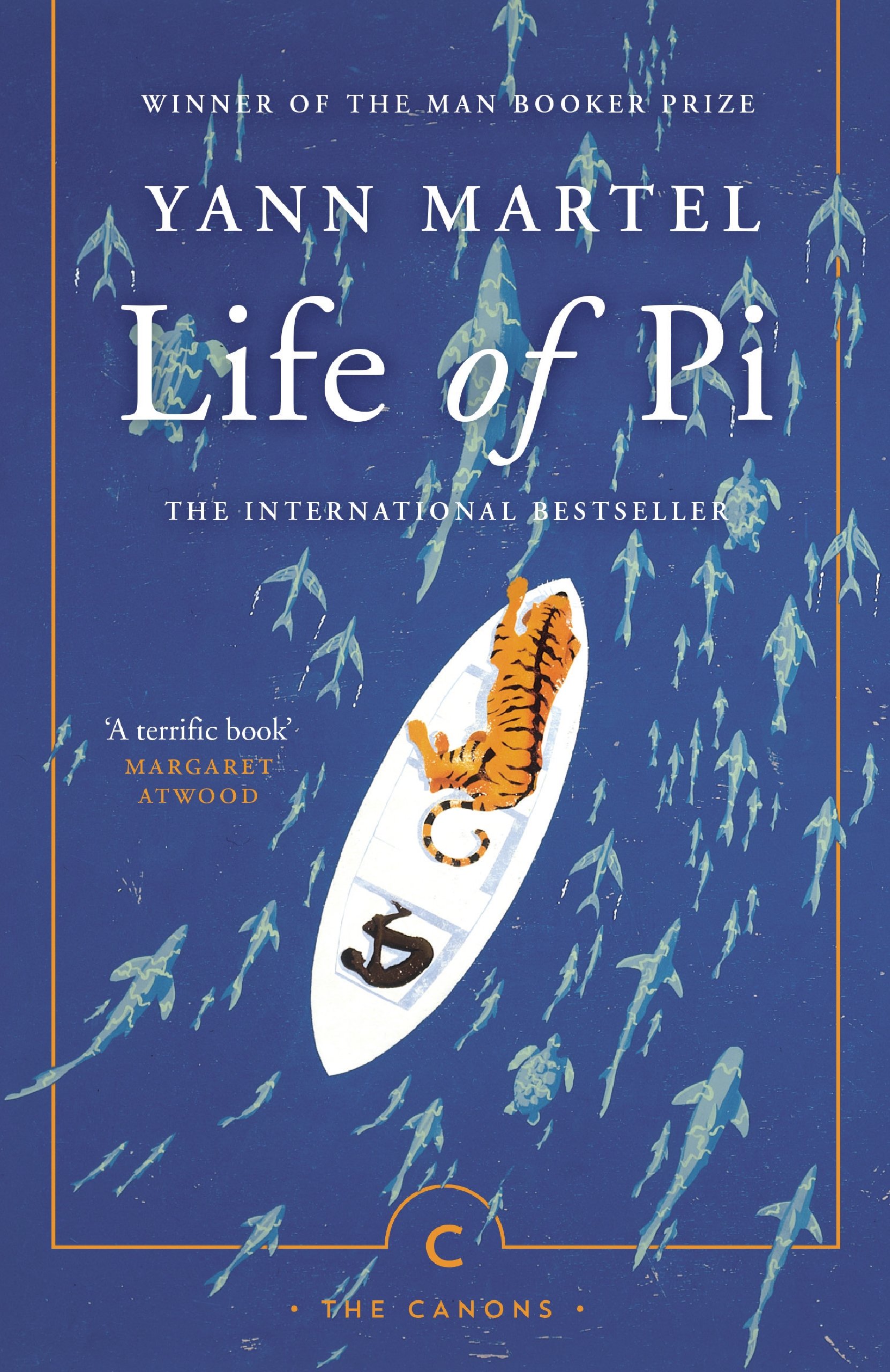
In twenty-first-century literature, there are works that not only captivate readers with dramatic plots but also generate enduring debates about the nature of truth and belief. Life of Pi by Yann Martel is a representative example. From its publication in 2001, the novel moved beyond the framework of a survival adventure story to become a multi-layered text – where narrative, religion, philosophy, and symbolism intersect in a tightly woven structure.
On the surface, Life of Pi recounts the 227-day ordeal of an Indian boy adrift across the Pacific Ocean with a Bengal tiger. Yet beneath this seemingly simple structure lie fundamental human questions: What do we cling to when all order collapses? Is faith a choice, or is it a condition for survival? And when confronted with two different accounts of the same event, what makes us call one of them “the truth”?
It is precisely this capacity to pose foundational questions that has given Life of Pi its enduring vitality. The novel is not merely a story about survival in the vast ocean; it is also a journey into the inner architecture of the human being – where instinct, reason, and faith continually collide.
1. Overview of the Author and the Work Life of Pi
The Life of Yann Martel
Yann Martel was born on June 25, 1963, in Salamanca, Spain, into a Canadian diplomatic family. His father, Émile Martel, was both a diplomat and a poet, creating an intellectually rich and multicultural environment from an early age. Because of his parents’ profession, Martel lived and studied in several countries such as Costa Rica, France, and Mexico. These cross-border experiences not only enabled him to become fluent in multiple languages, but also fostered a profound awareness of cultural diversity, religion, and value systems – elements that would later become central ideological pillars in Life of Pi.
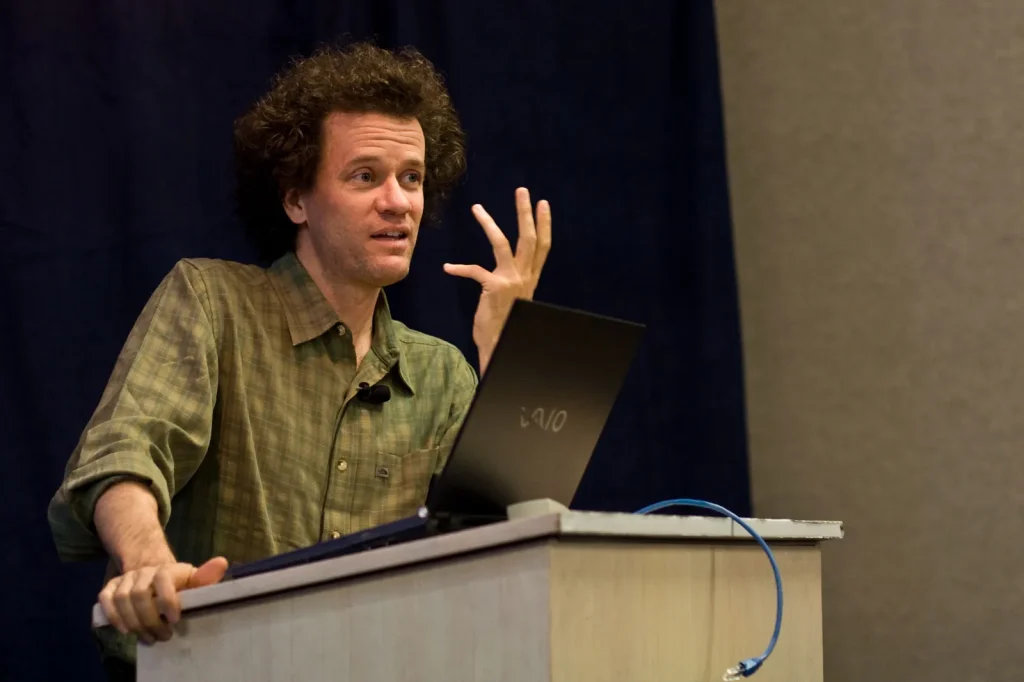
Martel studied philosophy at Trent University in Canada and graduated in 1985. His formal training in philosophy directly shaped his intellectual structure: issues such as the nature of truth, the relativity of perception, and the role of faith in spiritual life frequently appear in his works in the form of metaphor or narrative situations.
Before gaining recognition, Martel spent many years working independently, moving between countries, and experimenting with writing. This period reflects the perseverance of a writer committed to pursuing long-term ideas rather than seeking immediate success.
Literary Career
Yann Martel began his career with the short story collection The Facts Behind the Helsinki Roccamatios in 1993, a work that explores themes of death and imagination in the context of the AIDS pandemic. The book received positive critical attention in Canada. In 1996, he published the novel Self, a bold experiment concerning personal identity and gender.
However, the most significant turning point in Martel’s career was the publication of Life of Pi in 2001. The novel quickly gained international acclaim and won the Booker Prize in 2002 – one of the most prestigious literary awards for works written in English. This achievement was not only personally meaningful, but also marked a strong presence of Canadian literature on the global literary map in the early twenty-first century.
After Life of Pi, Martel continued to publish novels such as Beatrice and Virgil in 2010, a work that uses animal allegory to address the memory of the Holocaust; The High Mountains of Portugal in 2016, which blends elements of the fantastic and history; and an expanded reissue of The Facts Behind the Helsinki Roccamatios and Other Stories. Although these works did not achieve the same level of influence as Life of Pi, they consistently demonstrate Martel’s enduring concerns with ethics, memory, and faith.
The Genesis of Life of Pi
The idea for Life of Pi emerged when Martel was searching for a project substantial enough to challenge the limits of his creativity. During a visit to India, he became fascinated by the country’s rich religious life, where multiple faiths coexist within the same social space. India became not only a geographical setting, but also an ideological foundation for the story of a boy who simultaneously practices Hinduism, Christianity, and Islam.
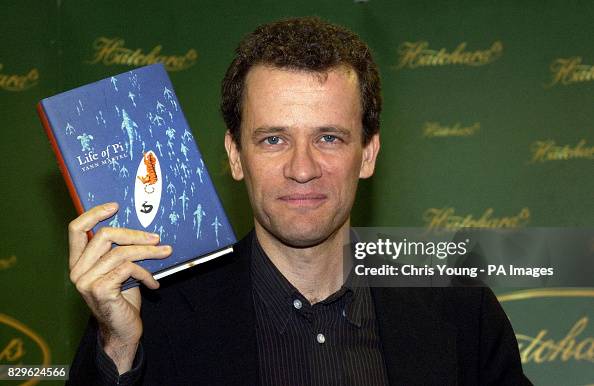
Martel has shared that his initial inspiration came from a review mentioning a Brazilian novel about a survivor sharing a lifeboat with a wild animal. Although he did not directly access the original text, the concept of a confined space in the middle of the ocean – where a human and an animal must coexist – stimulated his imagination. From that premise, Martel developed a three-part narrative structure combining memoir, testimony, and epistemological doubt.
Life of Pi was published in 2001 and quickly became an international publishing phenomenon. The novel has been translated into more than 40 languages and has sold millions of copies worldwide. In 2012, it was adapted into a film of the same name directed by Ang Lee. The film won four Academy Awards, including Best Director for Ang Lee, thereby further expanding the global impact of the story.
Within the context of contemporary literature, Life of Pi is regarded as a novel that intersects adventure, the fantastic, and philosophy. Its success lies not only in its unique premise – a boy and a tiger adrift in the ocean – but also in its dual narrative versions, which transform the text into a test of the reader’s own faith.
2. Plot Summary of Life of Pi
The plot of Life of Pi is constructed in a clearly defined three-part structure, operating as a progression from the formation of identity – through extreme trial – to a questioning of the nature of truth. It is not merely a journey of survival across the Pacific Ocean, but also a journey of reconstructing the self under ultimate circumstances.
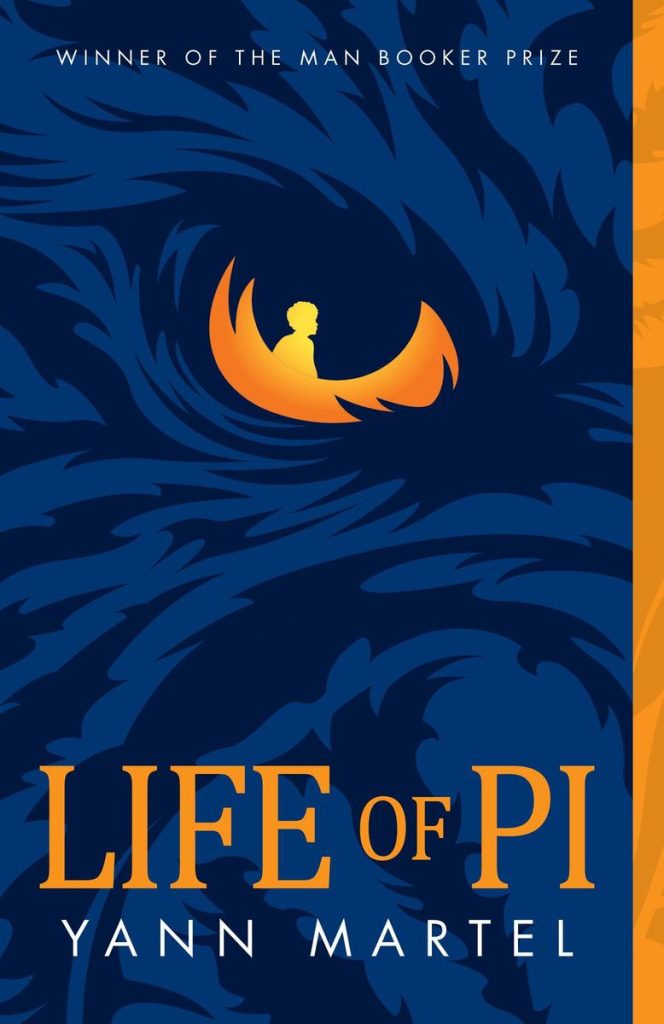
Part I – Childhood in Pondicherry and the Foundation of Faith
Piscine Molitor Patel is born in Pondicherry, India – then still deeply influenced by French culture. He is named after a famous swimming pool in Paris, but because the name “Piscine” is often mocked as “Pissing,” he renames himself “Pi” – the mathematical symbol 3.14… This early act of self-definition reveals an important trait in Pi’s character: the awareness that a human being can redefine himself.
Pi’s family owns a zoo. Growing up in that environment allows him to observe animal behavior closely and to understand the harsh laws of survival. One decisive memory occurs when his father forces the children to witness a Bengal tiger killing a goat. The lesson is conveyed with absolute clarity: animals are not friends; instinct always exists, even in captivity.
Parallel to the world of animals is the world of religion. Pi successively encounters Hinduism, Christianity, and Islam. Instead of choosing a single system, he embraces all three. This causes controversy within his family and community, but for Pi, faiths do not exclude one another. The three religions offer him three ways of interpreting God and existence. This multi-faith foundation later becomes his spiritual resource when disaster strikes.
In the late 1970s, due to the political and economic situation in India, Pi’s family decides to emigrate to Canada. They sell the zoo and transport the animals aboard a Japanese cargo ship bound for North America.
Part II – Disaster and 227 Days in the Pacific Ocean
The voyage has barely progressed when a violent storm strikes in the middle of the night. The ship sinks rapidly. In the chaos, Pi is thrown onto a lifeboat. At dawn, he realizes he is not alone: on board are a severely injured zebra, a hyena, a female orangutan named Orange Juice, and a fully grown Bengal tiger named Richard Parker.
The initial situation unfolds according to the natural logic of the food chain. The hyena kills and eats the zebra. It then attacks and kills Orange Juice. Just as the hyena appears to have established dominance, Richard Parker suddenly emerges from beneath the tarpaulin and kills the hyena. From that moment on, the lifeboat contains only two living beings: Pi and the 200-kilogram tiger.
This moment marks the true turning point of Life of Pi. Pi understands that unless he establishes a clear power relationship, he will become prey. Rather than attempting to kill the tiger – an almost impossible task – Pi chooses to train and control it. He constructs a small raft tied to the lifeboat to maintain a safe distance. He uses a whistle and deliberately induces seasickness to make Richard Parker recognize “who is the dominant one.”
Alongside controlling the tiger is the brutal problem of survival. Pi learns to fish, to kill sea turtles, to collect rainwater, and to consult the survival manual found on the boat. He keeps track of the days, estimates coordinates, and attempts to maintain a sense of temporal structure to prevent psychological disintegration. Massive storms nearly capsize the boat. Days without fish push him into physical collapse.
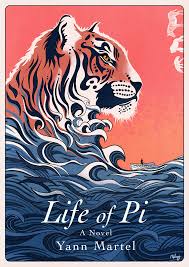
Throughout this ordeal, the boundary between human and beast gradually blurs. Pi is forced to kill fish with his bare hands, drink turtle blood, and eat raw flesh – acts he once found horrifying. Survival is not merely about preserving life; it is about accepting the instinctual part within himself.
One of the strangest chapters recounts his encounter with another survivor – a blind French castaway drifting on a lifeboat. The two converse in darkness, sharing hunger and despair, before Richard Parker kills the man. This episode intensifies the ocean’s savagery: a place where every alliance is fragile.
After many months adrift, Pi discovers an island covered with algae and inhabited by thousands of meerkats. By day, the island provides fresh water and food; by night, it turns acidic and corrodes living matter. When Pi finds a human tooth embedded in a fruit-like cluster of algae, he realizes the island is in fact a carnivorous organism. He chooses to leave, preferring to face the open sea rather than remain in that deceptively comforting trap.
After 227 days, Pi’s lifeboat reaches the coast of Mexico. Richard Parker leaps off and disappears into the jungle without a single backward glance. His departure leaves Pi with a profound emptiness – not because he has lost an enemy, but because he has lost his only companion in survival.
Part III – Two Stories and the Listener’s Choice
At a hospital in Mexico, Pi is interviewed by two Japanese investigators seeking to determine the cause of the shipwreck. They express skepticism toward the story of the tiger and the carnivorous island. Under pressure, Pi offers an alternative version.
In this second account, there are no animals. The zebra is a sailor with a broken leg. The hyena is a brutal cook. Orange Juice is Pi’s mother. Richard Parker is Pi himself – the instinctual self who kills the cook in revenge. The two narratives coexist, with no conclusive evidence to determine which is true or false.
When asked which version is correct, Pi responds with a counterquestion: “Which is the better story?” The investigators ultimately choose the version with the tiger. The official report records that account.
Through this structure, Life of Pi is not merely a tale of shipwreck. It places the reader in the position of the interrogator: do we believe in bare facts or in a story rich with meaning? And if truth cannot be absolutely verified, what does our choice reveal about ourselves?
At this point, the plot of Life of Pi transcends the conventional adventure genre and becomes a philosophical examination of faith, memory, and the nature of narrative itself.
3. Values, Significance, and Distinctive Features of Life of Pi
If read only at the level of plot, Life of Pi may appear to be a dramatic survival–adventure novel. However, the enduring vitality of the work lies in its multi-layered structure and intellectual depth. Here, adventure functions merely as a vehicle; what Yann Martel truly constructs is a philosophical space in which questions of faith, instinct, and the nature of truth are confronted directly yet without dogmatism.
3.1. A Survival Novel Elevated into a Discourse on Instinct and Humanity
In the Western literary tradition, the motif of a solitary human confronting nature is familiar – from Robinson Crusoe by Daniel Defoe to modern disaster narratives. Yet Life of Pi does not merely depict the conflict between human beings and nature; it shifts the focus to the conflict between the human self and the “animality” within.
Richard Parker – the Bengal tiger – is not simply a physical threat. On a symbolic level, he represents primal survival instinct, latent violence, and the capacity for extreme adaptation. When Pi learns to train the tiger, he is not only establishing order on the lifeboat, but also creating order within himself. The presence of Richard Parker forces Pi to remain alert, disciplined, and resolute. Without the tiger, Pi might have surrendered to loneliness and despair.
It is precisely this parallel interaction that transforms the survival narrative of Life of Pi into more than a struggle to stay alive; it becomes an effort to preserve humanity in inhuman circumstances. Martel suggests that instinct is not something to be entirely denied; it must be controlled and transformed.
3.2. A Discourse on Religion and the Pluralism of Faith
One of the most notable contributions of Life of Pi lies in its approach to religion. Pi simultaneously practices Hinduism, Christianity, and Islam. While the world around him views this as contradictory, Pi perceives religions as different languages for speaking about the same metaphysical reality.
Martel does not construct religion as rigid dogma, but as a human need to tell stories in the face of chaos. Faith in Life of Pi is not an instant miracle of salvation; it is a mental structure that enables human beings to endure adversity. When Pi prays in the midst of the ocean, the act does not calm the waves; it prevents him from collapsing internally.
Importantly, Martel does not advocate for any specific religion. He raises the issue at a philosophical level: human beings tend to construct grand narratives – religion, myth, symbol – in order to confer meaning upon life. In this context, religion becomes a mode of cognition rather than merely a system of rituals.
3.3. The Epistemological Question – Truth, Narrative, and Choice
The most distinctive feature of Life of Pi lies in its conclusion with two parallel versions of the story. It is here that the novel shifts from adventure to epistemological inquiry.
Martel provides no evidence to confirm which version is “true.” Instead, he places the reader in the position of the investigators: compelled to choose between a brutal yet plausible account and a symbolic yet improbable one. The question “Which is the better story?” becomes the central intellectual axis.
On the level of narrative theory, Life of Pi demonstrates that truth does not exist independently of its telling. The story one chooses to believe shapes one’s understanding of reality. In this sense, the novel becomes a metaphor for literature itself: fiction does not compete with science in supplying data, but in offering structures of meaning.
3.4. Narrative Craftsmanship and the Three-Layered Structure
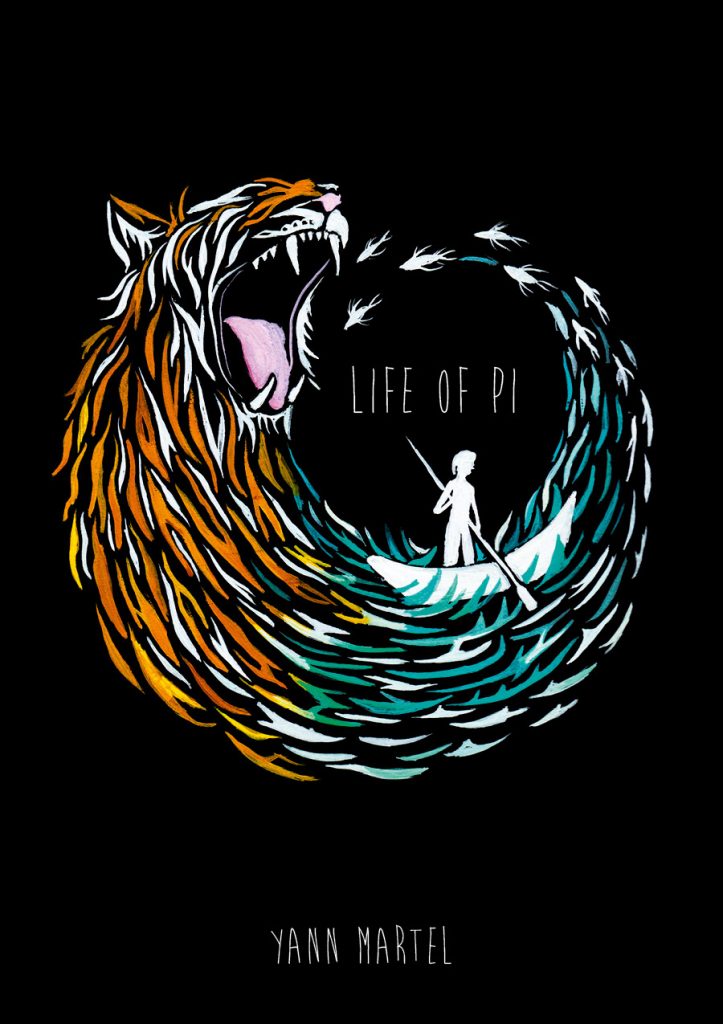
From a technical perspective, Life of Pi is constructed through a frame narrative. There is an “author” – a narrator who meets the adult Pi in Canada – and records his account. This organization creates a quasi-documentary effect, lending credibility to a story that contains many implausible elements.
Martel also demonstrates considerable precision in biological and survival details: the behavior of a Bengal tiger, methods of preserving fresh water, techniques for fishing in the open sea. Such accuracy grounds the narrative, allowing readers to accept fantastical elements such as the carnivorous island. When realistic details are tightly constructed, symbolic elements beyond conventional logic become more persuasive.
Martel’s language balances scientific clarity with lyricism. The ocean in Life of Pi functions both as a physical space and as a symbol of chaos. Descriptions of the night sea, the star-filled sky, and bioluminescent fish create aesthetic depth, preventing the narrative from becoming monotonous.
3.5. The Role of Life of Pi in Contemporary Literature
When Life of Pi won the Booker Prize in 2002, the recognition extended beyond the level of a literary prize. It marked the resurgence of idea-driven fiction at a time when the global book market was increasingly oriented toward entertainment value.
The 2012 film adaptation directed by Ang Lee further affirmed the universal appeal of the story. However, the literary essence of Life of Pi – particularly its dual narrative structure – remains difficult to fully translate onto the screen.
Within postmodern literature, where questions of truth and narrative are continually reexamined, Life of Pi occupies a notable position. It demonstrates that a novel can tell a compelling story while simultaneously posing fundamental philosophical questions, without turning itself into a theoretical treatise.
4. Reflections and Evaluation of Life of Pi
Reading Life of Pi is not merely a matter of following a survival narrative; it is entering a narrative space where the boundary between reality and symbol is constantly tested. The deepest impression the novel leaves does not lie in its dramatic events – storms, starvation, or the danger posed by wild beasts – but in the way Yann Martel organizes the entire story as a test of the reader’s perception.
4.1. A Survival Journey Structured as an Inner Process
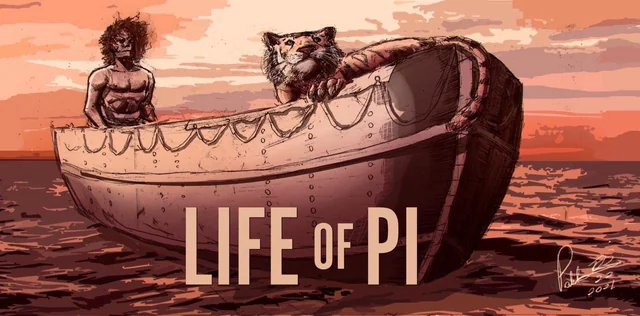
On the surface, the 227-day voyage across the ocean can be read as a sequence of physical trials. However, when one examines the structure of character development more closely, it becomes clear that each external event corresponds to an internal shift.
At first, Pi is a sensitive, religiously devoted, and somewhat naive adolescent. After the shipwreck, he is forced to learn how to kill fish, butcher turtles, and drink blood in order to survive. This transformation is not portrayed as moral degradation, but as necessary adaptation. Martel does not idealize human beings; he shows that civilization is only a thin layer covering instinct. When that layer is stripped away, what remains is the capacity to endure.
What is remarkable is that Pi does not entirely lose his moral structure. He continues to pray, to remember his family, and to keep a record of the days. For this reason, Life of Pi does not descend into absolute tragedy. Instead, it presents a model of survival in which instinct and consciousness coexist rather than annihilate one another.
4.2. Richard Parker – Adversary or Salvation?
One of the most haunting moments of the novel is Richard Parker’s silent departure when the lifeboat reaches the coast of Mexico. There is no farewell glance, no acknowledgment – only a leap into the jungle and disappearance.
This detail opens an important layer of meaning: Richard Parker can be understood as the instinctual part that has fulfilled its role. Once it is no longer necessary for survival, it withdraws. Pi’s sense of emptiness does not stem from losing an enemy, but from losing the structure that sustained him for months.
From this perspective, Life of Pi becomes a story about the complex relationship between the human self and the “wild” within. Instinct is not merely a threat; it is also a force of survival. Pi’s maturation does not lie in destroying instinct, but in mastering and accepting it.
4.3. Two Versions – A Moral Choice
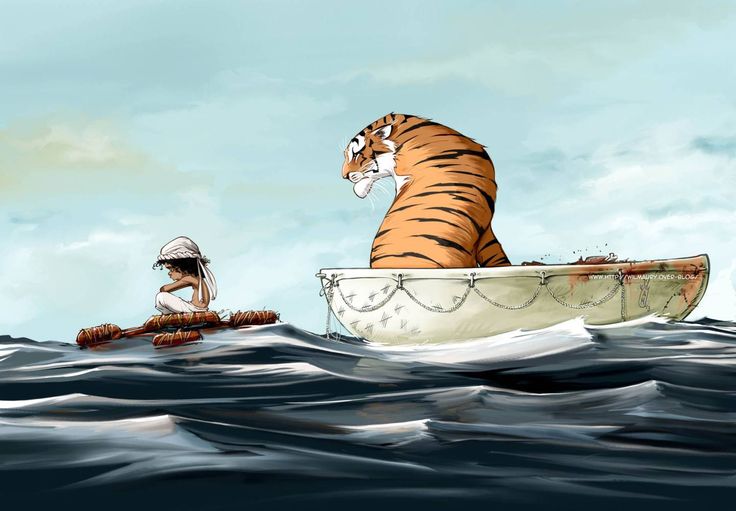
The ending of the novel generates a powerful cognitive effect. When Pi recounts the second version – without animals, only humans killing one another – the symbolic framework of the entire narrative is overturned. At this point, readers must ask themselves whether the story of the tiger is merely a veil covering a brutal reality.
The novel provides no definitive answer, yet what matters is the reader’s choice. If one believes the version with the tiger, one accepts that imagination can create meaning. If one believes the second version, one chooses stark truth. Both remain plausible.
In this sense, Life of Pi is not only a novel but also a moral examination – a test of humanity’s ability to confront suffering through narrative structure.
4.4. Aesthetic Effect and Universality
Artistically, Martel achieves a rare balance between accessibility and philosophical depth. The chapters describing the night sea, the star-filled sky, and schools of bioluminescent fish create a visual lyricism. Meanwhile, reflections on fear, faith, and doubt carry clear philosophical weight.
The novel also possesses a high degree of universality. Although set in India and the Pacific Ocean, the issues it raises – survival, belief, and the choice of narrative – are not confined to any specific culture. This helps explain why Life of Pi was widely received, won the Booker Prize in 2002, and was later adapted into a film by Ang Lee.
4.5. Overall Evaluation
Overall, Life of Pi is a tightly structured novel with a clear conceptual foundation and a consistent symbolic system. Its greatest strength lies in its ability to reconcile a dramatic adventure story with philosophical depth. The work avoids dogmatism and does not indulge in excessive sentimentality. Instead, it opens a reflective space in which readers are invited to participate in the construction of meaning.
On a personal level, what lingers after reading Life of Pi is not the shock of its events, but the unresolved question that remains after the final page: how much truth do human beings truly need, and how much imagination are they willing to accept in order to continue living?
It is precisely this deliberate ambiguity that gives the novel its lasting depth, allowing it not only to be read once, but to be revisited at different stages of life, each time yielding new interpretations.
5. Memorable Quotations in Life of Pi – When Language Becomes a Space for Reflection
One of the reasons Life of Pi sustains its lasting appeal lies not only in its extraordinary plot, but also in its system of highly condensed and generalized prose. Yann Martel does not write in an overtly philosophical manner; instead, his ideas are placed in the mouth of the character at moments of life and death. For that reason, each important statement in the novel carries a crystallized quality – at once Pi’s personal experience and a reflection of philosophical depth.
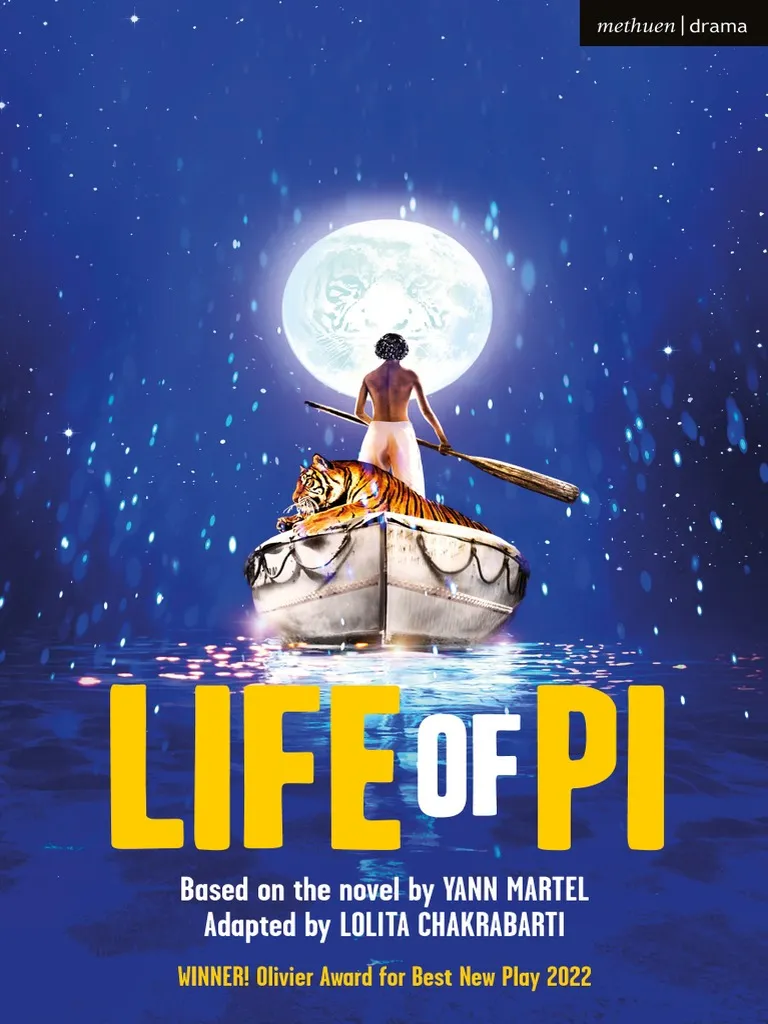
1. “I must say a word about fear.”
This sentence opens one of the most famous passages in the novel. Pi does not regard fear as a fleeting emotion, but as an entity with structure and power. From the formal phrasing “must say a word,” it is evident that he treats fear as a subject requiring serious analysis.
Here, Martel turns fear into the central theme of survival. Pi’s greatest adversary is not Richard Parker, but the inner paralysis caused by fear.
2. “Fear is life’s only true opponent. Only fear can defeat life.”
This statement elevates the issue to a philosophical level. Nature, hunger, or wild animals can all be confronted with strategy. But fear – when it takes possession of consciousness – can lead a human being to self-destruction.
In the context of 227 days adrift at sea, the sentence is not exaggerated. It reflects the psychological reality of survival: when the will collapses, every skill becomes meaningless.
3. “The world isn’t just the way it is. It is how we understand it.”
This is a clearly epistemological assertion. Martel raises the question that reality is not merely a collection of objective events, but also the product of human interpretation.
This statement prepares the groundwork for the novel’s ending, where two versions of the story coexist. The world is not only “what happened,” but also “how we tell what happened.”
4. “To choose doubt as a philosophy of life is akin to choosing immobility as a means of transportation.”
The sentence carries the tone of a direct argument against radical skepticism. Martel does not deny the value of doubt, but he suggests that if it becomes an absolute stance, human beings fall into spiritual immobility.
In Life of Pi, faith is not constructed as a rejection of reason, but as a condition for action. Pi cannot wait for metaphysical proof in the middle of the ocean; he must believe in order to continue living.
5. “I suppose in the end, the whole of life becomes an act of letting go.”
This line appears near the end, after Richard Parker leaves without looking back. It is not merely a lament over a parting, but a philosophy of impermanence.
Pi’s entire journey – losing his family, losing his homeland, losing his companion – is condensed into the act of “letting go.” Here, letting go does not carry a negative meaning, but signifies acceptance of the laws of existence.
6. “Which is the better story?”
This brief question carries the greatest weight in the entire novel. It is posed not only to the investigators, but also to the reader.
Structurally, this is the intersection between literature and philosophy. Martel grants the reader the authority to decide: choosing one story over the other is equivalent to choosing a particular way of viewing the world.
7. “If you stumble at mere believability, what are you living for? Isn’t love hard to believe?”
This statement broadens the issue of belief beyond the sphere of survival. Martel compares believing in the story with the tiger to believing in love – both are difficult to prove by pure reason.
Here, the novel suggests that human beings do not live by facts alone, but by things that transcend verification.
8. “Life on a lifeboat isn’t much of a life. It is like an end game in chess.”
The comparison between life on a lifeboat and a chess endgame illustrates the severity of the situation. There is no long-term strategy, no margin for error; every move carries existential consequences.
This image emphasizes the constant calculation and intense concentration Pi must maintain in order not to fail.
6. Conclusion – The Enduring Value of Life of Pi and the Question That Remains
Closing Life of Pi, what lingers is not merely a 227-day journey across the ocean, nor simply the image of a boy and a Bengal tiger on a fragile lifeboat drifting in the Pacific. What truly remains is a structure of questions – quiet yet persistent – about how human beings confront chaos, loss, and truth.
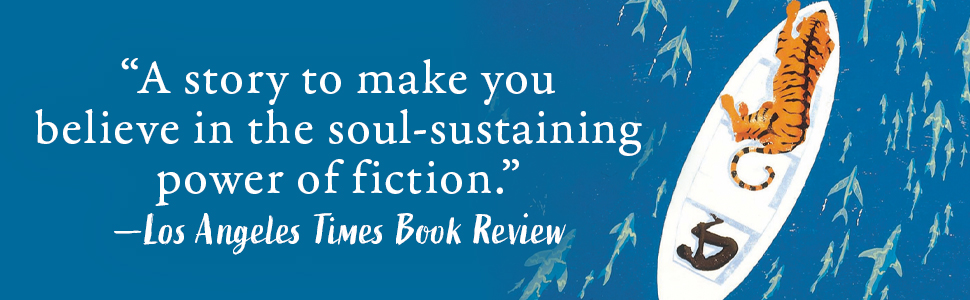
On the narrative level, Yann Martel constructs a novel capable of reconciling multiple genres: survival adventure, psychological fiction, fable, and philosophical discourse. On the level of ideas, the work raises three core issues: the human survival instinct, the role of faith, and the constructive nature of storytelling. It is precisely this intersection that enabled Life of Pi to win the Booker Prize and become one of the notable novels of early twenty-first-century literature.
However, the enduring value of Life of Pi does not lie in awards or the number of copies printed. The power of the novel rests in its ability to compel readers to participate in the act of choice. When the two versions of the story are placed side by side, the text does not impose a conclusion. Instead, it grants authority to the reader – and that very act of choosing becomes part of the reading experience.
If one chooses to believe the story with Richard Parker, the reader accepts that imagination and symbolism can serve as means to preserve humanity in the face of tragedy. If one chooses the stark version without animals, the reader prioritizes rationality and direct truth. Neither option is entirely wrong; what matters is the motive behind the choice.
From a broader perspective, Life of Pi demonstrates that literature does not merely recount events, but also constructs meaning. In a world marked by uncertainty, human beings need stories – not to escape reality, but to endure and continue within it.
The image of Richard Parker quietly disappearing into the forest when the boat reaches shore is one of the most haunting endings in contemporary fiction. There is no farewell, no acknowledgment, only an absence. That absence itself becomes the space in which readers complete the story in their own way.
Thus, it can be said that Life of Pi does not end when the final page is closed. It continues to exist in the reader’s thoughts, in later reflections on fear, faith, and letting go.
And after all, the question the novel leaves behind remains fully relevant:
When faced with two versions of one’s own life – one stark, one rich with meaning – which story will we choose to believe, and what does that choice reveal about the way we see the world?