Amid the violent upheavals of the twentieth century – an era marked by world wars, revolutions, economic crises, and ideological polarization – human beings were compelled not only to confront the challenge of survival but also to define their position within an ever-shifting social order. In such a context, literature became the most vivid space for reflecting the relationship between the individual and history, between origin and will, between destiny and choice. Kane and Abel by Jeffrey Archer stands as a representative work when it places two parallel lives at the center of the tide of the age, thereby portraying the human journey of ascent, confrontation, and self-awareness in the face of power and ambition.
More than merely a business or political novel, Kane and Abel constructs a tightly structured contrast between two characters born in the same year yet belonging to entirely different worlds. One inherits privilege from the moment of birth, while the other must struggle for every chance to survive under the harshest circumstances. This opposition not only creates dramatic tension for the plot but also opens up profound reflections on the nature of success, the value of individual will, and the limits of hatred. For that reason, Kane and Abel is compelling not only on the narrative level but also enduring in its intellectual depth, enabling the work to retain its appeal across decades and generations of readers.
1. Overview of the Author and the Work Kane and Abel
Jeffrey Archer
The author of Kane and Abel is Jeffrey Archer (born April 15, 1940, in London, England). He studied at the University of Oxford, majoring in physical education, and spent a period working as a track and field athlete before entering the field of politics. Archer was elected to the British House of Commons in 1969 at the age of 29 – a milestone that demonstrated his rapid rise in public life.
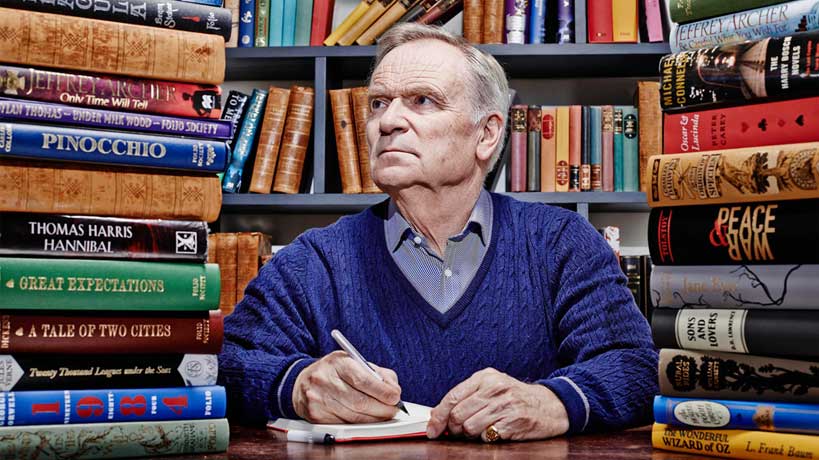
However, Archer’s political career was not without difficulties. After financial setbacks in the 1970s, he left Parliament and began focusing on writing as a new direction. It was during this turbulent period that Archer transformed his experiences of power, fame, and failure into literary material. He later returned to politics, was granted the title of Baron in 1992, and became a member of the House of Lords. His multifaceted life – spanning sports, politics, and literature – provided Archer with a profound perspective on society, particularly regarding ambition, competition, and the mechanisms of elite power.
Literary Career
Jeffrey Archer is one of the most widely published contemporary authors in the world. His works have sold more than 300 million copies and have been translated into dozens of languages. Archer is known for his tightly structured plots, fast pacing, and his ability to create highly ambitious and strong-willed characters.
Before Kane and Abel, he published his debut novel Not a Penny More, Not a Penny Less (1976), which gained considerable attention. However, the true turning point in his career came with Kane and Abel (1979) – the original work of Kane and Abel. Following its tremendous success, Archer continued to expand the fictional universe with related works such as The Prodigal Daughter (1982), which continues the story through the next generation of the Kane family.
Archer’s style is often categorized as political and business fiction. He explores power relationships among banking, finance, hospitality, government, and the media. Nevertheless, the core element that ensures the lasting vitality of his works does not lie in professional technical details, but in the way he situates personal ambition within its interaction with ethics and history.
The Emergence of Kane and Abel
Kane and Abel first published in the United Kingdom in 1979. The work was released in the context of the Cold War, when tensions between the Western bloc and the Soviet bloc remained intense. The choice of a character originating from Poland – a region deeply influenced by the Russian Empire and later the Soviet Union – demonstrates Archer’s perceptiveness in exploring ideological conflict and the wave of immigration to the United States in the early twentieth century.
In terms of structure, Kane and Abel is constructed according to a parallel and contrasting model. The two main characters are born in the same year, 1906, yet belong to entirely different worlds: one to the American financial elite, the other to an orphaned child amid the wartime turmoil of Eastern Europe. This contrast forms the foundation for the entire dramatic conflict of the novel.
Immediately after its publication, Kane and Abel quickly became an international bestseller. The novel topped bestseller lists for many weeks and was adapted into a television miniseries in 1985, further expanding the story’s influence among a broad audience.
It is worth noting that although it bears the appearance of a business novel, Kane and Abel is in essence a novel about individual destiny in a turbulent century. Archer not only tells the story of the success of two businessmen but also constructs a broad panorama of the shifting of global power, of opportunities, and of the price to be paid when pursuing ambition to the very end. It is precisely the combination of historical, economic, and psychological elements that enables Kane and Abel to transcend the limits of mere entertainment and become a work of profound social analytical value.
2. Summary of the Plot of Kane and Abel
Kane and Abel – the original novel of Kane and Abel written by Jeffrey Archer – is constructed in a parallel structure, following two lives born on the same day in the same year, 1906, yet originating from almost opposite ends of the world. It is precisely this parallelism that creates the dramatic foundation running throughout the work.
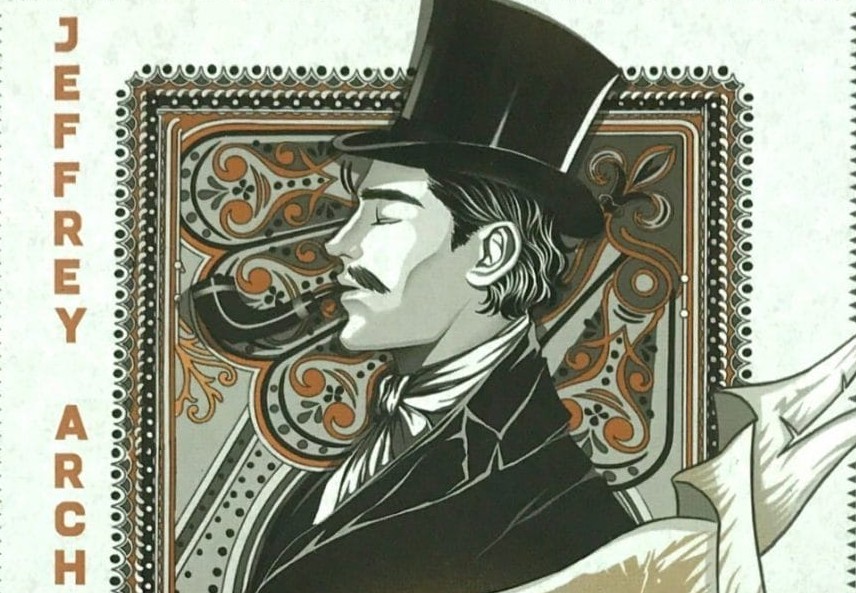
The Opposite Beginnings of Two Lives
William Lowell Kane is born in Boston into a distinguished banking dynasty. His father is the president of a major bank and places great expectations on his only son. However, when Kane is still very young, his father dies in an accident, leaving behind not only a profound emotional void but also a heavy legacy of responsibility. From that point on, Kane grows up in a strict educational environment, clearly oriented toward inheriting and expanding the family’s financial empire.
On the other side of Europe, in a rural region of Poland – then under the Russian Empire – a child is found in the forest after the aristocratic Rosnovski family is murdered. The boy is named Władek Koskiewicz and is adopted by a poor peasant family. Władek’s childhood is marked by hard labor and the harsh realities of Russian feudal society. A major upheaval soon occurs as war and political conflict spread, thrusting him into a vortex of violence and loss.
At a very young age, Władek is arrested and sent to Siberia, where he must survive in a brutal labor camp under extremely harsh conditions. It is here that his will to survive is tested to its limits. The passages depicting Siberia not only portray the cold, hunger, and cruelty of the prison camp system, but also highlight the intense desire to live of a man who refuses to submit.
The Journey of Escape and Rebirth
After years of endurance, Władek escapes and begins a journey across a Europe engulfed in war. He joins the army during the First World War, undergoes further life-and-death trials, and eventually finds the opportunity to set foot in the United States – the land of a new dream. There, he changes his name to Abel Rosnovski as a way of severing ties with his painful past and starting anew.
In his early days in America, Abel works manual jobs for meager wages. Yet unlike many other immigrants, he does not merely seek stability; he nurtures a grand ambition: to rise to the summit of American society. Through intelligence, sharp calculation, and decisive determination, Abel gradually enters the hotel business. From a waiter, he becomes a manager, and eventually the owner of a renowned hotel chain.
Parallel to Abel’s journey, William Kane is also coming of age in an elite environment. He studies at Harvard and demonstrates outstanding ability in finance and economics. Upon returning to manage the family bank, Kane faces the challenges of the Great Depression of 1929. Rather than avoiding difficulties, he makes bold decisions to sustain and expand the bank’s operations. Kane steadily establishes himself as one of the most influential financiers in the United States.
The Fateful Intersection
The lives of Kane and Abel appear unrelated until a turning point occurs: Abel’s closest friend and greatest benefactor – a banker who once helped him build his career – falls into financial crisis. Kane’s bank refuses to grant a crucial loan, driving the man into despair and ultimately to suicide. Abel believes that Kane is directly responsible for the death.
From this misunderstanding, a deep and enduring feud is formed. Abel vows to destroy Kane at any cost. For many years, both men use their power and influence to obstruct, compete with, and weaken each other. Their confrontation unfolds not only in the business world but also extends into politics and the media, reflecting a fierce clash between two strong personalities.
Notably, neither of them is a villain in the conventional sense. Kane acts according to financial principles and the responsibilities of a banker; Abel acts out of conviction and loyalty. The conflict, therefore, does not arise from a simple opposition between good and evil, but from differing perspectives and value systems.
Climax and the Revelation of Truth
As time passes, both men enter old age, yet their feud remains unresolved. However, when the truth gradually comes to light, Abel realizes that Kane was not directly responsible for the death he had long blamed on him. The refusal of the loan did not stem from personal malice, but from objective legal and financial constraints.
This realization comes too late, after both men have spent the greater part of their lives consumed by rivalry and hatred. The ending of Kane and Abel does not focus on the victory of one side over the other; instead, it turns toward connection in the next generation: Abel’s daughter and Kane’s son fall in love. Reconciliation does not occur through a grand declaration, but through the natural continuation of life – where new generations are no longer bound by the prejudices of the past.
3. Value, Significance, and Distinctive Features of Kane and Abel
If one looks only at the surface of its plot, Kane and Abel may be regarded as a novel about business rivalry and ambition. However, the true depth of the work lies in the way Jeffrey Archer constructs a multilayered narrative structure – where history, economics, morality, and individual psychology are tightly interwoven. It is precisely this combination that enables Kane and Abel to transcend the framework of a purely entertaining bestseller and become a work with enduring social analytical value.
Historical Realism: The Individual in the Turmoil of the Twentieth Century
One of the most notable contributions of Hai số phận is its ability to reconstruct the world of the early twentieth century through individual destinies. The novel not only tells the story of William Kane and Abel Rosnovski, but also re-creates major historical turning points: the Russian Revolution, the Siberian labor camp system, waves of immigration to the United States, the Great Depression of 1929, and the Second World War.
Significantly, Archer does not treat history as a static backdrop. Each event directly influences the characters’ choices and developmental trajectories. Without war and political repression in Eastern Europe, Abel would not have been forced into a brutal struggle for survival; without the economic crisis, Kane would not have had to make risky financial decisions to protect the family bank.
Through this, Hai số phận raises a philosophical question: to what extent is human freedom possible in a world shaped by structures of power and historical upheaval? The success of Kane and Abel is not solely the result of personal effort, but also of their capacity to adapt to the circumstances of their era. This dimension of realism is what grants the novel its lasting value.
Parallel Character Construction: The Art of Juxtaposition
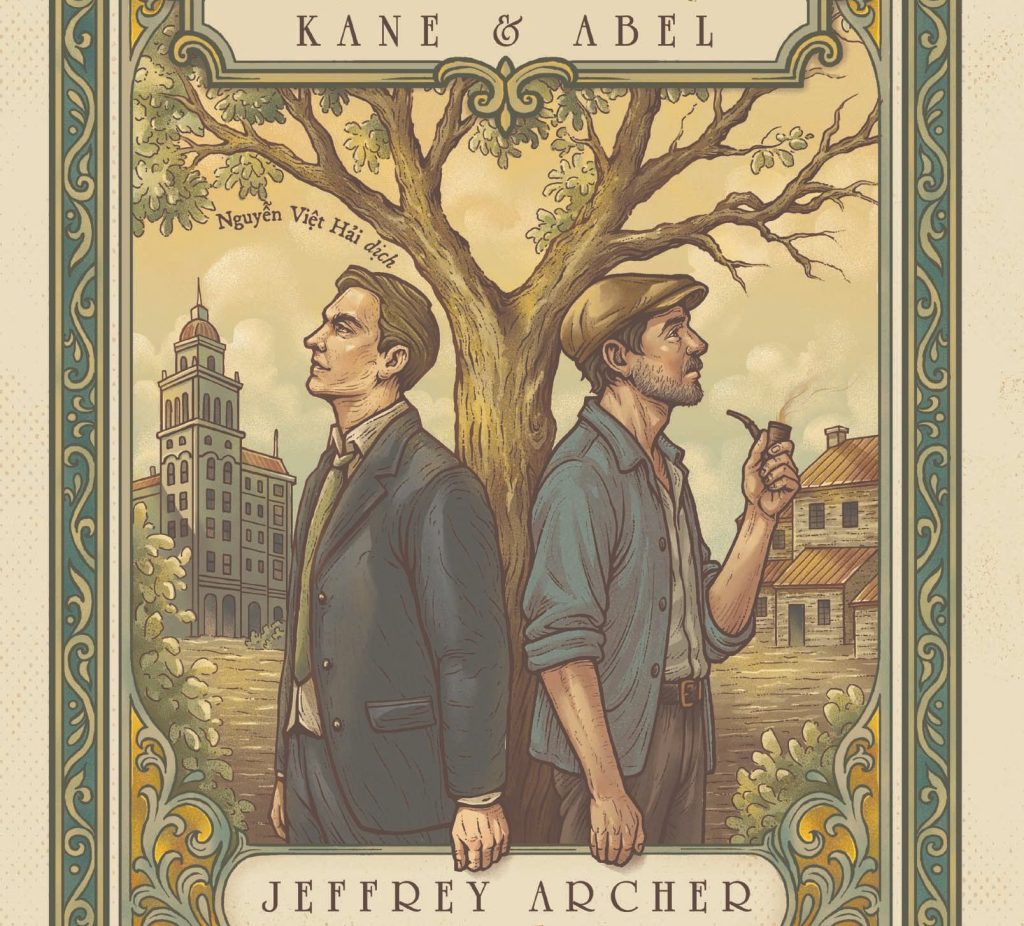
A prominent distinctive feature of Kane and Abel lies in its parallel construction of the two central characters. Kane and Abel are born in the same year and mature within the same century, yet they originate from entirely different worlds. One represents the American upper class, formally educated and heir to a financial legacy. The other is an orphan amid the turmoil of Eastern Europe, compelled to seize every opportunity for survival.
However, Archer does not portray them as moral opposites of good and evil. On the contrary, he creates striking similarities: both are intelligent, disciplined, ambitious, and strong-willed. It is precisely this resemblance that makes their conflict more complex. This is not a battle between the strong and the weak, but a collision between two value systems and two conceptions of justice.
Such character construction allows Hai số phận to avoid moral simplification. Readers cannot easily align themselves entirely with one side. Kane is not a cold and unfeeling capitalist figure; Abel is not a wholly innocent victim. Each acts according to his own internal logic. It is this inner conflict and subjective conviction that generate the psychological depth of the novel.
The Portrayal of Ambition and the Cost of Success
In many business novels, success is often depicted as a brilliant destination. In Kane and Abel, however, success always comes at a price. Both Kane and Abel attain positions of power in their respective fields – banking and hospitality – yet they lose valuable years of their lives to hatred and prejudice.
Archer does not deny ambition; on the contrary, he views it as a driving force of social development. Nevertheless, the novel poses a critical question: when ambition is governed by hatred, can it still retain its positive value? The careers of the two protagonists expand in parallel with the escalation of tension between them, creating a paradox: the more successful they become, the further they move away from the possibility of reconciliation.
The value of Kane and Abel lies in its dissection of the nature of modern success – where financial power and social status do not guarantee inner peace. This message remains timely, particularly in a contemporary society that continues to prioritize material achievement.
Narrative Technique and Dramatic Structure
From the perspective of narrative technique, Kane and Abel clearly demonstrates Jeffrey Archer’s craftsmanship. He employs short chapters that often end at moments of heightened tension, creating a fast-paced rhythm and continually stimulating the reader’s curiosity. The two storylines are skillfully interwoven, maintaining balance while intensifying contrast.
Archer’s language is not ornate; yet its clarity and directness produce a universal effect. He is particularly successful in describing financial decisions, business transactions, and competitive strategies while keeping them accessible to a general readership. This explains why Kane and Abel is both compelling in content and widely approachable.
The Role and Position of Hai số phận in Popular Literature
Within the landscape of twentieth-century fiction, Kane and Abel can be regarded as one of the representative works of the business–political novel. Its commercial success – with millions of copies sold and numerous reprints – demonstrates the powerful reach of the story.
However, the role of Kane and Abel does not lie solely in its publication figures. The novel has contributed to shaping the model of a parallel narrative centered on two rival characters across several decades – a structure later explored by many other writers. At the same time, the book broadens the scope of the business novel by integrating historical elements and psychological analysis.
For Vietnamese readers, Kane and Abel is often mentioned as a book about resilience and the aspiration to rise. Yet a closer reading reveals a deeper value: it serves as a warning about the dangers of prolonged misunderstanding and accumulated hatred. It is precisely this dual significance – both inspiring and thought-provoking – that has enabled Kane and Abel to maintain its appeal across generations.
4. Kane and Abel – The Confrontation Between the Will to Rise and a Half-Century of Prejudice
Placed within the broader landscape of twentieth-century fiction, Kane and Abel is not merely a story about two successful businessmen, but also a psychological exploration of ambition, pride, and the limits of forgiveness. In following the journeys of William Kane and Abel Rosnovski – the two central characters created by Jeffrey Archer – what ultimately lingers is not simply admiration for their determination to rise, but a reflective awareness of how a single misunderstanding can shape an entire lifetime.

The Impression of Abel – The Ultimate Will to Survive
Abel Rosnovski leaves a powerful impression because of his origins and his journey of escape. From an orphan amid the turmoil of Eastern Europe, exiled to Siberia under brutal conditions, Abel not only survives but also nurtures the ambition to rise. The chapters depicting the labor camps do not stop at describing hardship; they portray a will that refuses to be defined by circumstance.
It is noteworthy that Archer does not construct Abel as an idealized model. Abel possesses strong self-respect and loyalty, yet he is also easily driven by emotion. When he believes that Kane is responsible for his benefactor’s suicide, he allows hatred to guide his actions for decades. It is precisely this mixture of resilience and extremity that renders the character authentic.
Abel represents the immigrant “American Dream” – rising from poverty through labor and intellect. However, his success does not erase the wounds of the past. Here, Kane and Abel reveals a paradox: determination enables a person to overcome adversity, yet if left unchecked, that same determination can become the driving force of hatred.
William Kane – A Symbol of Privilege and Discipline
If Abel embodies the self-made individual, William Kane represents those born into privilege. Nevertheless, Archer does not portray Kane as a passive heir. On the contrary, Kane is constructed as disciplined, rational, and strategically minded.
Amid the Great Depression of 1929 and subsequent financial upheavals, Kane must make difficult decisions to protect the family bank. He acts based on principles and regulations, not personal emotion. It is precisely this that unintentionally turns him into a “hostile figure” in Abel’s eyes.
The most profound impression of Kane lies in his solitude. Despite standing at the pinnacle of financial success, he must confront the pressure of maintaining the family reputation and fulfilling responsibilities to shareholders. He is not a villain; he is a man acting within the framework of the system he represents. This makes the conflict in Kane and Abel complex: no one is entirely wrong, yet no one is entirely right.
The Obsession with Hatred and the Limits of the Ego
What gives Kane and Abel its depth does not lie in its business dealings, but in the way it raises questions about the destructive power of prolonged misunderstanding. For more than half their lives, Kane and Abel exist in competition and confrontation, each convinced that he is defending honor and justice.
Yet when the truth is revealed, it becomes clear that the feud originated from a chain of systemic decisions rather than personal malice. A sense of regret emerges upon realizing that much of both men’s lives has been consumed by prejudice.
In this respect, Kane and Abel evokes a modern tragedy: individuals who succeed professionally yet fail in their capacity for dialogue. The novel does not sentimentalize the conflict, but it clearly shows the cost of placing the ego above understanding.
Impact on Contemporary Readers
In the present context, when material success and social status are still regarded as measures of personal worth, Kane and Abel offers a balanced perspective. The novel does not deny the value of effort and ambition; on the contrary, it affirms that determination can alter the trajectory of one’s life. However, achievement does not equate to happiness if one remains trapped in a cycle of hatred.
What allows Kane and Abel to retain its appeal after many decades is its capacity to place readers in a position of reflection: if confronted with similar circumstances, would their choices be different? Could they pause sooner to seek the truth rather than nurture prejudice?
Overall Evaluation
On the artistic level, Kane and Abel succeeds in harmonizing entertainment value with intellectual depth. The dramatic plot sustains a steady reading rhythm, while thematic layers concerning power, origin, and destiny create reflective depth.
On the ideological level, the novel affirms the role of individual will while simultaneously emphasizing its limits. A person may rise above circumstance, yet cannot escape the consequences of choice. Success does not erase the past; only understanding and dialogue can do so.
It is precisely this balance between inspiration and reflection that prevents Kane and Abel from falling into the simplistic formula of a “rags to riches” narrative. Instead, it becomes a multidimensional story about aspiration, error, and the possibility of reconciliation – issues that remain relevant in every era.
5. Impressive Quotations in Kane and Abel
In Kane and Abel, Jeffrey Archer does not employ ornate or elaborate language. He chooses a direct and concise style of expression, yet behind that simplicity lie layers of meaning concerning ambition, power, pride, and the limits of human beings in the face of prejudice. The most striking statements in the novel often appear at crucial turning points – when characters stand before decisive choices, or when an event forces them to confront themselves.
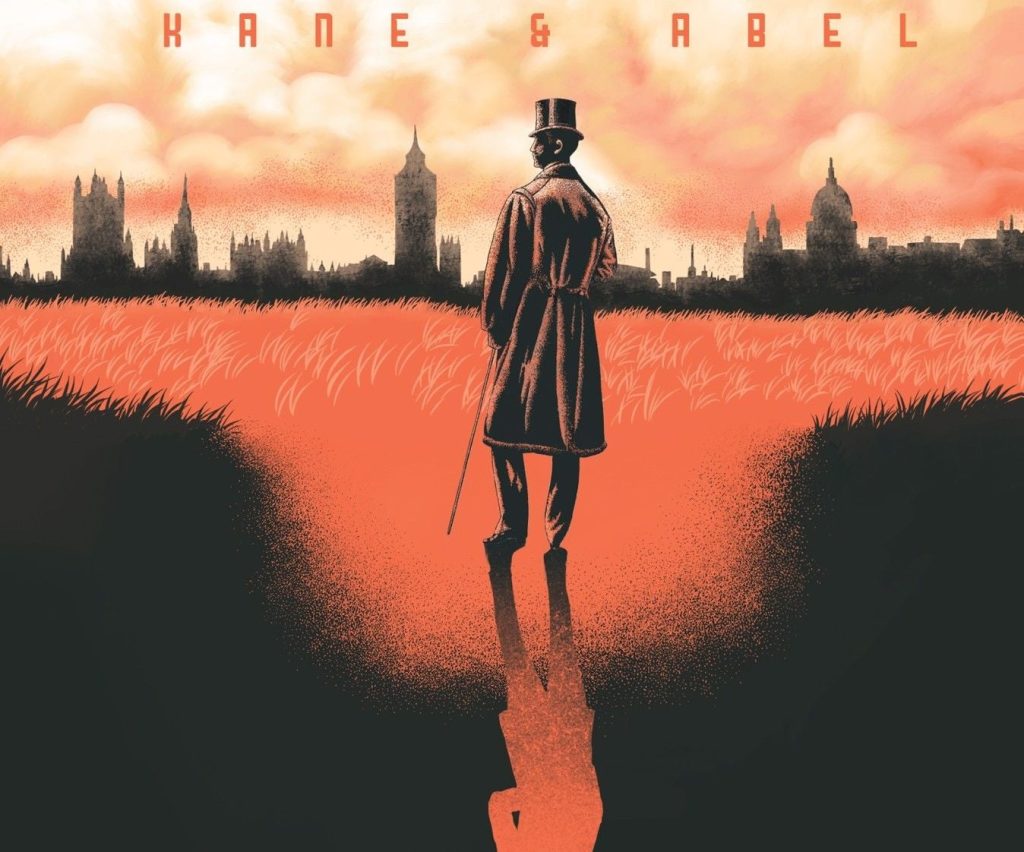
1. “A person cannot choose where he is born, but he can choose how he will live.”
→ This idea encompasses the entire journey of Abel Rosnovski. Born into poverty and violence, exiled to Siberia, he does not accept circumstance as a permanent sentence. The statement affirms the role of individual will in the face of origin – one of the central messages of Kane and Abel.
2. “Failure does not kill us; accepting it does.”
→ This spirit is present in both protagonists. Kane must confront economic crisis and the pressure of managing the bank; Abel repeatedly faces the risk of losing everything. Yet neither allows failure to become the end point. The statement reflects the novel’s conception of success: it is a process of perseverance rather than a single moment.
3. “The longer hatred endures, the greater the price to be paid.”
→ This may be considered the moral axis of the entire story. The feud between Kane and Abel not only drains resources, but also erodes the years that could have been devoted to family and personal happiness. The quotation is not didactic; it is demonstrated through the very life trajectories of the two characters.
4. “Ambition is the strongest driving force of human beings – if it is not guided by pride.”
→ Archer does not deny the value of ambition. On the contrary, he views it as the energy that propels social development. However, when ambition is blended with ego and prejudice, it can turn into a destructive motive. This statement explains why the confrontation between the two characters becomes so prolonged.
5. “The truth may be obscured for many years, but it never disappears.”
→ The climax of Kane and Abel lies in the moment when the truth is revealed: Kane did not directly cause the death for which Abel had held him responsible. This statement serves as a summary of the inevitability of transparency. It also raises a question of timing – when the truth arrives too late, can it still salvage anything?
6. “Power does not lie in destroying one’s opponent, but in the ability to control oneself.”
→ This is one of the most profound ideas in the novel. Kane and Abel both possess considerable financial power, yet they fail to control their personal emotions. The quotation broadens the meaning of success: external achievement does not equate to inner maturity.
7. “Sometimes, a person’s greatest enemy is not the one standing opposite, but his own stubborn conviction.”
→ This statement encapsulates the tragedy of the two characters. For many years, they do not truly fight each other; rather, they battle the image of the other that they themselves have constructed. Hai số phận thus becomes a story about the power – and the danger – of prejudice.
6. Conclusion – The Enduring Value of Kane and Abel and the Remaining Question
Bringing to a close the more than half-century journey of William Kane and Abel Rosnovski, Kane and Abel does not end merely as a story of success or failure. Jeffrey Archer’s work constructs a broad panorama of the twentieth century – a time in which individuals are placed amid violent historical upheavals, yet must simultaneously bear responsibility for their own choices.
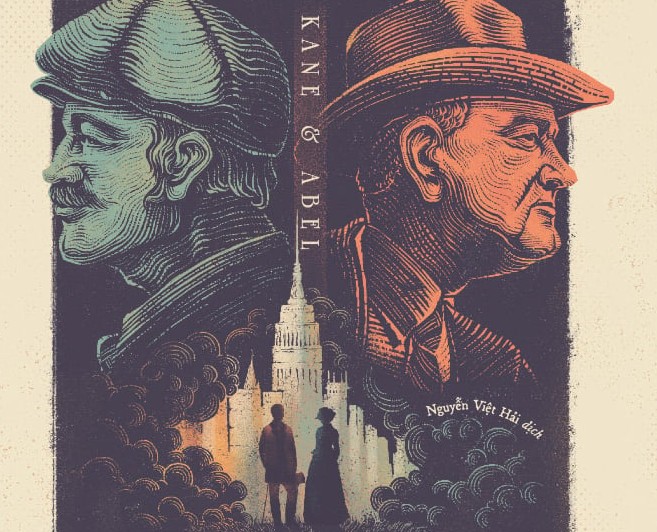
On the surface level, Kane and Abel is an epic of determination and upward striving. Abel rises from an orphan in a war-torn land to become a hotel magnate. Kane, from a young heir compelled to prove his competence, becomes a symbol of financial power. Both demonstrate that origin is not an unchangeable destiny. In a fiercely competitive world, resilience and intellect can open doors to transformation.
At a deeper level, however, the novel presents a paradox: human beings may overcome circumstance, but they do not always overcome themselves. Ambition enables Kane and Abel to reach the summit, yet pride and prejudice cause them to lose many valuable years. When the truth is finally revealed, a sense of regret prevails – for much of the conflict originates from misunderstanding and the absence of dialogue.
The enduring value of Kane and Abel lies in its balance between inspiration and reflection. The novel neither idealizes success nor denies it. Archer shows that material achievement may be attained through strategy and capability, but inner maturity requires the ability to listen and to transcend the ego. It is this depth that allows Kane and Abel to move beyond the framework of a conventional business novel and become a story of broad human significance.
For contemporary readers, in a society that continues to value speed, competition, and achievement, Kane and Abel offers a necessary perspective: the value of a life is not measured solely by the power one attains, but by how one confronts conflict and chooses to resolve it. Success may be built through willpower; yet happiness and peace come only when one has the courage to reflect upon and adjust oneself.
In conclusion, Kane and Abel is the story of two parallel lives within the same century – two origins, two value systems, two journeys of ascent – yet both compelled to confront a shared question about the limits of ambition and the power of truth.
And after closing the final page, the lingering question is addressed not only to Kane or Abel, but to every reader: if success demands the sacrifice of years governed by hatred and prejudice, can it truly be considered a complete victory?