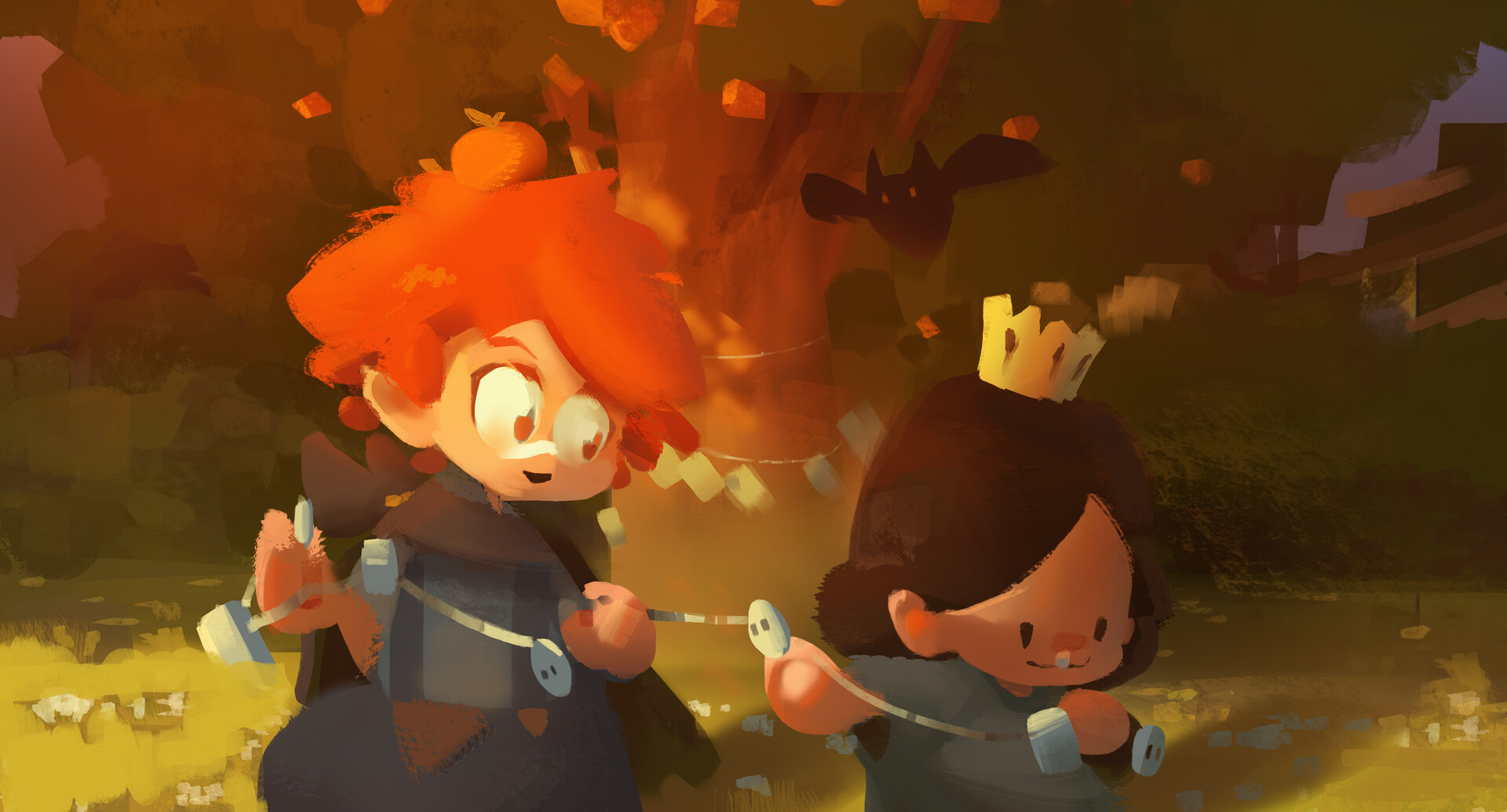
In the history of literature about childhood, there are works that do not merely recreate the world of children in bright and innocent tones, but delve into the hidden layers of pain and the longing to be loved. My Sweet Orange Tree is one of them. Appearing at first as a simple story about a poor boy in the outskirts of Rio de Janeiro, the novel gradually unfolds into a broader portrait of family, poverty, violence, and human dignity within the social context of twentieth-century Brazil.
What distinguishes My Sweet Orange Tree is not a plot filled with dramatic events, but its psychological depth and its subtle portrayal of a child’s inner world. Through the character of Zezé – a five-year-old boy who is intelligent and sensitive yet frequently misunderstood – the book raises universal questions: What does a child truly need in order to grow up in a healthy way? What consequences might uncontrolled strictness leave on a fragile young soul?
From a small garden with a tiny orange tree, Zezé’s inner world expands into a symbolic narrative space. There, imagination becomes a refuge, friendship becomes redemption, and loss becomes a turning point in the journey toward maturity. It is precisely the autobiographical structure combined with a dense layer of realism that allows My Sweet Orange Tree to transcend the boundaries of an ordinary children’s novel, establishing itself as a work of enduring humanistic value in Latin American and world literature.
1. Overview of the Author and the Work My Sweet Orange Tree
The Author’s Life – José Mauro de Vasconcelos
José Mauro de Vasconcelos was born on February 26, 1920, in Bangu, a suburb of Rio de Janeiro, Brazil, into a poor family of Portuguese origin. His childhood unfolded amid economic hardship, instability, and direct encounters with the harsh realities of urban life in early twentieth-century Brazil. This background later became the foundational material for much of his literary work.
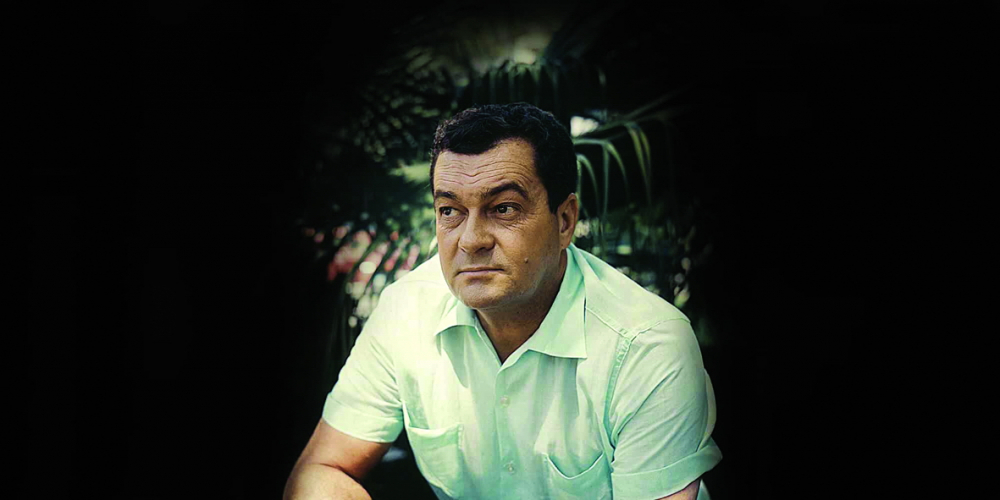
Before becoming a professional writer, Vasconcelos held a variety of occupations: manual laborer, fisherman, dockworker, stage and film actor. He also spent some time studying medicine but did not complete his studies. Earning a living in diverse social environments provided him with rich life experience and a realistic perspective on the working-class poor – figures who frequently appear in his works.
Unlike many writers who emerged from intellectual circles, Vasconcelos entered literature through lived experience. He once shared that the painful memories of his childhood were the driving force behind his decision to write. This explains why his works consistently carry strong autobiographical elements and psychological depth.
He passed away in 1984, leaving behind a literary legacy that continues to exert lasting influence in Brazil and many other countries.
Literary Career
José Mauro de Vasconcelos began publishing in the late 1940s. Throughout his career, he produced more than twenty works across various genres, ranging from novels and children’s literature to socially oriented realist narratives.
Some of his notable works include:
- Banana Brava (1942)
- Barro Blanco (1945)
- Arara Vermelha (1953)
- Rua Descalça (1960)
- Meu Pé de Laranja Lima (1968) – My Sweet Orange Tree
- Vamos Aquecer o Sol (1974)
- Doidão (1963, later republished and connected to his autobiographical cycle)
Across his body of work, Vasconcelos consistently focused on themes such as impoverished childhood, maturation through adversity, social inequality, love, and human dignity. He did not construct intricate or elaborate plots; instead, he emphasized psychological depth and the authenticity of lived experience.
The work that brought him international recognition was My Sweet Orange Tree (original title: Meu Pé de Laranja Lima). The book quickly became a publishing phenomenon in Brazil, was reprinted numerous times, and translated into dozens of languages. It was also adapted into film on multiple occasions, notably in 1970 and 2012, further solidifying its place in Brazilian cultural life.
It is important to note that My Sweet Orange Tree is not an entirely standalone work, but part of a broader autobiographical sequence. Vamos Aquecer o Sol continues the story of Zezé’s adolescence, while Doidão explores later stages of his maturation. In this sense, the character Zezé can be regarded as the enduring “literary self” of Vasconcelos throughout his career.
The Birth of My Sweet Orange Tree
My Sweet Orange Tree was first published in 1968 in Brazil, during a period of significant social and political upheaval in the country. However, the novel does not directly address politics; rather, it reflects the broader social context through the life of a working-class family on the outskirts of Rio de Janeiro.
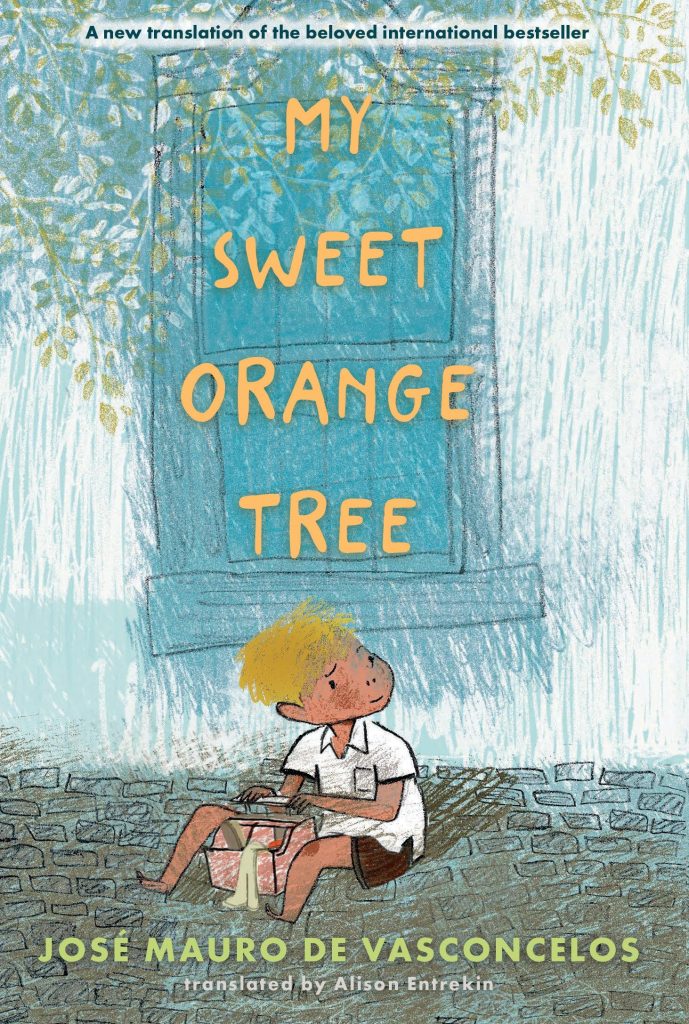
According to the author himself, he wrote the book in approximately twelve consecutive days. Despite the brief writing period, the content was distilled from childhood memories accumulated over many years. The character Zezé – a five-year-old boy who is intelligent yet misunderstood – bears many similarities to Vasconcelos’s own childhood. For this reason, the novel possesses a clear autobiographical dimension, even though it is structured as a work of fiction.
The original Portuguese title, Meu Pé de Laranja Lima, can be translated literally as “My Lime Orange Tree,” though the widely used Vietnamese translation is Cây cam ngọt của tôi (“My Sweet Orange Tree”). The image of the small orange tree in the garden is not merely a realistic detail; it functions as the central symbol of the novel, representing the imaginative world where the protagonist seeks comfort and understanding.
Immediately after its release, the book quickly became one of the best-selling novels in Brazil. Its success was not driven by marketing strategies, but by readers’ deep emotional identification with Zezé. Since then, My Sweet Orange Tree has been continuously reprinted, becoming a classic in literature about childhood and maturation.
2. Plot Summary of My Sweet Orange Tree
My Sweet Orange Tree is set in a poor suburb of Rio de Janeiro, where Zezé’s large family struggles to survive amid the father’s prolonged unemployment. From the very first chapters, the family atmosphere is marked by tension: a lack of money, a lack of work, and a lack of gentleness in daily communication. Within this context, Zezé – a five-year-old boy – emerges as both innocent and different.
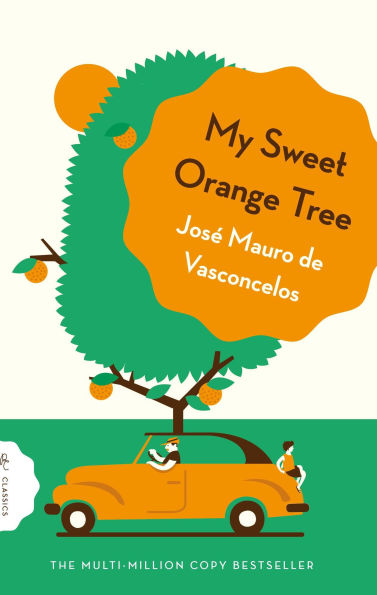
Zezé is precociously intelligent. He can read before entering first grade, possesses a rich imagination, and demonstrates keen powers of observation. However, this very cleverness often leads others to misunderstand him as “sly” or “mischievous.” His pranks – parodying songs, teasing neighbors, showing curiosity about the adult world – repeatedly result in corporal punishment. Within the family, he almost becomes an outlet for the frustrations of the adults.
The first major turning point in Zezé’s life occurs when the entire family must move to a smaller house because they can no longer afford their previous one. The new garden contains a few fruit trees. By custom, each child is allowed to choose one tree as their “own.” Zezé selects a small orange tree, one that attracts little attention because it is frail and has never borne fruit. He names it Minguinho.
From this point onward, a crucial narrative axis of My Sweet Orange Tree takes shape: the conversations between Zezé and the orange tree. In his imagination, Minguinho can speak, listen, and understand. When he is beaten, Zezé runs to the garden to confide in it. When he feels sad after being unjustly scolded, he whispers to the tree. Minguinho is not merely an imaginary friend; it is a psychological defense mechanism, a refuge from harsh reality.
Parallel to this inner world are Zezé’s early social encounters. He frequently causes trouble in the neighborhood: teasing vendors, playing pranks in front of wealthy houses, and curiously observing the shiny car of a Portuguese man named Manuel Valadares. It is from this encounter that an important relationship gradually develops.
At first, Zezé’s meeting with Mr. Valadares – whom he affectionately calls “Portuga” – takes place in conflict. Zezé once teased him and was reprimanded. Yet instead of maintaining distance, Portuga gradually recognizes the sensitivity and loneliness hidden behind the boy’s mischievous exterior. He begins to talk with Zezé, give him rides in his car, and listen to his naïve yet profound questions.
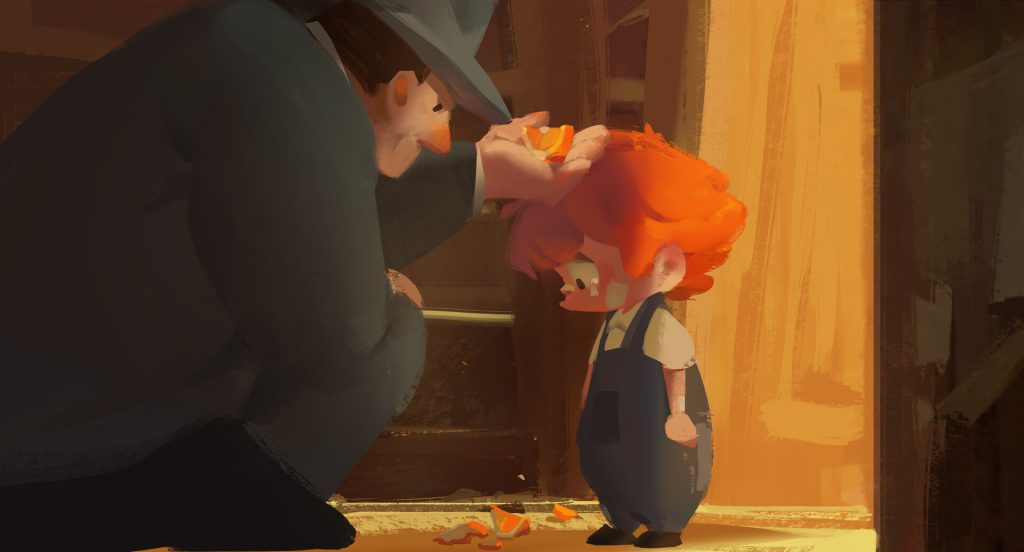
The relationship between Zezé and Portuga becomes the emotional core of My Sweet Orange Tree. For the first time in his life, Zezé is acknowledged by an adult as an individual with his own thoughts. Portuga does not shout or beat him; he engages in dialogue. He tells Zezé about his work and about the wider world beyond the impoverished neighborhood. He teaches him simple lessons about self-respect and proper conduct.
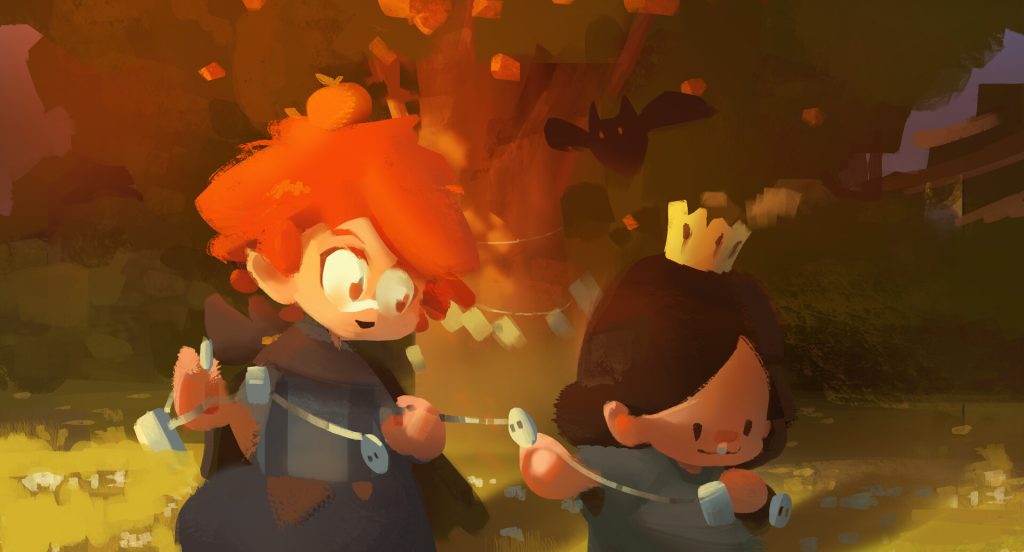
Meanwhile, Zezé’s family circumstances remain unstable. His father’s prolonged unemployment leads to emotional collapse. The beatings do not entirely disappear. However, Portuga’s presence changes Zezé’s psychological state. He no longer relies solely on the orange tree to escape reality; he begins to open himself to a genuine human relationship.
The tragic turning point occurs when Portuga dies in a train accident. His death comes suddenly, without farewell. For Zezé, this is the most profound emotional shock he has ever experienced. He loses the only person who understood and loved him with tenderness.
The subsequent chapters portray Zezé’s internal collapse. He falls into prolonged silence and no longer shows enthusiasm for mischief. His imaginative world with Minguinho also changes. The orange tree – once a refuge – is no longer sufficient to fill the void left by Portuga. Zezé begins to confront the finitude of life and to understand death as an irreversible reality.
This transformation marks an important stage of maturity. If previously Zezé suffered because of beatings or unjust scolding, now he suffers from genuine loss. It is an existential pain that forces him to look at the world with a different perspective.
At the end of the novel, Zezé’s family gradually becomes more stable as his father finds employment. However, the true focus lies in Zezé’s internal change. He is no longer a child who reacts impulsively. He begins to regulate his behavior and think before speaking. His innocence has not entirely vanished, but it has been reshaped by an awareness of responsibility and sorrow.
Thus, structurally speaking, My Sweet Orange Tree does not merely recount a series of events in the life of a five-year-old boy. The work is organized as a psychological journey:
– From unconscious mischief to self-awareness.
– From seeking attention to understanding the value of love.
– From an imaginary world to confronting the reality of loss.
The orange tree – the recurring symbol throughout the novel – represents not only childhood but also the process of self-healing. As Zezé grows, his relationship with the tree also changes. This suggests that maturity does not mean completely losing imagination, but rather repositioning it within a more realistic world.
For this reason, the plot of My Sweet Orange Tree, though simple on the surface, possesses considerable psychological depth. Each event is closely tied to an internal shift, making Zezé’s journey a microcosm of the process of growing up: painful, marked by loss, yet deeply meaningful.
3. Values, Role, and Distinctive Features of My Sweet Orange Tree
If considered only on the surface level, My Sweet Orange Tree may appear to be a children’s story about a poor childhood. However, when placed within literary and psychological frameworks, it becomes evident that this is a novel of considerable intellectual depth. The value of My Sweet Orange Tree does not lie in dramatic events, but in the way the author constructs a journey of maturation through suffering.
Humanistic Value – Love as the Foundation of Existence
The central ideological axis of My Sweet Orange Tree is a child’s need to be loved and understood. Zezé does not lack a family, nor does he lack a home, but he lacks attentive listening. The distinction between biological existence and emotional existence is clearly articulated in the novel.
Through Zezé’s character, the work raises a question: how does a child develop if he is not emotionally acknowledged? The beatings within the family are not portrayed as isolated acts of cruelty, but as consequences of poverty and frustration. The author does not exaggerate the conflict; instead, he shows domestic violence as a cycle generated by economic pressure and social helplessness.
In his relationship with Portuga, Zezé experiences for the first time a different form of love – love grounded in dialogue. It is precisely this dialogue that alters the boy’s psychological trajectory. This demonstrates the essential role of empathy in the formation of personality.
For this reason, the novel carries enduring humanistic value: it affirms that love is not a supplementary element, but the very foundation of spiritual life.
Psychological Depth – A Precise and Subtle Portrayal of a Child’s Inner World
One of the most remarkable features of My Sweet Orange Tree is its ability to recreate a child’s inner world with a high degree of authenticity. Zezé is not constructed as an idealized model of “pure childhood” in the conventional literary sense. He is at once innocent and selfish, affectionate and impulsive.
His conversations with the orange tree, Minguinho, most clearly reveal his psychological defense mechanism. When no adult is willing to listen, Zezé creates an imaginary companion to preserve his emotional balance. From the perspective of developmental psychology, this is a common response among children raised in emotionally insecure environments.
The author does not explain this through academic terminology; instead, through delicate narration, he demonstrates that imagination is not a cowardly escape, but a means of survival for a fragile soul.
Particularly noteworthy is the psychological progression after Portuga’s death, which is constructed at a measured pace that allows readers to perceive the internal “fracture.” Zezé is not merely sad; his emotional structure changes. From a talkative child, he becomes quiet. From impulsive reactions, he moves toward reflection. Maturity is not declared explicitly, but expressed through behavior and tone.
Artistic Symbolism – The Orange Tree as a Central Structure
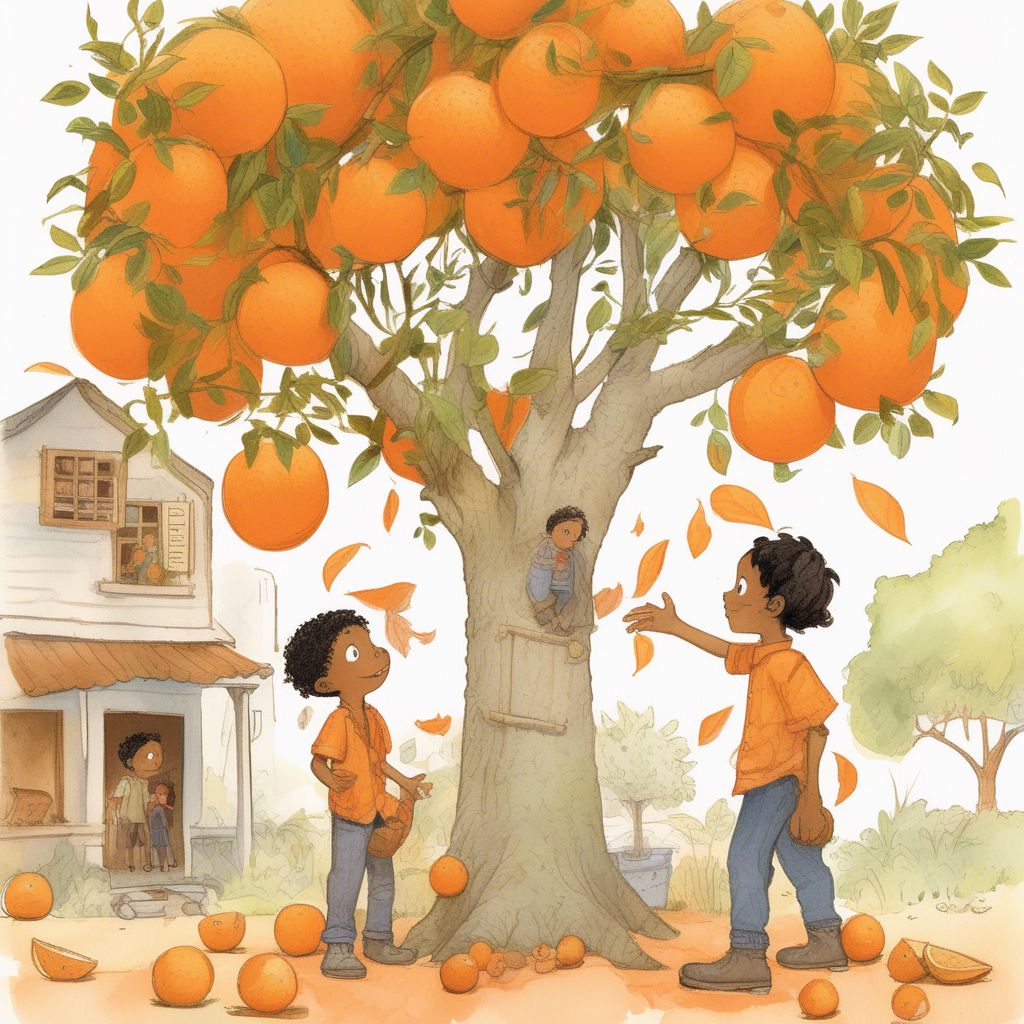
The image of the orange tree in My Sweet Orange Tree is not merely a domestic detail; it is a recurring symbol throughout the work.
In the early stages, the tree represents imagination – a parallel world where Zezé has control. When he is hurt, the tree becomes his refuge. When he is happy, the tree is his confidant. Thus, the orange tree functions as the character’s “safe space.”
However, when Portuga appears, the tree no longer holds exclusive significance. Zezé begins to orient himself toward the real world. After Portuga’s death, the tree reappears as a witness to his grief. This demonstrates that the symbol is not static; it evolves alongside the character’s psychological state.
It is precisely this fluid movement of symbolism that prevents the novel from becoming simplistic illustration. The orange tree does not merely symbolize childhood; it also represents the human capacity for self-healing.
Social Realism – A Portrait of the Brazilian Working Class
Beneath the family story lies a clearly defined social background. The father’s unemployment, economic instability, and the disparity between the impoverished neighborhood and those who own private cars all reflect the social context of mid-twentieth-century Brazil.
The novel does not employ direct political discourse, yet through concrete daily life, it reflects social inequality. Domestic violence is not separated from economic conditions; it is a consequence of the pressure to survive.
Notably, the author does not transform the father into a villain. He allows readers to perceive the despair of a man who has lost his job in a society that values the male breadwinner role. This approach creates multidimensionality and avoids oversimplifying conflict.
A Simple yet Effective Narrative Structure
My Sweet Orange Tree is told in a linear sequence, consistent with a child’s perspective. Yet within this simplicity lies a coherent structure:
– Introduction: presenting the family situation and Zezé’s personality.
– Development: building the imaginary world and the relationship with Portuga.
– Climax: Portuga’s sudden death.
– Conclusion: the process of internalization and maturation.
The climax does not lie in dramatic action, but in psychological upheaval. This indicates that the novel belongs to a literary tradition that emphasizes interior depth rather than external conflict.
The slow narrative pace, combined with dialogue and interior monologue, allows readers direct access to Zezé’s stream of thought. The narrative voice – half innocent, half contemplative – creates the distinctive tonal quality of the work.
Role in Children’s Literature and Coming-of-Age Literature
My Sweet Orange Tree is often classified as children’s literature, yet in reality, it transcends age boundaries. For children, the story can be read as the journey of a mischievous boy learning to grow up. For adults, it becomes a mirror reflecting how grown-ups treat children.
This dual-layered nature enables My Sweet Orange Tree to maintain lasting vitality. The novel is not confined to a single generation of readers. Each rereading at a different stage of life may yield new meanings.
In the modern context – when work pressure, technology, and the pace of life shorten family communication – the message of My Sweet Orange Tree retains its warning force: a lack of attentive listening can leave long-lasting psychological consequences.
Cultural Influence and Impact
Since its publication in 1968, My Sweet Orange Tree has been translated into numerous languages, continuously reprinted, and adapted into films. The novel has been included in educational curricula in many countries and has become one of the representative works about childhood in twentieth-century Latin American literature.
This widespread influence does not stem merely from market factors, but from the novel’s ability to touch universal human experiences: the memory of being misunderstood for the first time, of being loved properly for the first time, and of confronting death for the first time.
4. Reflections and Evaluation of My Sweet Orange Tree
Reading My Sweet Orange Tree, what lingers is not a sequence of events, but an emotional state that endures after the book is closed. The novel does not impress through dramatic intensity or violent climaxes; its weight lies in its quiet depth. It is a book that compels readers to slow down and confront fundamental questions about how people treat one another – especially children.
A Direct Look at Childhood Trauma
The most striking feature of My Sweet Orange Tree is its honesty. The novel does not idealize a poor family as a space always filled with warmth and affection. Here, poverty leads to tension, and tension leads to violence. The beatings Zezé endures are neither exaggerated for tragic effect nor minimized. They appear as part of daily life, and precisely because of that, they become more thought-provoking.
Notably, the author does not construct a clear-cut opposition between good and evil. Zezé’s parents are not portrayed as cruel villains, but as individuals driven into desperate circumstances. This perspective moves the story beyond the personal level and touches on social structures. Zezé’s trauma is not merely a family issue; it is a consequence of living conditions.
From the reader’s standpoint, this creates a particular experience: instead of judging, one is compelled to reflect. My Sweet Orange Tree does not force emotion, but allows readers to recognize the value of empathy on their own.
Zezé – A Rarely Complex Child Character
Zezé is the soul of the novel. He is not perfect, nor obedient according to conventional standards. He lies, misbehaves, and sometimes deliberately provokes adults. Yet these contradictions make him vividly real.
What leaves a strong impression is the coexistence of two layers of personality:
– On the surface: a “little devil” who frequently causes trouble.
– Beneath that surface: a sensitive, vulnerable soul longing for recognition.
The author does not engage in lengthy psychological explanations; instead, he allows actions and dialogue to reveal character. When Zezé speaks to the orange tree, when he reproaches himself for his “bad” thoughts, when he falls silent after Portuga’s death – all of these moments demonstrate a quiet process of maturation.
In terms of characterization, this is a major achievement of My Sweet Orange Tree. Zezé does not represent only one individual, but many children who have been misunderstood because they lacked the ability to articulate their emotions.
The Relationship with Portuga – The Emotional Peak of the Novel
If the orange tree symbolizes imagination, then Portuga symbolizes redemption in real life. The relationship between Zezé and Portuga is not loud or grandly declared, yet it is decisive.
Portuga does not change Zezé’s material circumstances. He does not resolve poverty. What he does is simply listen and engage in dialogue. Yet that seemingly “small” act creates a profound turning point in the boy’s life.
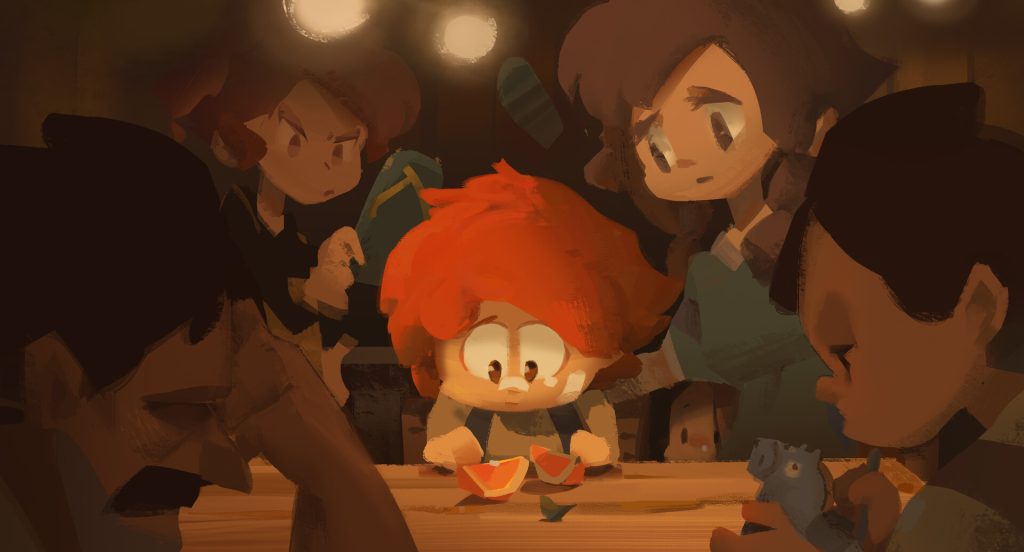
Portuga’s death is the climax not only in terms of plot, but also in emotional impact. This loss deprives Zezé of his only spiritual anchor. At that moment, the novel ceases to be merely a children’s story and becomes a narrative about the first rupture of the heart.
What is remarkable is that the author does not prolong melodrama. Grief is expressed through changes in behavior – silence, premature maturity. This approach deepens emotion rather than dramatizing it.
Contemporary Relevance and Enduring Value
Although written in 1968, My Sweet Orange Tree retains its relevance in the modern context. Society may change, but the issue of communication between adults and children remains significant.
In many families today, economic pressure and the rapid pace of life reduce the time spent with children. The novel poses a question that is not stated directly but is unmistakable: what long-term consequences might arise from a lack of attentive listening?
It is this universality that prevents the book from being confined by time or cultural boundaries. Readers from different countries can still recognize themselves in Zezé’s story.
Overall Evaluation
From a personal perspective, My Sweet Orange Tree is a work of remarkable endurance. It does not create immediate impact through shocking details, but gradually permeates the reader chapter by chapter. Its value lies in its ability to provoke reflection after the final page.
Artistically, the novel achieves a balance between simplicity and depth. The language is not ornate, yet it is rich in psychological nuance. The linear structure appears straightforward, yet each event serves a function within the character’s journey toward maturity.
Ideologically, My Sweet Orange Tree places love and understanding at the center of human development. It reveals a simple truth: a gentle word can reshape the memory of childhood, and that memory will accompany a person throughout life.
The greatest strength of the novel is not in making readers emotional, but in making them question themselves. After closing My Sweet Orange Tree, the question no longer concerns Zezé alone; it turns toward the reader: in daily life, how many tender emotions have been dismissed simply because they were not yet strong enough to defend themselves?
5. Memorable Quotations from My Sweet Orange Tree
One of the elements that gives My Sweet Orange Tree its lasting resonance is its haunting lines of dialogue and internal monologue. The language of the novel is not ornate or embellished in a flowery manner; on the contrary, it is precisely this simplicity that generates such powerful impact. Zezé’s words – whether spoken to the orange tree, to Portuga, or in self-reflection – are often brief, yet they carry deep layers of meaning about loneliness, love, and growth.
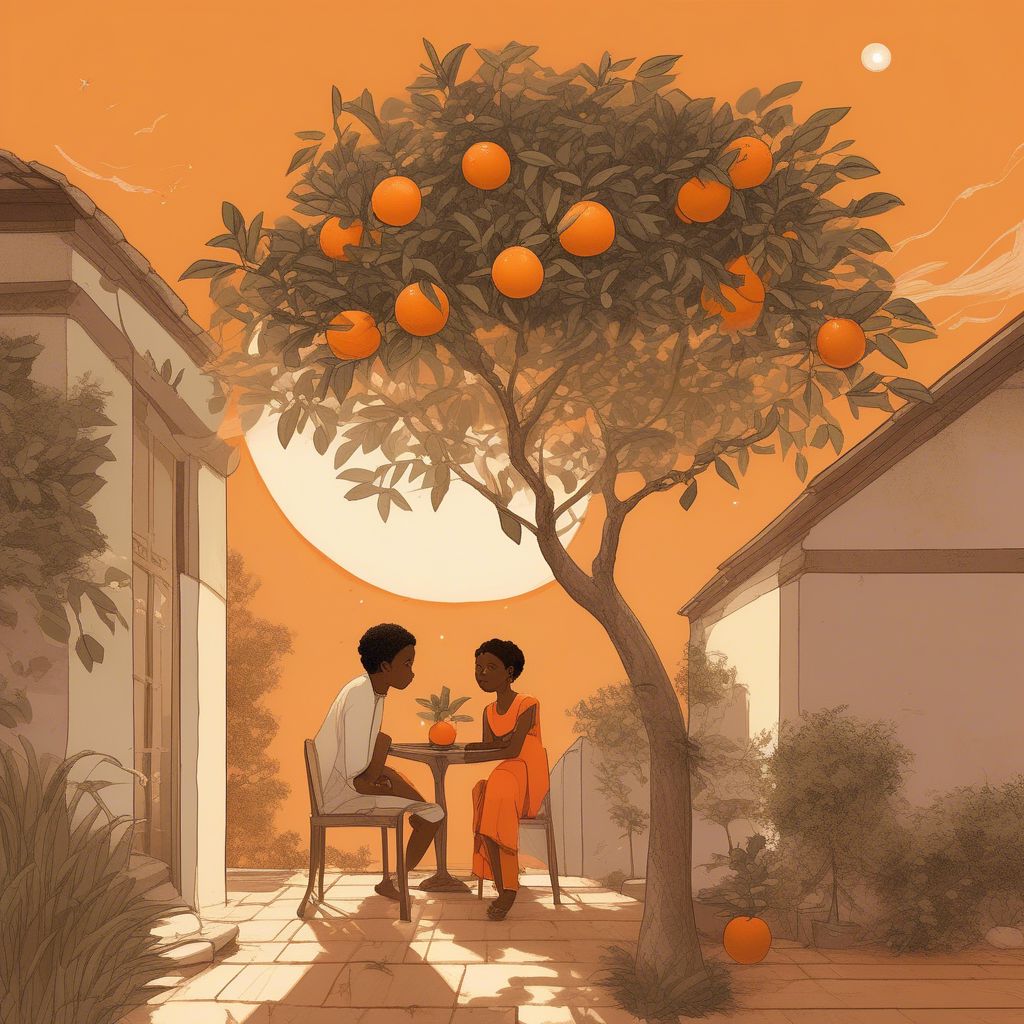
1. “I am not bad. I am just a child whom no one understands.”
→ This line can be seen as the tragic core of Zezé’s character. He does not deny his mistakes, but he is aware that he has never truly been listened to. Here, the novel raises a social issue: how repeated misunderstanding can define a child’s identity.
2. “Minguinho, you are my only friend.”
→ This confession to the orange tree reveals Zezé’s psychological defense mechanism. When he cannot find safety among adults, he constructs an imaginary world to preserve his emotional balance. The short sentence reflects a profound reality: loneliness does not belong only to adults.
3. “When people truly love, they do not hit.”
→ This is one of the lines that clearly expresses Zezé’s emerging moral awareness. From a child’s perspective, love and violence cannot coexist. The sentence is simple yet sharp, raising questions about how adults justify their actions.
4. “Portuga, why do people die?”
→ This question marks a psychological turning point in the novel. For the first time, Zezé confronts death as an irreversible reality. Beneath the innocent inquiry lies existential confusion – an early philosophical reflection on the finitude of human life.
5. “I have grown up.”
→ This statement appears after the loss of Portuga. It does not carry pride, but acceptance. Here, “growing up” does not mean biological maturity, but maturation through loss.
6. “From now on, my heart will wear mourning.”
→ This metaphor reveals an emotional depth that surpasses the character’s age. Zezé is not merely sad; he understands that this sorrow will endure as a lasting inner mark.
7. “Everyone must suffer once in order to grow.”
→ This idea encompasses the character’s entire journey. The novel does not avoid pain, but regards it as an essential component of growth. The sentence is general in scope, almost serving as the book’s implicit declaration.
8. “If a person has a heart, then they must know how to use it.”
→ This is one of the core humanistic messages of My Sweet Orange Tree. The heart is not only a symbol of emotion, but also of moral responsibility. This line broadens the scope of the novel from a personal story to a reflection on how people treat one another.
6. Conclusion – The Enduring Value of My Sweet Orange Tree and the Reflections It Leaves Behind
Bringing Zezé’s journey to a close, My Sweet Orange Tree does not leave readers with a dramatic ending, but with a quiet state of mind. It is the silence of a childhood that has just passed through an irreversible turning point. Zezé is no longer the five-year-old boy who merely misbehaved and reacted impulsively; he has tasted loss, has become aware of the finitude of human life, and has understood that love is not something self-evident.
The enduring value of My Sweet Orange Tree lies in the fact that it does not simply tell a touching story about a poor childhood. It constructs a model of maturation through trauma. In that model, imagination – symbolized by the orange tree – serves as the initial defense mechanism; friendship with Portuga is the spiritual anchor; and loss is the force that compels the character to enter a new state of awareness. That journey reflects a universal principle: human beings do not mature through absolute smoothness, but through confronting and internalizing pain.
From a literary perspective, My Sweet Orange Tree demonstrates that a work about children does not require complex structures or relentless conflict to achieve depth. Simplicity in narration, when accompanied by psychological authenticity, can create lasting power. The figure of Zezé therefore is not merely a fictional character, but becomes a symbol of children who have been misunderstood and who have longed to be heard.
From a social perspective, the novel raises an issue that is never outdated: the role of empathy within the family. Poverty may be an objective circumstance, but the way adults treat children is a moral choice. A timely word of encouragement, a patient conversation, can transform an entire childhood memory. Conversely, repeated indifference or anger can leave marks that endure into adulthood.
From a personal point of view, My Sweet Orange Tree is not a book to be read for immediate entertainment. It is a work that must be read slowly, even reread. Each return to Zezé at a different age allows readers to discover new layers of meaning. In youth, one may see oneself in the boy’s loneliness. In adulthood, one may place oneself in the position of the adults around Zezé and question one’s own behavior.
Ultimately, My Sweet Orange Tree reminds us of something seemingly obvious yet often forgotten: children need not only physical care, but emotional recognition. Childhood trauma does not simply disappear; it either becomes a burden or a foundation for growth – depending on how a person is accompanied.
When closing the final page of My Sweet Orange Tree, Zezé’s story may have ended, but the question the novel leaves behind remains open: in today’s modern world of pressure and haste, does every child truly have an “orange tree” to take refuge in, and more importantly, a “Portuga” patient enough to listen?