In the current of twentieth-century literature, as crime fiction gradually became an important branch of American popular writing, The Godfather emerged as a distinctive milestone. The work of Mario Puzo not only reconstructs the Italian–American mafia world with its harsh unwritten codes, but also builds a complex narrative structure centered on power, family, and morality in modern society. Upon its publication in 1969, The Godfather quickly moved beyond the scope of a commercial novel to become a global publishing phenomenon, laying the foundation for “The Godfather” as an enduring cultural symbol.
Notably, The Godfather does not approach the mafia as a sensational subject, but as a parallel system of power existing within mainstream society. In that realm, the law is not the sole standard; honor, loyalty, and blood ties become the pillars governing every life-and-death decision. It is precisely this construction of the fictional world that enables The Godfather to transcend the framework of crime fiction and move closer to a literary inquiry into the nature of power and the ways human beings operate within structures of organized violence.
More than half a century later, the appeal of The Godfather has not diminished. The novel continues to be reprinted, studied, and adapted, becoming one of the most influential works in the history of popular literature. Its enduring significance lies not only in its dramatic plot, but in its capacity to raise fundamental questions: Is family a source of support or a binding constraint? Is power a means of protection or an instrument of destruction? And to what extent will a person transform when forced to choose between kinship and survival?
1. Overview of the Author and the Work The Godfather
The Life of Mario Puzo – The Foundation of the Corleone World
Mario Puzo was born on October 15, 1920, in New York, into an Italian immigrant family from the Campania region. His father left the family early, leaving his mother – a strong and resilient woman – to shoulder the entire responsibility of raising the children. Puzo grew up in Hell’s Kitchen, Manhattan – an area densely populated by working-class immigrants facing economic hardship, where informal power structures existed outside the law.
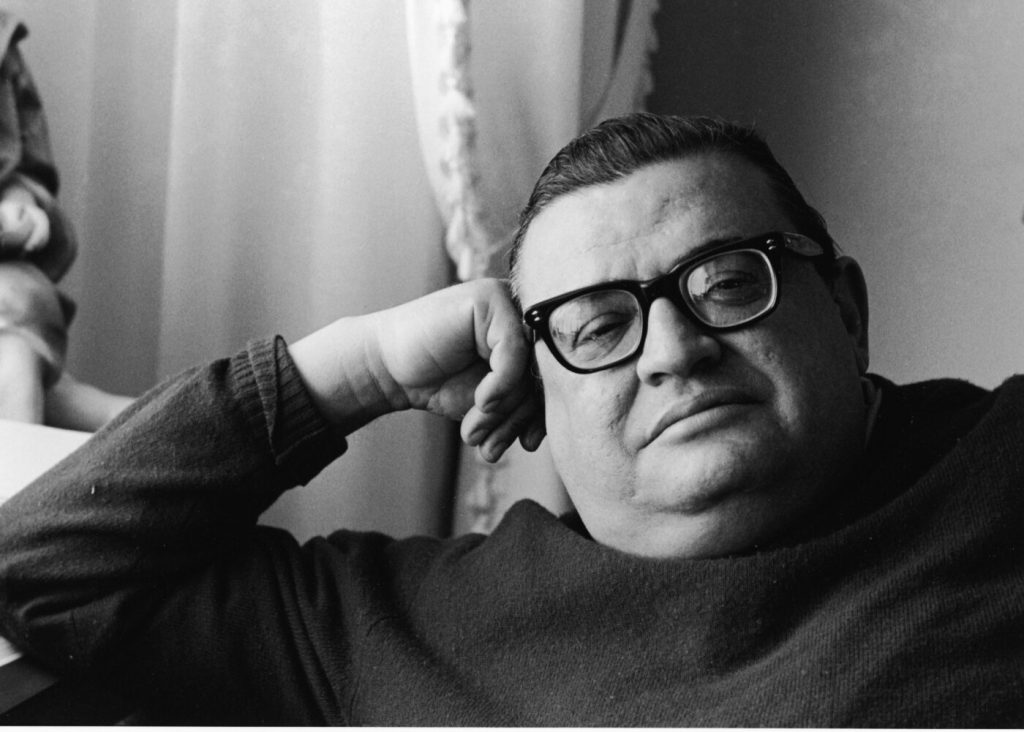
His childhood in an environment marked by poverty yet deeply rooted in traditional Italian family values left a lasting imprint on his artistic consciousness. The image of a steadfast mother who upheld honor and blood ties later became the foundation for his creation of Don Vito Corleone – a family patriarch who places the interests of the “family” above all other social principles.
During World War II, Puzo served in the United States Army Air Forces. After the war, he studied at the City College of New York and later at the New School for Social Research. His academic training and social experiences exposed him to American literary realism and fostered his interest in communities situated on the margins of mainstream society.
Literary Career Before and After The Godfather
Before achieving success with The Godfather, Mario Puzo published two novels:
- The Dark Arena (1955) – set in postwar Germany.
- The Fortunate Pilgrim (1965) – depicting the life of an Italian immigrant family in New York, critically praised for its psychological depth and realism.
However, neither work brought him financial success. Puzo later admitted that he had fallen into significant debt and needed to write a commercially viable book. It was in this context that the idea of a novel centered on the Italian–American mafia emerged.
It is important to emphasize that Puzo was not a member of any mafia organization. His research was conducted primarily through newspapers, investigative documents, and social observation. Nevertheless, through his narrative structuring skills and understanding of immigrant psychology, he constructed a fictional world of remarkable credibility.
Following the success of The Godfather, Puzo continued exploring mafia themes in:
- The Sicilian (1984) – expanding the Corleone world through the character Salvatore Giuliano.
- Omertà (2000) – published posthumously.
In addition to writing novels, Puzo co-wrote the screenplay for the film adaptation of The Godfather with director Francis Ford Coppola. The film won the Academy Award for Best Adapted Screenplay, affirming Puzo’s stature not only in literature but also in cinema.
The Emergence of The Godfather – From Commercial Novel to Cultural Icon
The Godfather was published in 1969 by G. P. Putnam’s Sons. Upon release, it quickly entered The New York Times bestseller list and remained there for consecutive weeks. The novel sold millions of copies within its first few years and was translated into numerous languages worldwide.
The American social context of the late 1960s – a period marked by political turbulence, a crisis of confidence in institutions, and the rise of mass culture – contributed to the widespread reception of The Godfather. Readers were drawn not only to its criminal elements, but also to its portrayal of a power system operating parallel to the state.
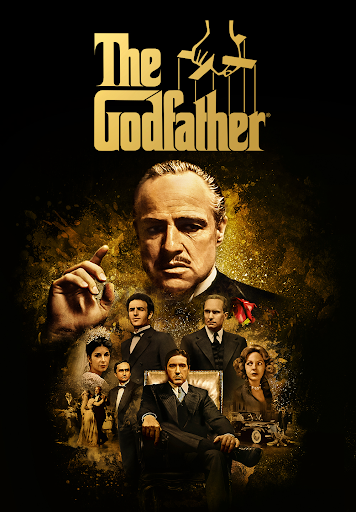
In 1972, the novel was adapted into the film The Godfather, starring Marlon Brando as Don Vito Corleone and Al Pacino as Michael Corleone. The film’s resounding success not only reinforced the book’s reputation but also transformed “The Godfather” into a cross-generational cultural symbol.
The Position of The Godfather in Modern Crime Literature
Before The Godfather, American crime fiction often focused on investigation, detection, or sensationalized portrayals of gangsters. Mario Puzo shifted the emphasis from criminal acts to structures of power and psychological motivation.
The distinctiveness of The Godfather lies in the following:
- The mafia is portrayed not merely as a criminal organization, but as a familial–political institution.
- Central characters are not reduced to purely good or evil archetypes.
- Violence is interpreted as an instrument within a system of survival.
As a result, The Godfather became one of the most influential novels in crime fiction and in twentieth-century popular culture studies. The work not only shaped the global imagination of the “Godfather,” but also introduced a new perspective: viewing the underworld as a social structure governed by its own internal laws.
It is precisely the combination of commercial appeal, anthropological depth, and the capacity for narrative world-building that enabled The Godfather to transcend the boundaries of a bestselling novel and become a cultural phenomenon of enduring vitality.
2. Summary of the Plot of The Godfather – A Chronicle of Power in the Corleone Family
If The Godfather is read as a chronicle, it is a chronicle of the transfer of power – from a “don” of the first immigrant generation to an heir who has come of age within modern American society. The plot unfolds through multiple interwoven narrative lines, yet its central axis remains the journey of the Corleone family amid cycles of violence and the restructuring of power.
Connie’s Wedding – The Gateway into the Underworld
The novel opens with the wedding of Connie Corleone, the youngest daughter of Don Vito Corleone. According to Sicilian tradition, on his daughter’s wedding day, a father cannot refuse any request made of him. Through this device, Mario Puzo skillfully introduces the power structure of the Corleone family.
In a dark and discreet office, Don Vito receives those who come to seek justice – from Amerigo Bonasera, who wants revenge for his assaulted daughter, to the singer Johnny Fontane, who needs assistance with his film career. From the very first pages, the reader confronts a paradox: although the American legal system exists, these individuals turn to Don Corleone as an alternative source of justice.
Alongside the authoritative image of Don Vito appear his three sons:
Santino “Sonny” Corleone – impulsive and instinct-driven.
Fredo Corleone – weak and indecisive.
Michael Corleone – a World War II veteran, detached from the “family business.”
Michael is introduced together with Kay Adams, his American girlfriend of non-Italian origin. At this stage, he stands outside the mafia world, representing the possibility of integration into mainstream society.
The Drug Proposal and the Assassination Plot
The central crisis begins when Virgil Sollozzo – a drug trafficker backed by the Tattaglia family – proposes that Don Vito invest in and provide political protection for heroin distribution. Don Vito refuses, believing that narcotics would damage the political relationships he has painstakingly built with judges and police officials.
This decision leads to an assassination attempt. Don Vito is shot multiple times in the street but survives. The Corleone family plunges into crisis. Sonny temporarily assumes leadership and responds with direct violence, igniting a war among the New York mafia families.
Parallel to the war runs a calculated maneuver: Sollozzo kidnaps Tom Hagen – the family’s legal adviser (consigliere) – in an attempt to force the Corleones into negotiation.
Michael Enters the Game
The most decisive turning point in The Godfather is Michael Corleone’s choice. Upon learning of the attempt on his father’s life and of Police Captain McCluskey’s collusion with Sollozzo, Michael proposes a bold plan: to personally kill both Sollozzo and McCluskey during a negotiation meeting.
In a restaurant in the Bronx, Michael carries out the double assassination. This act is not merely revenge; it marks a profound transformation of character. From an outsider, Michael formally steps into the realm of power and violence.
Immediately afterward, he flees to Sicily to avoid prosecution and retaliation.
Exile in Sicily – A Phase of Transformation
In Sicily, Michael lives under the protection of family allies. He experiences a temporary period of calm and marries a local woman, Apollonia. However, the marriage ends tragically when Apollonia is killed in a car bombing intended for Michael.
Meanwhile in America, Sonny continues to lead the family through open confrontation with rival clans. His impulsiveness becomes a fatal weakness. He is ambushed and brutally murdered at a toll booth – one of the novel’s most harrowing scenes of violence.
Sonny’s death shifts the balance of power. After recovering, Don Vito is compelled to negotiate peace with the other families to end the war and ensure Michael’s safety upon his return.
Michael’s Return and the Process of Restructuring
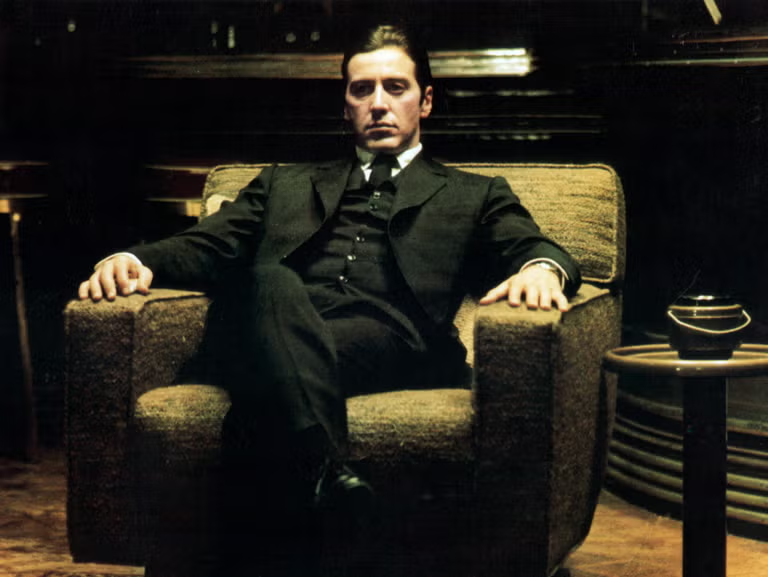
After his period of exile, Michael returns to the United States. He marries Kay Adams and gradually takes over the family business under Don Vito’s guidance. Unlike Sonny, Michael acts with caution and strategic calculation. He plans to relocate the family’s operations to Las Vegas in order to legitimize income from casino enterprises.
Don Vito dies of a heart attack while playing with his grandson in the garden. His death marks the end of an old-style mafia generation – one in which power was grounded in personal networks and respect for tradition.
The Final Purge – The Birth of a New Godfather
The climax of The Godfather lies in the meticulously orchestrated purge planned by Michael. On a single day – coinciding with the baptism of Connie’s child – Michael orders the assassination of all rival family heads, including Barzini and Tattaglia, while also eliminating internal traitors such as Carlo Rizzi.
Puzo constructs a parallel structure between the religious ritual and the acts of violence to underscore a moral paradox: a man publicly renounces Satan in church while simultaneously directing a network of killings in the secular world.
The novel closes with the moment Kay realizes the truth about her husband. As the office door shuts in her face – and the caporegimes bow their heads, addressing Michael as “Don Corleone” – a new cycle of power formally begins.huộc hạ cúi đầu gọi Michael là “Don Corleone” – một chu kỳ quyền lực mới chính thức bắt đầu.
3. The Value and Intellectual Depth of The Godfather – When Crime Fiction Becomes an Analysis of Power
On the surface, The Godfather is the story of an Italian mafia family in America. However, if one stops at the “crime” layer, the work is reduced in a regrettable way. The true value of The Godfather lies in the fact that Mario Puzo constructs a complete model of power – where family, honor, rules, and violence form a system operating according to its own principles. It is not merely an underworld, but a social structure existing parallel to mainstream society.
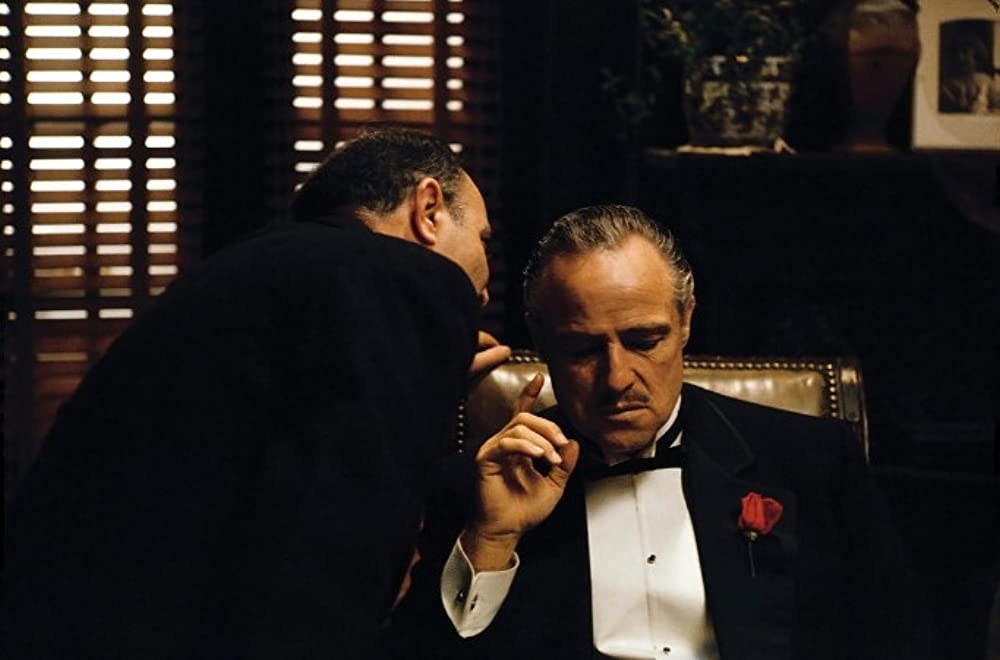
What is noteworthy is that Puzo does not depict the mafia as figures living outside order, but as individuals who construct their own order. Don Vito Corleone does not act impulsively. He refuses to engage in the drug trade not out of pure morality, but because he understands that it would destabilize the political relationships that guarantee the family’s long-term survival. In this perspective, power is not the display of violence, but the ability to control relationships, maintain balance, and anticipate consequences.
At this point, The Godfather transcends the conventional framework of crime fiction. Puzo is not concerned with the question “who is evil,” but rather with how power is organized and sustained. The Corleone family is constructed as an institution: it has a hierarchy, a system of reward and punishment, rules of loyalty, and long-term strategy. When placed alongside American society outside, readers perceive a paradox: two systems coexist, each operating under its own principles, and at times intersecting with one another.
Another dimension of depth in The Godfather lies in the tragedy of personal transformation. Michael Corleone’s journey is not merely a story of succession, but a process of restructuring personal identity. In the opening sections, Michael represents the possibility of breaking away from mafia tradition – a war veteran who has chosen his own path. Yet when the family system is threatened, he is compelled to step into the center of power. From that moment onward, his decisions become increasingly strategic rather than emotional.
Michael’s tragedy does not lie in failure, but in absolute success. He consolidates the Corleone empire more firmly than ever before, yet simultaneously loses the moral distance that once distinguished him. Here, power does not destroy the character through collapse, but through gradual transformation to the point of no return. It is a modern form of tragedy – in which individuals are not crushed by fate, but choose their path and accept its consequences.
Artistically, Puzo constructs a world with considerable realistic density. He does not limit himself to narrating the story of the Corleone family, but expands into secondary narrative lines, thereby reflecting the connections between the mafia and politics, the judiciary, and the entertainment industry. The underworld in The Godfather is not detached from American society; it exists as an unofficial part of it. This creates the impression that the novel does not merely tell a fictional story, but simulates a structure of power that could exist in any society.
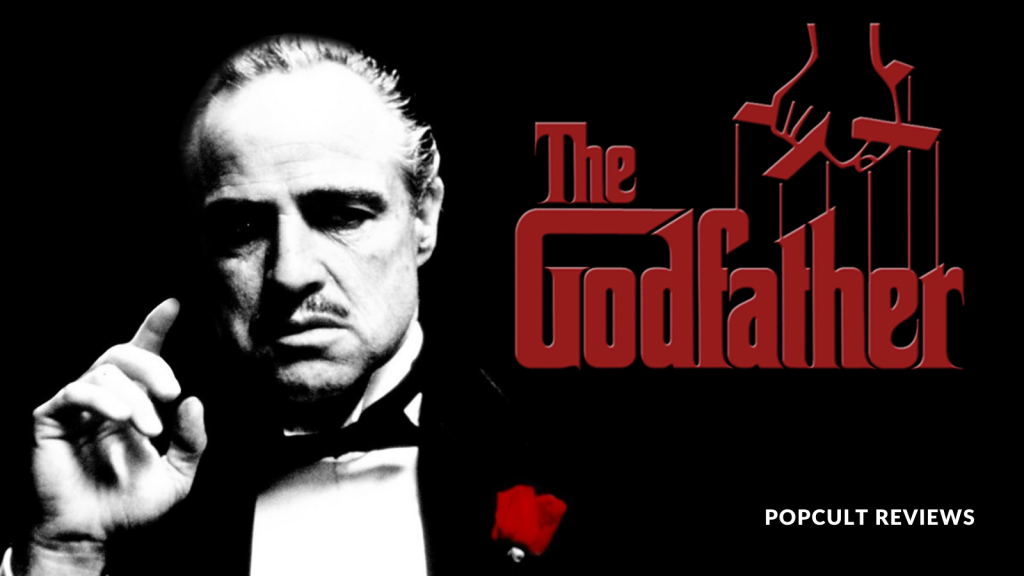
The enduring value of The Godfather also lies in the moral ambiguity it sustains throughout. Don Vito may order killings, yet he also protects his family and keeps his promises. Michael may coldly eliminate rivals, yet he does so with the argument that it is the only way to safeguard his loved ones. Puzo offers no final judgment. Instead, he places readers in the position of confronting a fundamental question: can the goal of protecting one’s family justify organized violence?
For this reason, The Godfather is not confined to the context of the American mafia in the twentieth century. The work can be read as an allegory of all systems of power – from politics and economics to traditional family structures. When power becomes the central organizing principle of life, morality ceases to be an absolute value and instead becomes a variable dependent on interest and survival.
At the intersection of compelling narrative and sociological depth, The Godfather demonstrates that popular fiction can attain complex intellectual dimensions. Mario Puzo transformed the story of a mafia family into an analysis of power – and it is precisely this achievement that has allowed the work to maintain its enduring vitality in cultural and academic discourse to this day.
4. Reflections and Evaluation of The Godfather – The Tragedy of Choice and the Price of Power
When reading The Godfather, what lingers is not merely the purges or the tense negotiations between rival families. What remains more deeply is the sense of a world operating according to its own logic – where every action has an internal rationale, and every choice demands a price. The Godfather is compelling not because it displays violence, but because it enables readers to understand the mechanism of survival underlying that violence.
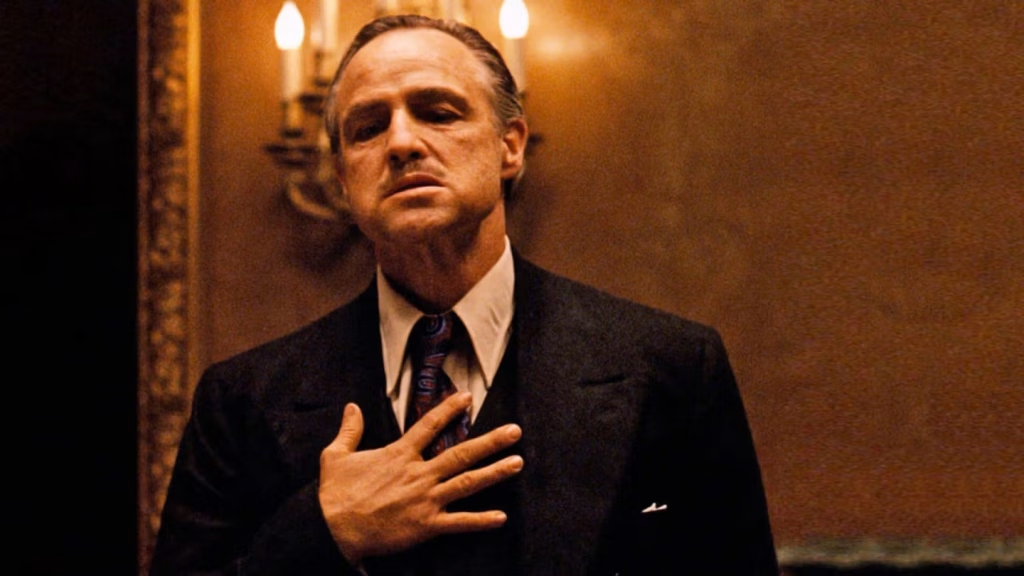
On a personal level of reception, the most striking aspect of the work is the way Mario Puzo constructs the figure of Don Vito Corleone. He is not portrayed as a purely cruel man, but as a seasoned manager of power. Don Vito understands that strength does not lie in making others fear blindly, but in making them dependent. He builds relationships based on exchanges of benefit and loyalty, forming a network of patronage that is both flexible and durable. His composure and emotional control create a classical form of authority – power grounded in personal prestige and tradition.
Yet the most compelling and unsettling dimension lies in Michael Corleone. Michael’s journey is not loud or dramatic, but each of his shifts carries substantial weight. At the beginning, he appears as an individual capable of separating himself from the mafia world. He represents an alternative path – integration into mainstream American society and a life independent of the family. However, when crisis strikes, he chooses to enter that system of power, not out of ambition, but out of duty and the need to protect his family.
It is here that The Godfather constructs a distinctive form of tragedy. Michael is not entirely coerced; he makes deliberate decisions. Yet each decision gradually distances him from his original identity. When he kills Sollozzo and McCluskey, it is an act of defense. When he orchestrates the final purge, it is a strategy to secure long-term stability. Step by step, rational actions evolve into a complete structure of violence. This transformation unfolds quietly, without an explosive dramatic climax, but precisely that quiet progression makes it profoundly thought-provoking.
From an evaluative perspective, The Godfather succeeds because it does not impose a simple moral judgment. Puzo does not depict the underworld as an absolutely dark space. He shows that within it exist values such as loyalty, honor, and the protection of family – values also upheld by mainstream society. The difference lies only in the methods of execution. This creates a moral gray zone in which readers are compelled to define their own stance.
Another element that deepens the reading experience is Puzo’s handling of narrative rhythm. The novel does not rely on the fast pace of an action thriller. He devotes substantial space to dialogue, negotiation, and internal reflection. As a result, power in The Godfather does not appear as a sequence of isolated violent acts, but as a continuous process of accumulation and maintenance. Readers witness not only outcomes, but also the logic that leads to them.
From a personal viewpoint, The Godfather leaves an impression of the isolation inherent in power. The deeper Michael moves into the center of the system, the narrower his private space becomes. The final scene – when Kay stands outside the closed door – marks not only the confirmation of a new Don’s authority, but also a symbol of separation. Power is consolidated, yet the distance between the individual and emotional life is more sharply defined than ever.
Overall, The Godfather is a rare novel that reconciles two elements: popular appeal and intellectual depth. It demonstrates that a story about the mafia can become a discourse on family, choice, and the price of power. The strength of the work does not lie in shock value, but in its ability to prompt readers to question the structures of power within their own reality.
For that reason, The Godfather is not merely a book about the rise of an empire. It is a text that compels reflection on how individuals adapt to systems, on the boundary between duty and ambition, and on the moment when success itself becomes the origin of tragedy.
5. Memorable Quotations in The Godfather – When Language Condenses into a Philosophy of Power
One of the elements that has allowed The Godfather to sustain its enduring vitality in cultural life lies not only in its plot or character construction, but also in its lines of dialogue and passages of high generalization. Mario Puzo possesses the ability to condense an entire system of thought about power, family, and survival into brief yet weighty statements. The quotations below are famous not only because they have been repeatedly echoed in cinema and popular culture, but also because they directly reflect the operating philosophy of the Corleone world.
1. “I’m gonna make him an offer he can’t refuse.”
This is the most emblematic line associated with the figure of Don Vito Corleone. On the surface, it is a threat. At a deeper level, however, it expresses Don’s philosophy of power: there is no need to display overt violence, only to construct a set of choices that compels the other party to accept.
What is noteworthy is that “offer” here is not merely a proposal, but a subtle mechanism of coercion. Power in The Godfather does not operate through emotion, but through the control of circumstances.
2. “A man who doesn’t spend time with his family can never be a real man.”
This statement affirms that family stands at the center of the Corleone value system. Within Don Vito’s frame of reference, manhood is measured not by wealth or status, but by attachment and responsibility to one’s family.
What is thought-provoking is that this very value becomes the driving force behind many acts of violence. Family serves both as a moral foundation and as a justification for harsh actions. Puzo does not idealize the family; he shows that it can be the basis of power and at the same time its greatest constraint.
3. “Keep your friends close, but your enemies closer.”
Often associated with Michael Corleone, this line clearly reflects the generational shift in the approach to power. If Don Vito relies heavily on networks and balance, Michael tends toward strategic control.
Keeping enemies close is not an expression of tolerance, but a method of risk management. In the world of The Godfather, understanding one’s adversaries is more important than eliminating them immediately. This represents a modern mindset of power – cold and calculated.
4. “Great men are not born great, they grow great.”
This statement directly reflects Michael’s journey. He was not born to become Don Corleone, nor did he initially seek that position. Yet through a chain of events and decisions, he “grows” within the very power structure he once stood outside.
It is important to note that this “growth” does not carry a purely positive moral meaning. It signifies adaptation to a structure of violence, where leadership ability simultaneously entails the capacity to make life-and-death decisions.
5. “Revenge is a dish that tastes best when served cold.”
The philosophy of revenge in The Godfather is not impulsive. Violence is executed only after careful consideration of timing and consequences. This line expresses strategic patience – a key factor enabling the Corleone family to survive multiple upheavals.
Here, Puzo does not advocate revenge; he analyzes it as a political instrument. Coldness in action signifies control rather than loss of control.
6. “Never hate your enemies. It affects your judgment.”
This line further reinforces a central principle: power requires absolute clarity of mind. Hatred is an emotion that can distort strategic decision-making. In the Corleone world, personal feelings must yield to the interests of the family.
At the same time, the statement reveals a paradox: those who administer a system of violence must exercise stricter emotional control than anyone else.
7. “Behind every great fortune there is a crime.”
This remark broadens the scope of reflection beyond the mafia world. It implies that the accumulation of power and wealth in modern society may not be as pure as it appears on the surface.
Although spoken within the context of the underworld, this line resonates beyond the novel, inviting a critical perspective on the structures of power and capital in society.
6. The Enduring Value of The Godfather and the Unresolved Question of Power
Bringing the journey of the Corleone family to a close, The Godfather does not end with a simple victory, nor does it conclude with a tragic collapse. The novel settles into a new state of power equilibrium – where Michael Corleone officially becomes Don, and the family machine continues to operate more smoothly than ever. Yet it is precisely this “stability” that creates a lasting resonance for reflection: when power is consolidated absolutely, how much of oneself remains?
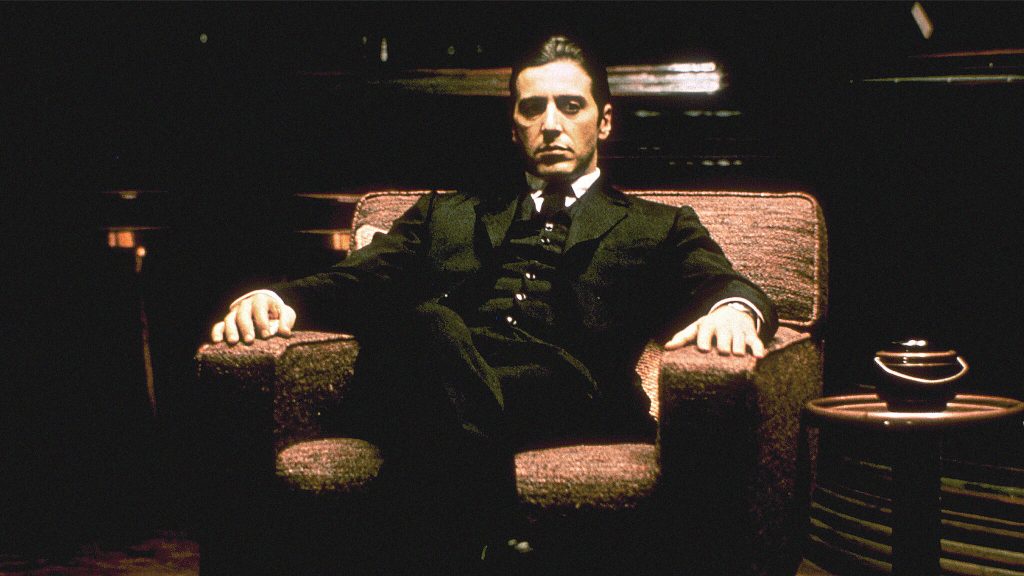
The enduring value of The Godfather lies not only in its construction of a compelling narrative, but in its ability to transform the mafia world into a microcosm of all power structures. The Corleone family may be a criminal organization within the context of the novel, but the way they operate – building alliances, controlling information, maintaining loyalty, eliminating betrayal – are mechanisms that can be found in many different institutions in real life.
Mario Puzo does not romanticize the underworld, but neither does he reduce it to absolute darkness. He places the reader in a moral gray zone, where concepts such as “justice,” “responsibility,” and “loyalty” are redefined according to the interests of a particular system. For that reason, The Godfather is not merely a novel about the mafia; it is a text that reexamines the moral foundations of power.
On the level of character, Don Vito represents a generation of authority grounded in personal prestige and tradition, while Michael represents a modern form of power – cold, strategic, and efficient. This transition reflects a shift from a classical patriarchal model to a rationalized model of governance. If Don Vito governs through networks of relationships and respect, Michael governs through structure and calculation. Two different forms of power, yet united by the same principle: protecting the family at all costs.
From an overall perspective, The Godfather succeeds because it does not impose a predetermined moral conclusion. There is no explicit declaration of condemnation or praise. The story simply reveals the consequences of choices. Michael preserves the empire, but the door closing in front of Kay becomes a symbol of the separation between power and personal life. That silence carries more weight than any direct commentary.
After more than half a century, The Godfather continues to be read and analyzed because it addresses a question that never grows old: the nature of power and its price. In any society, power exists in many forms. The question the novel leaves behind is not only for the world of the mafia, but for all human organizational structures:
Is it possible to maintain power without sacrificing part of one’s humanity? And when family, duty, or collective interest is placed above all else, where does the boundary between protection and destruction begin?
It is precisely these open-ended questions that prevent The Godfather from closing with its final page. It continues to exist as a dialogic text with its readers – about choice, about loyalty, and about the limits human beings are willing to cross in order to defend what they believe to be just.