In the history of twentieth-century literature, particularly within the sphere of socialist realist writing, there are works that not only reflect reality but also actively participate in constructing a system of spiritual values for society. How the Steel Was Tempered by Nikolai Ostrovsky is one such representative text. Published at a time when the Soviet Union was shaping its political and ideological identity after the October Revolution and the Civil War, the novel built the image of the “new man” forged through hardship, war, and collective labor.
More than merely the story of an individual’s maturation, How the Steel Was Tempered functions as a discourse on the ideal of living, on the relationship between the individual and the collective, and between personal aspiration and historical responsibility. The figure of Pavel Korchagin – the central character of the work – is constructed as a process of tempering: from a poor boy subjected to injustice, to a Red Army soldier, and finally to a man deprived of physical mobility yet unwavering in his will to contribute.
Nearly a century after its publication, How the Steel Was Tempered continues to be remembered as a literary symbol of steadfast spirit and committed idealism. The work holds not only documentary value regarding a distinctive historical period of the Soviet Union, but also raises universal questions about the meaning of existence and the way human beings confront adversity.
1. An Overview of the Author and the Genesis of How the Steel Was Tempered
The Author: Nikolai Ostrovsky
Nikolai Ostrovsky was born on September 29, 1904, in the village of Vilia, Volyn region (then part of the Russian Empire, now in Ukraine), into a poor working-class family. His father had been a soldier, while his mother worked as a housekeeper and wage laborer. Ostrovsky’s childhood was marked by material deprivation, interrupted schooling, and the deep social stratification of the final years of the Tsarist regime.
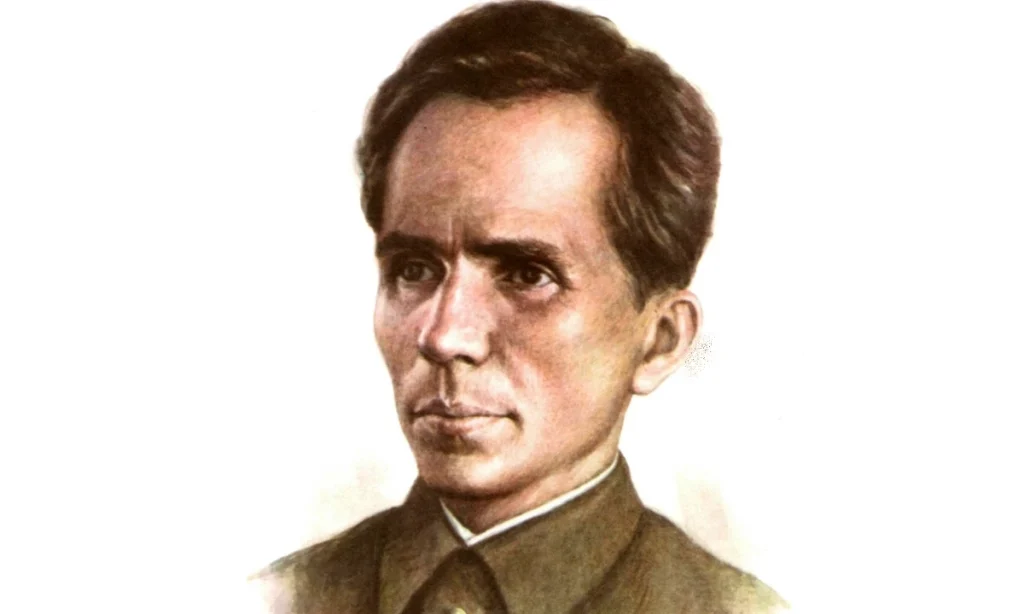
From an early age, he had to work to help support his family – he was employed as a kitchen assistant, a railway worker, and an electrician. This harsh labor environment allowed him direct contact with the working class and contributed to the early formation of his political consciousness. After the October Revolution of 1917, the intense social upheaval drew Ostrovsky into revolutionary activities.
During the Russian Civil War (1918–1921), he joined the Red Army and took part in combat. This period profoundly shaped his worldview and later literary inspiration. However, the war and excessive labor severely damaged his health. He developed acute rheumatism, which later progressed into ankylosing spondylitis. From the mid-1920s onward, he gradually lost mobility; by the end of his life, he was almost completely paralyzed and blind.
Notably, under such harsh conditions of illness, Ostrovsky did not abandon intellectual activity. He studied political theory independently, had books read to him, and began writing. His completion of How the Steel Was Tempered while nearly entirely paralyzed became a vivid testament to personal willpower – at the same time creating a profound parallel between the author and the character Pavel Korchagin.
He died on December 22, 1936, in Moscow at the age of only thirty-two. Despite his short life, Ostrovsky’s name was quickly established in Soviet literature.
Literary Career
Nikolai Ostrovsky’s literary career was not extensive in terms of the number of works, yet it exerted a particularly far-reaching influence. He is regarded as one of the representative writers of socialist realism – the official literary doctrine of the Soviet Union from the early 1930s onward.
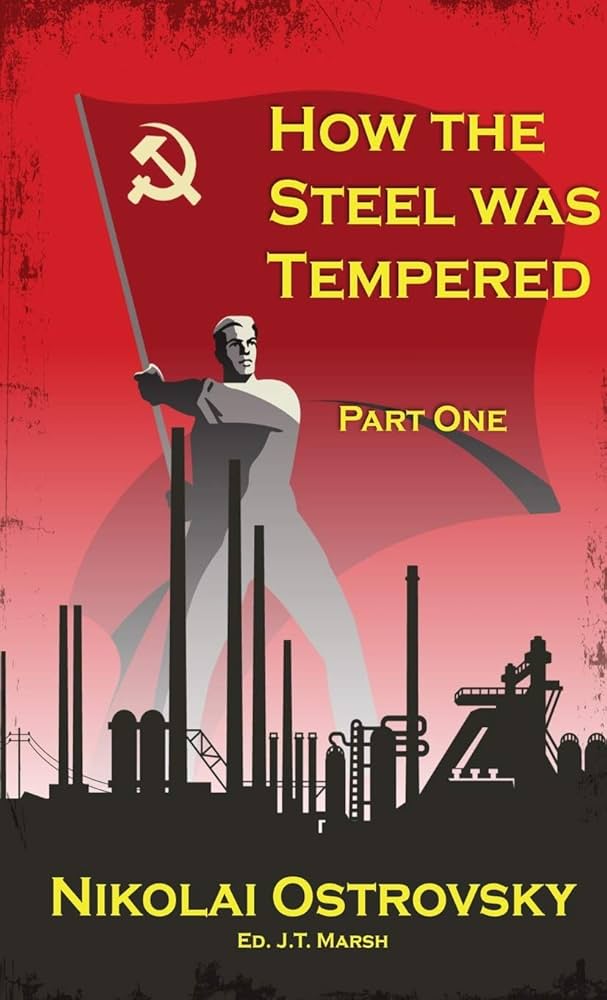
His most important and best-known work is How the Steel Was Tempered (Russian: “Как закалялась сталь”). In addition, he began writing a sequel entitled Born of the Storm, but he did not complete it before his death.
With How the Steel Was Tempered, Ostrovsky was admitted to the Soviet Writers’ Union and was honored by the Soviet state. After his death, the work continued to be reprinted many times, translated into dozens of languages, and became one of the most influential novels within the socialist countries of the twentieth century.
The Genesis of How the Steel Was Tempered
How the Steel Was Tempered was written between 1930 and 1934. The first manuscript was completed in 1932 but was initially rejected by some publishers on the grounds that its style was still rough. After revision and review, the work was first published in the magazine Molodaya Gvardiya (Young Guard) beginning in 1932, and later issued in complete book form in 1934.
The novel emerged during a period when the Soviet Union was consolidating its political system and carrying out industrialization and agricultural collectivization under the leadership of the Communist Party. In this context, literature was defined as an important instrument for constructing the model of the “new Soviet man” – steadfast, loyal to ideals, and ready to sacrifice for the collective.
The character Pavel Korchagin in How the Steel Was Tempered bears strong autobiographical elements. Many details of his impoverished childhood, his participation in the Red Army, his injuries, and his illness leading to paralysis and blindness directly reflect the author’s own life. Nevertheless, the character is not a complete replica of Ostrovsky; rather, he was idealized to become a spiritual symbol of a generation.
Immediately after publication, How the Steel Was Tempered was widely received. The work was included in the Soviet educational curriculum and became a representative book for youth. For many decades, the image of Pavel Korchagin was regarded as a moral and political standard of the “new man” in socialist society.
Beyond its domestic impact, How the Steel Was Tempered was translated and widely disseminated in China, Vietnam, and many other countries. In Vietnam, the novel was once among the most widely read books during the periods of resistance and national reconstruction, contributing to the shaping of the life ideals of many generations of young people.
2. Summary of the Plot of How the Steel Was Tempered
If How the Steel Was Tempered is regarded as a spiritual chronicle, then its plot constitutes the journey of the formation and tempering of a human being, from a rebellious adolescent to a mature communist fighter, and ultimately to an individual who triumphs over adversity through sheer willpower. The central character, Pavel Korchagin, experiences not only personal upheavals but also moves alongside the great historical convulsions of early twentieth century Russia.
Adolescence – The Seeds of Resistance and the Awakening of Consciousness
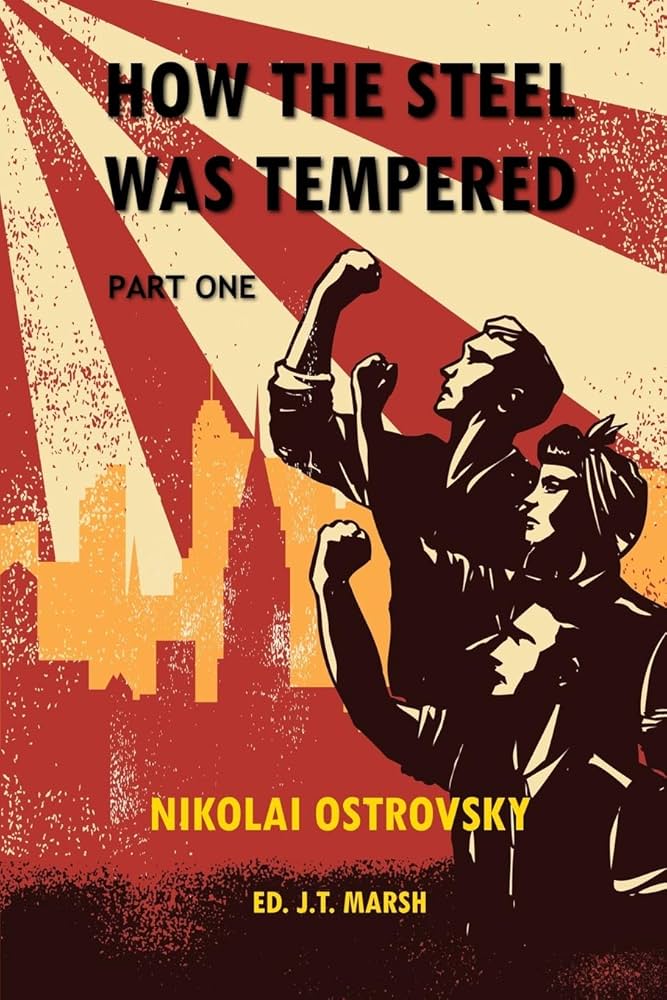
Pavel is born into a poor working class family. His father dies early, and his mother works tirelessly to support her children. From a young age, he must confront the harshness of life and the injustices of the old social order. Being expelled from school for defying a priest is not merely a personal incident; it reflects the early formation of a spirit of resistance within the boy.
After leaving school, Pavel works as a kitchen assistant at a railway station, where he comes into contact with workers and the rigors of manual labor. It is here that he begins to witness oppression and class division. Conversations with individuals holding revolutionary ideas, especially the image of Bolshevik fighters operating clandestinely, sow the first seeds of idealism in him.
At that time, the October Revolution breaks out, bringing profound changes to the political and social structure. Pavel is no longer a boy observing from the margins; he is gradually drawn into the vortex of history.
Entering the Revolution – The Trials of War and Ideals
When the Russian Civil War erupts, Pavel joins the Red Army. From this point on, his life is bound to the battlefield. Fierce engagements, confrontations with life and death, and the loss of comrades mark decisive stages in his maturation.
Pavel is not portrayed as a superhuman hero; he is wounded multiple times and suffers exhaustion, yet each ordeal becomes a test of his will. In one battle, he sustains a severe head injury that leaves lasting consequences. Nevertheless, he does not leave the ranks.
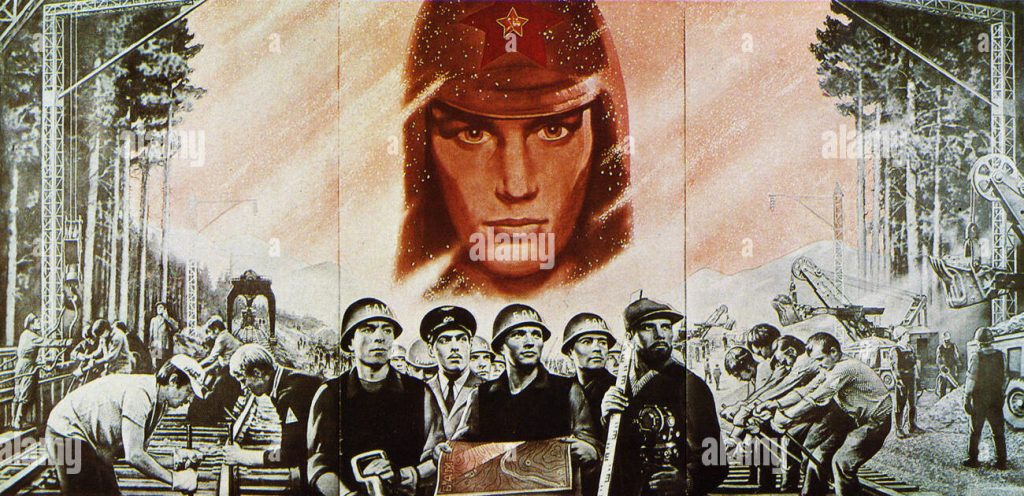
After hostilities subside, Pavel continues to participate in the construction of the revolutionary government. One prominent episode is his involvement in building a railway line under harsh winter conditions. This is no longer an armed battlefield, but a battlefield of labor. Snowstorms, food shortages, and rampant disease create a severe setting in which the collective spirit is affirmed.
It is during this period that Pavel is depicted as a steadfast Party member who places collective interests above personal ones. He is strict with himself and willing to sacrifice his health to fulfill his duties.
Love – The Conflict Between the Individual and the Ideal
Alongside the revolutionary journey, the novel interweaves a romantic storyline, particularly the relationship between Pavel and Tonia. Tonia comes from a more privileged background and represents a social environment distinct from Pavel’s working class revolutionary milieu.
At first, their love is pure and sincere. However, differences in worldview and life choices gradually emerge. As Pavel becomes increasingly devoted to revolutionary activity, Tonia cannot fully share his ideals. Eventually, they part ways.
This detail is not constructed as a purely romantic tragedy, but as a test. Pavel chooses the collective path over personal happiness. This is one of the key elements expressing the ideological structure of How the Steel Was Tempered, in which political ideals occupy the central position.
Illness – The Tragic Climax and the Final Trial
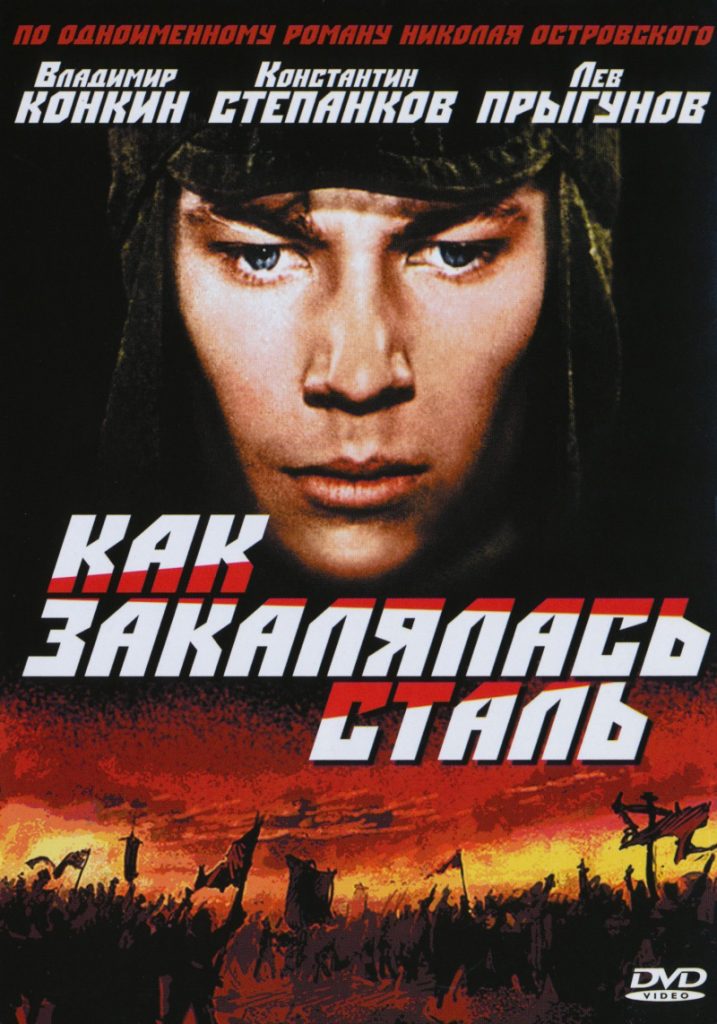
After years of fighting and excessive labor, old wounds and rheumatism cause Pavel’s health to deteriorate severely. He gradually loses his mobility. Constant pain torments him, and his body becomes partially paralyzed. Ultimately, he is almost completely immobilized and blind.
This marks the tragic climax of How the Steel Was Tempered. If war is a trial of the body, illness is a trial of the spirit. Pavel confronts the feeling of being excluded from social life, no longer able to participate directly in combat or labor.
In moments of despair, he contemplates death. However, instead of ending his life, he chooses another path. He takes up the pen.
Writing to Continue Living and Contributing
The final part of the work focuses on Pavel’s decision to write a novel about his own generation. Writing is not merely a personal activity, but a way of continuing to serve the revolution.
In a condition where he can hardly move, Pavel dictates line by line to others. The first manuscript is lost, forcing him to begin again from the beginning. This detail creates a new cycle of trial. Even after losing everything, he does not surrender.
When the final manuscript is accepted, it represents not only literary success, but also a spiritual victory. Pavel proves that a person may be deprived of physical strength, but as long as willpower endures, one can still find a way to live meaningfully.
3. Values, Role, and Distinctive Features of How the Steel Was Tempered
If How the Steel Was Tempered is viewed merely as a story of personal perseverance, one would overlook its ideological depth and historical role within Soviet literature. The novel by Nikolai Ostrovsky is not only a work of art, but also an ideological construct in which the image of the human being is shaped to reflect and reinforce the ideals of an era. Its value, therefore, must be examined from multiple perspectives: ideological, artistic, symbolic, and social.
Ideological Value – The Image of the “New Man” in Socialist Realist Literature
How the Steel Was Tempered is one of the representative works of socialist realism, the official literary doctrine in the Soviet Union from the 1930s onward. Within this framework, the central character is often constructed as an ideal model, representing the new generation of revolutionary society.
Pavel Korchagin is not merely an individual with a distinct personality; he is a symbolic figure of the “new man” – a person formed through class struggle, war, and collective labor. In Pavel, revolutionary ideals are not a spontaneous choice but the foundation governing all actions and life decisions.
Notably, the novel does not stop at praising external victories, but focuses on inner victory – victory over oneself, over weakness and despair. When Pavel loses his mobility, the meaning of “struggle” is transformed from a physical battlefield to a spiritual one. This shift allows the ideological dimension of the work to transcend the limits of a conventional war novel.
Symbolic Value – The Metaphor of “Steel” and the Process of Human Tempering
The title How the Steel Was Tempered is not merely an evocative image, but the central symbolic axis of the entire novel. Steel becomes strong only after being heated in fire and then suddenly cooled in cold water. It is precisely the collision between these opposing extremes that creates durability.
The human being in the novel is “tempered” through a similar mechanism:
– The fire of war and social conflict.
– The cold water of illness, loss, and isolation.
Pavel is not born as “steel.” He is a hot tempered and impulsive adolescent who makes mistakes and lacks emotional control. Failures, injuries, and sacrifices shape the process of refinement. This metaphor gives the narrative a consistent developmental structure and a high level of generalization.
The symbol of “steel” also carries a collective dimension. Not only Pavel, but an entire generation of Soviet youth is portrayed as blocks of steel in the process of being forged to build a new society. It is this collective layer of meaning that enables the novel to exert broad influence in political and social life.
Artistic Value – The Combination of Autobiography and Epic Structure
One of the distinctive features of How the Steel Was Tempered is the combination of autobiographical elements and an epic tone. Many details concerning illness, combat, and the circumstances of composition directly reflect the life of Nikolai Ostrovsky. This lends authenticity and depth to the work.
However, the novel does not remain confined to the personal sphere. Its structure is epic in nature:
– A broad historical background – the October Revolution and the Russian Civil War.
– Characters bound to collective destiny.
– A narrative voice marked by affirmation, orientation, and idealization.
This interweaving produces a type of character who is both concrete and symbolic. Pavel is not a psychologically complex figure in the manner of the modern Western novel; he is constructed as consistent, steadfast, and rarely wavering. This very consistency aligns with the ideological function of literature during that period.
In addition, the novel possesses a clear developmental rhythm – each stage of Pavel’s life corresponds to a new level of tempering. The linear structure is easy to follow yet contains sufficient climaxes, making the book appealing to a broad readership, especially young readers.
Social Role – The Work as a “Text of Ideological Orientation”
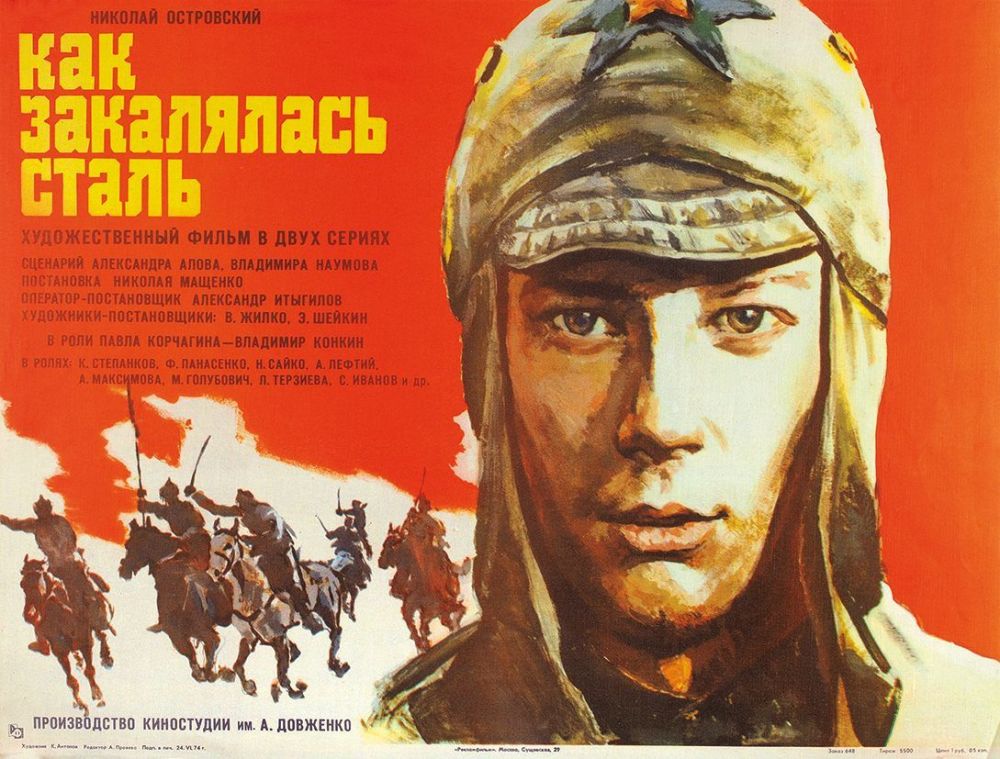
After its publication in the early 1930s, How the Steel Was Tempered quickly became one of the most widely disseminated books in the Soviet Union. It was included in educational curricula, read within youth organizations, and became a symbol of committed spirit.
In many socialist countries, including Vietnam, the novel once held a special place in the spiritual life of young people. Famous passages about the meaning of life and dedication became mottos for generations.
Its social role therefore extends beyond literature. It became an instrument of ideological education, a moral symbol, and a widely promoted model of living. This explains why the influence of How the Steel Was Tempered endured for many decades.
The Capacity for Dialogue with Modern Readers
Placed in a contemporary context, How the Steel Was Tempered can be read on multiple levels of meaning. If separated from its political context, the core of the work remains a story about perseverance and the capacity to transcend one’s own limitations.
The final part of the novel – when Pavel is paralyzed and blind yet continues to write – stands as a clear testament to individual willpower. This element allows the work to move beyond the confines of propaganda. Illness, isolation, and the feeling of exclusion from society are universal experiences that do not depend on ideology.
It is at this point that How the Steel Was Tempered continues to resonate with readers today. In a world no longer marked by the Russian Civil War but still filled with pressure, crises, and personal challenges, the question of how to “temper” oneself remains profoundly relevant.
4. Personal Reflections and Evaluation of How the Steel Was Tempered
Reading How the Steel Was Tempered today is no longer the act of receiving a “mandatory text” as it was in many earlier historical periods, but rather a voluntary dialogue with an ideal model that once exerted a powerful influence on the spiritual life of the twentieth century. This temporal distance allows the work to be viewed more comprehensively, both within its historical framework and in relation to modern values.
What leaves the deepest impression is not the battle scenes or revolutionary slogans, but Pavel Korchagin’s inner journey as he confronts his own limits. In the early part of the novel, Pavel is portrayed as an impulsive young man, quick tempered and at times extreme in his behavior. His maturation does not occur abruptly; it is the result of continuous collisions between ideal and reality. It is precisely this process that gives the character, despite his strong symbolic function, a sense of developmental depth.
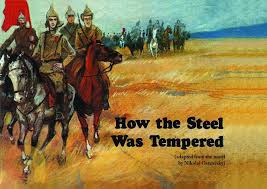
Impression of the Will to Transcend Limits
The final part of How the Steel Was Tempered, when Pavel is paralyzed and blind, creates the greatest emotional weight. Here, victory is no longer defined by the defeat of an enemy, but by the ability to resist spiritual collapse.
Illness in the novel is not merely a medical condition, but a metaphor for exclusion from social life. When he can no longer carry a rifle or work, Pavel faces the risk of losing his sense of purpose. The moment he contemplates death is one of the rare instances of stark realism in a character otherwise constructed as unwavering. The fleeting presence of that negative thought highlights his final decision to continue living and writing.
The act of writing a novel under conditions of near total immobility is not only an autobiographical detail of Nikolai Ostrovsky, but also a declaration of the power of human will. From this perspective, How the Steel Was Tempered transcends the framework of a political novel and becomes a story about spiritual endurance in the face of adversity.
Reflection on the Conflict Between the Individual and the Collective
One thought provoking aspect of the novel is the way it handles the relationship between personal happiness and collective ideals. Pavel repeatedly places revolutionary duty above love and private life. His separation from Tonia is not depicted as a prolonged emotional wound, but as an inevitable consequence of differing positions.
From a modern perspective, such a choice may invite debate. Can a person completely suppress individual needs in order to merge with the collective? Does continuous sacrifice lead to suppressed psychological wounds? The novel does not delve deeply into such complex internal conflicts, as its purpose is to affirm an ideal rather than to deconstruct it.
However, this linearity enables the character to function as a clear symbol. Pavel does not waver for long; he chooses and follows through to the end. In an era that required decisive role models, this character structure proved effective.
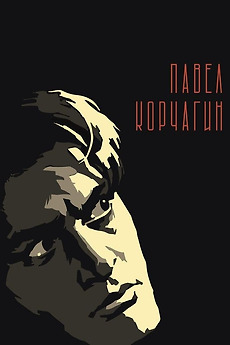
Inspirational Value and Inevitable Limitations
It cannot be denied that How the Steel Was Tempered possesses strong inspirational power. Famous lines about living “without regret” became guiding principles for many generations of young people. The spirit of not surrendering to fate and not accepting passive decline is a consistent and universal message.
At the same time, the novel bears the limitations of socialist realist literature. Antagonistic characters are not explored in depth; internal psychological conflicts are not complex; the world is divided relatively clearly between right and wrong. For readers accustomed to multidimensional modern novels, this structure may appear simplified.
Yet it is necessary to place How the Steel Was Tempered within its historical context. The work was not intended to conduct existential psychological analysis, but to affirm an ideal model of living in a period of social upheaval. Within that framework, the character’s consistency and high symbolic quality constitute strengths rather than weaknesses.
Resonance with Contemporary Readers
When rereading How the Steel Was Tempered in a modern context, where revolutionary war is no longer the direct experience of most readers, what remains is not the historical background, but the question of how individuals confront their own limits.
Today, the “battlefield” may take the form of professional pressure, personal crises, illness, or a sense of disorientation. The figure of Pavel, though idealized, suggests a principle: circumstances may deprive a person of the conditions for action, but they cannot deprive one of the capacity to choose an attitude.
It is precisely this aspect that enables How the Steel Was Tempered to maintain dialogue with multiple generations of readers. The work may no longer be read as a political manual, yet it can still be received as a text about perseverance and responsibility in living.
5. Impressive Quotations from How the Steel Was Tempered – When Words Become a Declaration of Life
One of the elements that enables How the Steel Was Tempered to extend its influence beyond the scope of an ordinary novel is its system of highly generalized statements that approach the structure of a declaration. Numerous passages in the work have been quoted, memorized, and repeated across generations of readers.
These words not only reflect the thoughts of Pavel Korchagin, but also crystallize the worldview of Nikolai Ostrovsky – a man who had endured both war and illness. Here, literature serves not only to tell a story, but also to establish a standard of living.
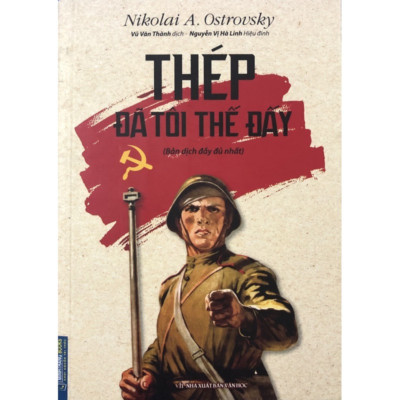
1. “The most precious thing a person possesses is life. It is given to him but once.”
This is the opening line of the most famous monologue in the novel. The concise and direct structure creates the tone of a fundamental truth. Pavel begins from a universal value – that life is the most precious possession – and from there develops an entire conception of responsibility in living.
2. “One must live in such a way that one does not feel tormenting regret for wasted years.”
This sentence shifts from assertion to self examination. The emphasis is not on longevity or achievement, but on avoiding “wasted years.” The measure of value here is not personal enjoyment, but the degree of commitment and contribution. The repetition within the phrase concerning wasted years creates a strong and memorable rhythm.
3. “So that when the time comes to die, one can say: all my life and all my strength were given to the finest cause in the world.”
This is the climax of the declaration about the ideal of living. The extended sentence and solemn rhythm create the impression of an oath. The repetition of “all my life and all my strength” underscores the totality of devotion. Here, the individual dissolves into the collective ideal, and the value of a life is defined by service.
4. “Steel is tempered in red hot fire and icy water. Fire and water make it strong.”
This sentence directly explains the title of the novel. The metaphor is simple yet evocative: fire symbolizes severe trials, while cold water represents shocks and sudden impacts. It is precisely this opposition that creates durability. The metaphor applies not only to Pavel, but to an entire generation.
5. “Man is not born to disappear like a nameless grain of sand.”
This line expresses the desire to leave a mark on life. The novel here touches upon a universal human need – the need for recognition and meaning. However, unlike individualistic conceptions, that meaning is situated within the relationship between the individual, the collective, and history.
6. “The greatest happiness for a human being is to fight for an ideal.”
This statement redefines the concept of happiness. Instead of being associated with comfort or enjoyment, happiness is linked to action and responsibility. Within the ideological structure of How the Steel Was Tempered, happiness is not a static state, but a process of commitment.
7. “Once a path has been chosen, one must follow it to the end.”
Steadfastness is expressed through short and decisive sentences. This principle runs throughout Pavel’s journey. Whether confronted with war or illness, he does not return to the starting point. It is precisely this consistency that forms the image of “steel.”
6. Conclusion – The Enduring Value of How the Steel Was Tempered and the Remaining Question Humanity Faces in the Face of Trial
Closing the journey of Pavel Korchagin, How the Steel Was Tempered does not produce an ending in the conventional dramatic sense. There is no resounding victory on the battlefield, nor a tear-soaked tragedy pushed to its extreme. The work comes to rest in a different state – a state in which willpower is affirmed. When Pavel completes his manuscript in a condition of near paralysis and blindness, victory is no longer material but becomes absolute in a spiritual sense.
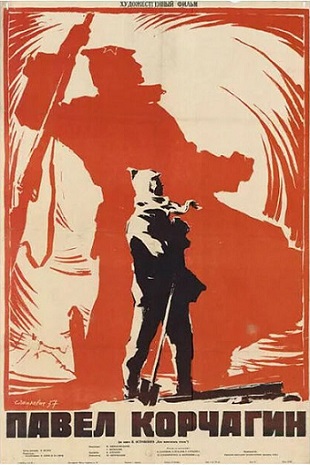
On the historical level of meaning, the novel by Nikolai Ostrovsky is a typical product of socialist realist literature, reflecting the aspiration to construct the model of the “new man” in Soviet society. The work contributed to shaping the ideal of living for many generations of young people, becoming a symbol of moral education and the spirit of commitment throughout the twentieth century. In many countries, including Vietnam, How the Steel Was Tempered once held a special role in reading culture and in the collective memory of an era.
However, if we stop at its historical value alone, we would narrow the scope of the book. What keeps How the Steel Was Tempered mentioned today is not merely that it represents an ideological system, but that it raises a fundamental human question: how to live a life that is not wasted.
Pavel Korchagin goes through three levels of trial:
– The trial of poverty and injustice in his childhood.
– The trial of war and harsh labor.
– The ultimate trial of illness and the loss of the ability to act.
If the first two trials still allow a person to respond through direct action, the final trial strips away almost all physical means. There, the question is no longer “how to fight,” but “whether to continue living meaningfully.” It is precisely in this circumstance that the spirit of How the Steel Was Tempered is pushed to its highest point: the meaning of life does not depend entirely on external conditions, but on an inner choice.
From a modern perspective, one may recognize elements of idealization and a clearly directed ideological tendency within the work. The character is constructed according to a consistent model, with little complex psychological fluctuation; the conflict between the individual and the collective is resolved in a direction that gives absolute priority to the common ideal. Yet it is precisely this decisiveness that creates symbolic power. Pavel does not represent hesitation, but rather choice and the commitment to see it through to the end.
In today’s context – when revolutionary war is no longer a common experience, yet people still face competitive pressure, spiritual crises, illness, and a sense of disorientation – the story of “steel being tempered” still has the capacity to resonate. The form of trial may change, but the need to affirm the value of life does not.
How the Steel Was Tempered can therefore be read in two ways:
– As a historical and ideological text reflecting a specific era.
– As a universal story about resilience and the responsibility of living.
The enduring value of the work does not lie in providing a formula for living applicable to all times, but in compelling readers to question themselves. A person lives only once – so what limits are “tempering” each individual today? When facing adversity, will one choose to stop, or continue to seek another way to contribute and to exist meaningfully?