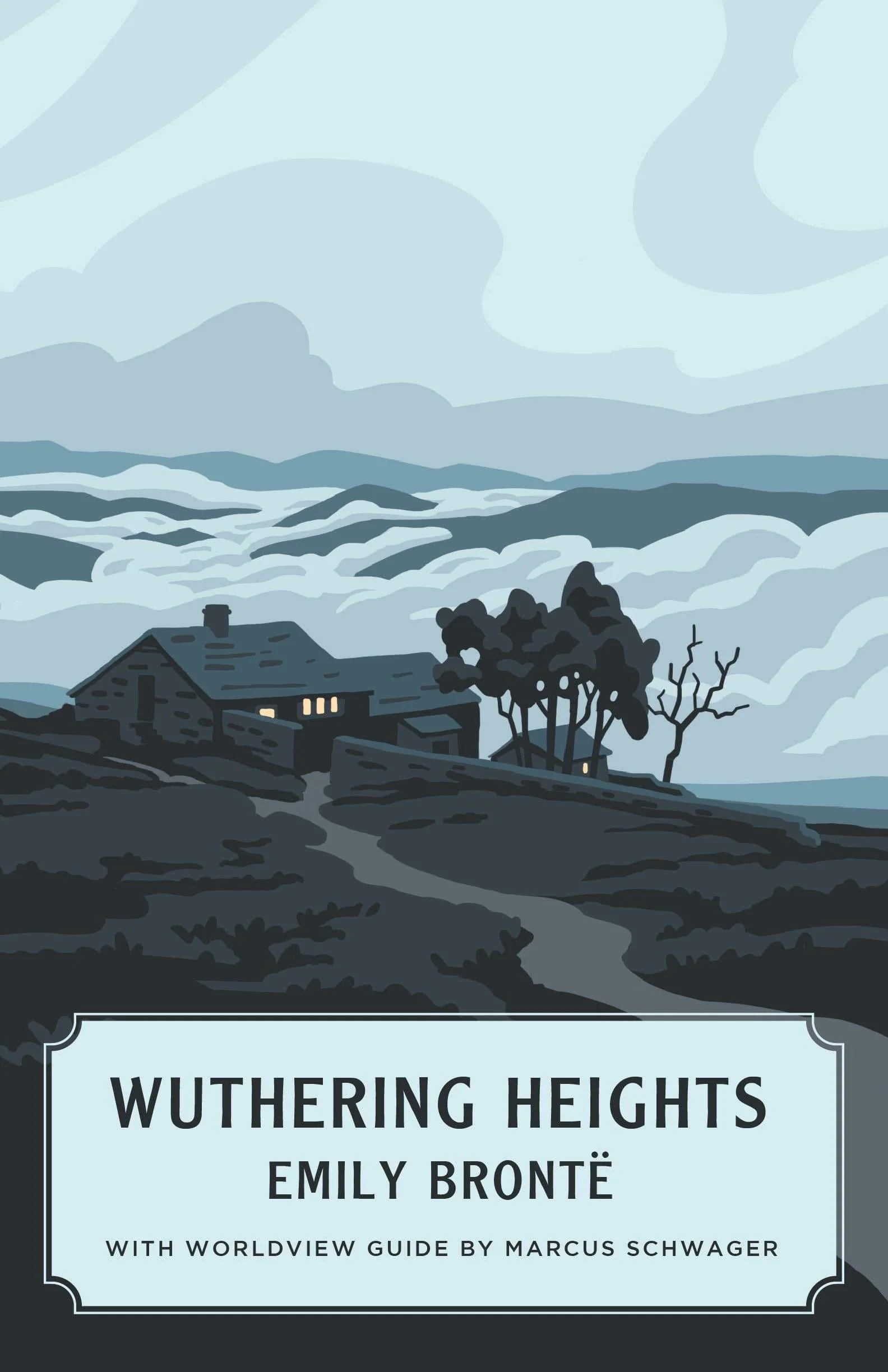
Within the landscape of nineteenth-century English literature – an era marked by strict moral conventions and the consolidation of realist fiction as the dominant form – there emerged a work of striking distinctiveness. Wuthering Heights does not follow the trajectory of idealized love stories or familiar moral didactic journeys. Instead, the novel unfolds a closed world in which the wild nature of the Yorkshire moors intertwines with the intense impulses of the human soul, forming a dark symphony of passion, hatred, and fate.
From the moment of its publication, Wuthering Heights provoked controversy for its vehement tone, intricate narrative structure, and its portrayal of extreme psychological states rarely addressed in the literature of its time. The windswept heath, the isolated houses, and characters marked by profound inner conflicts together create an artistic universe that is at once realistic and deeply symbolic. Over more than a century and a half, the novel has come to be recognized not only as a masterpiece of English literature but also as a text that reexamines fundamental questions concerning the nature of love, power, identity, and the limits of human endurance in the face of uncontrollable passions.
1. Overview of the Author and the Work Wuthering Heights
Emily Brontë – Life and the Formation of Her Intellectual Context
Emily Brontë was born on 30 July 1818 in Thornton, Yorkshire, the fifth child of the clergyman Patrick Brontë. Shortly after her birth, the family moved to Haworth – a small parish situated amid the desolate moorlands of Yorkshire. This harsh, windswept, and isolated natural environment left a profound imprint on Emily’s aesthetic sensibility and later artistic world.
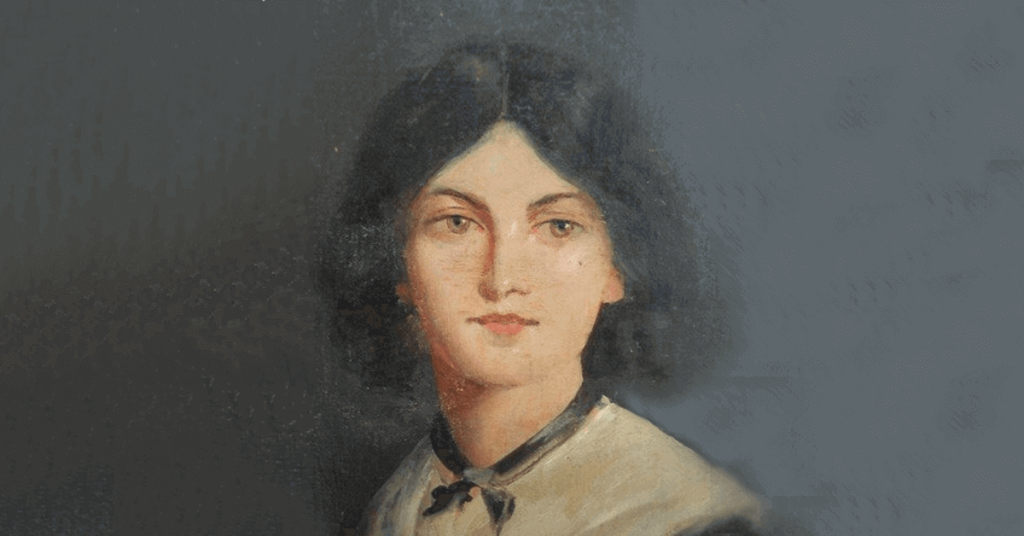
Her mother died when Emily was only three years old. This early loss, together with the subsequent deaths of her two elder sisters from tuberculosis after their time at Cowan Bridge School, meant that Emily’s childhood was closely associated with a sense of life’s fragility and an enduring preoccupation with death. These events were not merely biographical facts but are directly reflected in the dark and haunting atmosphere of Wuthering Heights.
Emily shared an especially close relationship with her sister Charlotte Brontë and her younger sister Anne Brontë. The three sisters wrote together and published a joint volume of poetry in 1846 under masculine pseudonyms: Currer Bell, Ellis Bell, and Acton Bell. The use of pseudonyms reveals the gender prejudice within the nineteenth-century English publishing world, where women writers were often not taken seriously.
Unlike Charlotte – who worked as a governess and studied in Brussels – Emily spent most of her life in Haworth and rarely left her hometown. She worked briefly as a teacher but soon returned because she could not endure the unfamiliar environment. Her secluded lifestyle, closeness to nature, and rich inner life nurtured an independent and intense spiritual world, one that did not easily conform to the social norms of her time.
Emily Brontë died of tuberculosis on 19 December 1848, only a year after Wuthering Heights was published. She was just thirty years old. Her early death meant that her literary legacy consists of a single novel and a collection of poems, yet this very conciseness highlights the depth and originality of her work.
Literary Career and Position in English Literature
In terms of quantity, Emily Brontë did not leave behind an extensive body of work. However, in terms of intellectual and artistic value, she is regarded as one of the most distinctive figures in nineteenth-century English literature.
The poetry volume published in 1846 – Poems by Currer, Ellis and Acton Bell – was not commercially successful at first and sold only a few copies. Nevertheless, Emily’s poetry was later highly praised for its metaphysical tone, its emphasis on spiritual freedom, the aspiration to transcend material limits, and the fusion between human beings and nature. These characteristics continued to develop and reached their culmination in Wuthering Heights.
Within the contemporary literary context, the English novel was strongly influenced by moral realism, represented by writers such as Charles Dickens and William Makepeace Thackeray. In contrast to this mainstream current, Wuthering Heights displays a clearly different orientation: it does not focus on social reform, nor does it aim at moral instruction, but instead delves deeply into psychological structures and the primitive impulses of human beings. For this reason, it was not until the twentieth century – when literary criticism paid greater attention to psychological analysis and narrative structure – that Emily Brontë’s position was comprehensively affirmed.
The Publication of Wuthering Heights – Circumstances of Composition and Initial Reception
Wuthering Heights was first published in 1847 in London. The work bore the pseudonym Ellis Bell, leading many early readers and critics to assume that the author was male. This misunderstanding partly influenced its reception: numerous early reviews described the book as “coarse,” “cruel,” and “morally improper.”
Regarding its composition, research indicates that Emily completed the manuscript during the years 1845–1846 while living in Haworth. There is no evidence that she relied directly on any specific real-life model; however, the Yorkshire landscape – with its expansive heathlands, fierce winds, and geographical isolation – became the spatial foundation of the novel’s artistic world. The term “wuthering” in the local dialect refers to the sound of strong wind whistling around a house, a linguistic detail that demonstrates the close connection between the novel and the region in which the author lived.
Upon its initial release, Wuthering Heights was not warmly received. Many critics were perplexed by its complex narrative structure and by the character of Heathcliff – a figure who transcends the conventional framework of hero or traditional villain. After Emily’s death, her sister Charlotte Brontë wrote a preface for the 1850 edition, helping to reposition the novel’s value and affirm her sister’s talent.
From the late nineteenth century into the twentieth century, Wuthering Heights gradually came to be recognized as one of the most important novels in English literature. The work has been incorporated into university curricula and has become the subject of diverse critical approaches – from psychoanalytic criticism and feminist studies to analyses of class and power structures.
2. Plot Summary of Wuthering Heights – The Tragedy of Two Generations and the Vortex of Passion and Hatred
The plot of Wuthering Heights does not unfold in a simple linear progression but is constructed through a multi-layered narrative structure, in which the central story is retold through the recollections of those directly involved. This technique causes the entire tragedy to appear as a past that has never been fully closed – one that continues to haunt and govern the present.
Framing Narrative – The Arrival of Lockwood
The story opens from the perspective of Mr. Lockwood – a gentleman from the city who rents Thrushcross Grange in search of solitude. During a visit to Wuthering Heights – the house standing on a windswept hill – he encounters a cold, tense atmosphere and individuals whose demeanor is withdrawn and coarse.
There he meets Heathcliff – the current master of both Wuthering Heights and Thrushcross Grange – along with Hareton Earnshaw, Cathy Linton, and the servant Joseph. The domestic atmosphere at Wuthering Heights confuses Lockwood: among them exist complex ties of blood and resentment that he cannot decipher.
After being forced to spend a night at Wuthering Heights because of a snowstorm, Lockwood dreams of the figure of a girl named Catherine begging to be let in through the window. This strange event arouses his curiosity and prompts him to ask the housekeeper, Nelly Dean, to recount the entire history of the past.
The First Generation – Essential Love and the Seeds of Destruction
Many years earlier, Mr. Earnshaw – the owner of Wuthering Heights – brought home an orphan boy of unknown origin and named him Heathcliff. This decision completely altered the fate of two families.
Heathcliff grew up alongside Mr. Earnshaw’s two biological children: Hindley and Catherine Earnshaw. While Hindley quickly displayed jealousy, Catherine developed a unique bond with Heathcliff. Together they roamed the moors, sharing a wild childhood that was almost detached from social order. Their relationship was not merely friendship; it was the resonance of two intense personalities, bound by a form of attachment that transcended conventional definition.
After Mr. Earnshaw’s death, Hindley – now master of the house – degraded Heathcliff to the status of a servant, depriving him of education and social standing. The prolonged humiliation smoldered silently, laying the foundation for future hatred.
Another event shifted the course of events: Catherine was injured while secretly entering Thrushcross Grange and was taken in by the Linton family – members of the landed gentry. During her stay, she encountered an entirely different world: refined, courteous, and affluent. When she returned to Wuthering Heights, Catherine carried with her a desire to rise above her former rough existence.
Edgar Linton – the heir of Thrushcross Grange – proposed to Catherine. In a conversation with Nelly Dean, Catherine admitted that she loved Heathcliff in the deepest sense of her being, yet she could not marry him because he lacked social status. She believed that marriage to Edgar would elevate her position and would later enable her to help Heathcliff rise as well.
Unfortunately, Heathcliff overheard only the part in which Catherine said that marrying him would “degrade” her. He did not hear her declaration, “I am Heathcliff.” In despair and humiliation, he left.
Heathcliff’s Return – Love Transformed into Revenge
Three years later, Heathcliff returned to Wuthering Heights with an elegant appearance and a mysterious fortune. His transformation was not merely external; he came back with a clear purpose: to take revenge on those who had wronged him.
He exploited Hindley – now sunk in alcoholism and debt – in order gradually to gain ownership of Wuthering Heights. At the same time, Heathcliff approached Isabella Linton – Edgar’s sister – not out of love, but as a means of causing suffering to both Edgar and Catherine.
Isabella, naive and blinded, fell in love with Heathcliff. She eloped with him and soon found herself trapped in a marriage marked by psychological abuse. Heathcliff treated her merely as an instrument of revenge. Eventually, Isabella fled and gave birth to a son – Linton Heathcliff.
Meanwhile, the relationship among Catherine, Edgar, and Heathcliff grew increasingly tense. Catherine descended into psychological crisis, torn between two worlds – wild passion and social order. She became gravely ill during pregnancy and died shortly after giving birth to a daughter, Cathy Linton.
Catherine’s death marked a decisive turning point. Heathcliff found no release; instead, he sank into extreme obsession. He begged Catherine’s spirit not to leave him, even wishing that she would “haunt” him forever. From this point on, love became a metaphysical form of existence – both a driving force for life and a source of destruction.
The Second Generation – The Consequences of Hatred
After the deaths of Catherine and Edgar, Heathcliff continued his plan to control all property through the next generation.
Cathy Linton grew up at Thrushcross Grange in a sheltered environment. She happened to meet Hareton Earnshaw – Hindley’s son – unaware of the blood ties and complicated history between their families.
Heathcliff forced Cathy to marry Linton Heathcliff – his own frail and sickly son – in order to legalize his claim over Thrushcross Grange. This marriage was coercive and purely calculated in terms of power. After Linton died shortly thereafter, all the property fell into Heathcliff’s hands.
At the moment of achieving his objective, Heathcliff descended into emptiness. His hatred no longer had a direct target; those he sought to punish were dead or ruined. He began to see Catherine’s presence everywhere, from the moors to the dark rooms of the house. He refused food and sleep, as though surrendering himself to death.
Finally, Heathcliff died in the room where Catherine had once lived. His face in death bore an unusual serenity – as though he had at last reached what he had long sought.
After Heathcliff’s death, the atmosphere at Wuthering Heights gradually changed. Cathy Linton and Hareton Earnshaw – representatives of the new generation – began to build a relationship founded on mutual understanding and learning. They planned to marry and move to Thrushcross Grange, bringing to a close the vortex of hatred that had endured for decades.
3. Giá trị, vai trò và điểm đặc sắc của Đồi gió hú – Khi tiểu thuyết vượt khỏi khuôn khổ truyền thống
The plot of Wuthering Heights does not unfold in a simple linear progression but is constructed through a multi-layered narrative structure, in which the central story is retold through the recollections of those directly involved. This technique causes the entire tragedy to appear as a past that has never been fully closed – one that continues to haunt and govern the present.
Framing Narrative – The Arrival of Lockwood
The story opens from the perspective of Mr. Lockwood – a gentleman from the city who rents Thrushcross Grange in search of solitude. During a visit to Wuthering Heights – the house standing on a windswept hill – he encounters a cold, tense atmosphere and individuals whose demeanor is withdrawn and coarse.
There he meets Heathcliff – the current master of both Wuthering Heights and Thrushcross Grange – along with Hareton Earnshaw, Cathy Linton, and the servant Joseph. The domestic atmosphere at Wuthering Heights confuses Lockwood: among them exist complex ties of blood and resentment that he cannot decipher.
After being forced to spend a night at Wuthering Heights because of a snowstorm, Lockwood dreams of the figure of a girl named Catherine begging to be let in through the window. This strange event arouses his curiosity and prompts him to ask the housekeeper, Nelly Dean, to recount the entire history of the past.
The First Generation – Essential Love and the Seeds of Destruction
Many years earlier, Mr. Earnshaw – the owner of Wuthering Heights – brought home an orphan boy of unknown origin and named him Heathcliff. This decision completely altered the fate of two families.
Heathcliff grew up alongside Mr. Earnshaw’s two biological children: Hindley and Catherine Earnshaw. While Hindley quickly displayed jealousy, Catherine developed a unique bond with Heathcliff. Together they roamed the moors, sharing a wild childhood that was almost detached from social order. Their relationship was not merely friendship; it was the resonance of two intense personalities, bound by a form of attachment that transcended conventional definition.
After Mr. Earnshaw’s death, Hindley – now master of the house – degraded Heathcliff to the status of a servant, depriving him of education and social standing. The prolonged humiliation smoldered silently, laying the foundation for future hatred.
Another event shifted the course of events: Catherine was injured while secretly entering Thrushcross Grange and was taken in by the Linton family – members of the landed gentry. During her stay, she encountered an entirely different world: refined, courteous, and affluent. When she returned to Wuthering Heights, Catherine carried with her a desire to rise above her former rough existence.
Edgar Linton – the heir of Thrushcross Grange – proposed to Catherine. In a conversation with Nelly Dean, Catherine admitted that she loved Heathcliff in the deepest sense of her being, yet she could not marry him because he lacked social status. She believed that marriage to Edgar would elevate her position and would later enable her to help Heathcliff rise as well.
Unfortunately, Heathcliff overheard only the part in which Catherine said that marrying him would “degrade” her. He did not hear her declaration, “I am Heathcliff.” In despair and humiliation, he left.
Heathcliff’s Return – Love Transformed into Revenge
Three years later, Heathcliff returned to Wuthering Heights with an elegant appearance and a mysterious fortune. His transformation was not merely external; he came back with a clear purpose: to take revenge on those who had wronged him.
He exploited Hindley – now sunk in alcoholism and debt – in order gradually to gain ownership of Wuthering Heights. At the same time, Heathcliff approached Isabella Linton – Edgar’s sister – not out of love, but as a means of causing suffering to both Edgar and Catherine.
Isabella, naive and blinded, fell in love with Heathcliff. She eloped with him and soon found herself trapped in a marriage marked by psychological abuse. Heathcliff treated her merely as an instrument of revenge. Eventually, Isabella fled and gave birth to a son – Linton Heathcliff.
Meanwhile, the relationship among Catherine, Edgar, and Heathcliff grew increasingly tense. Catherine descended into psychological crisis, torn between two worlds – wild passion and social order. She became gravely ill during pregnancy and died shortly after giving birth to a daughter, Cathy Linton.
Catherine’s death marked a decisive turning point. Heathcliff found no release; instead, he sank into extreme obsession. He begged Catherine’s spirit not to leave him, even wishing that she would “haunt” him forever. From this point on, love became a metaphysical form of existence – both a driving force for life and a source of destruction.
The Second Generation – The Consequences of Hatred
After the deaths of Catherine and Edgar, Heathcliff continued his plan to control all property through the next generation.
Cathy Linton grew up at Thrushcross Grange in a sheltered environment. She happened to meet Hareton Earnshaw – Hindley’s son – unaware of the blood ties and complicated history between their families.
Heathcliff forced Cathy to marry Linton Heathcliff – his own frail and sickly son – in order to legalize his claim over Thrushcross Grange. This marriage was coercive and purely calculated in terms of power. After Linton died shortly thereafter, all the property fell into Heathcliff’s hands.
At the moment of achieving his objective, Heathcliff descended into emptiness. His hatred no longer had a direct target; those he sought to punish were dead or ruined. He began to see Catherine’s presence everywhere, from the moors to the dark rooms of the house. He refused food and sleep, as though surrendering himself to death.
Finally, Heathcliff died in the room where Catherine had once lived. His face in death bore an unusual serenity – as though he had at last reached what he had long sought.
After Heathcliff’s death, the atmosphere at Wuthering Heights gradually changed. Cathy Linton and Hareton Earnshaw – representatives of the new generation – began to build a relationship founded on mutual understanding and learning. They planned to marry and move to Thrushcross Grange, bringing to a close the vortex of hatred that had endured for decades.
4. Wuthering Heights – When Passion Becomes Destiny
Throughout the experience of reading Wuthering Heights, what lingers is not a love story in the conventional sense, but the feeling of witnessing a psychological experiment pushed to its limits. The novel does not attempt to soothe the reader with gentle romantic moments; on the contrary, it compels the reader to pass through the darker regions of emotion – where love and destruction coexist.
Heathcliff – The Tragedy of a Man Deprived of Identity
Heathcliff is the gravitational center of the novel. On the surface, he is a character who inflicts suffering on nearly everyone around him. At a deeper level, however, Heathcliff represents a human being deprived of identity from the very beginning of his life. With no origin, no status, and no recognition, he grows up in an environment that constantly reminds him that he does not belong.
Catherine’s choice – placing social status above her essential bond with Heathcliff – is not merely a personal decision, but the final confirmation that he is excluded from the established order. From that moment, Heathcliff’s love is no longer purely a longing for connection; it transforms into a need for control and possession.
What makes this character complex is the coexistence of injury and cruelty. Heathcliff is not constructed as a gratuitous “monster”; he acts from a profoundly human starting point – rejection and humiliation. However, he chooses to prolong his pain by reproducing it upon the next generation. His revenge is not aimed at repairing the past, but at recreating the sense of power once taken from him.
From a psychological perspective, Heathcliff can be viewed as a character haunted by unresolved loss. He does not accept Catherine’s death as an inevitable event; he turns it into the center of his existence. This refusal to let go places him in a state that is almost metaphysical – suspended between reality and illusion.
Catherine – The Conflict Between Instinct and Social Ambition
If Heathcliff embodies primal instinct, Catherine Earnshaw stands at the intersection of two worlds. She loves Heathcliff with the deepest core of her being, yet simultaneously longs for status, recognition, and security within society.
Her choice cannot be reduced to selfishness. In the nineteenth-century context, marriage was almost the only path for women to secure economic stability and social position. By deciding to marry Edgar Linton, Catherine acts within the framework of the power structures of her time.
Her tragedy lies in the fact that the two parts of her identity cannot be reconciled. She cannot sever herself from Heathcliff, yet she cannot relinquish social ambition. This inner conflict leads to psychological crisis and ultimately to her death.
In Catherine, the reader perceives a paradox: the more absolute the love, the harsher the reality. She does not lose Heathcliff for lack of feeling; she loses him because she seeks to retain both love and power simultaneously. It is precisely this ambition to “keep both” that causes her to lose everything.
Love in Wuthering Heights – Not Redemption, but Trial
One of the most striking aspects of the novel is its refusal of the model of “redemptive love.” In many romantic novels, love serves to heal and guide individuals toward fulfillment. Here, the love between Catherine and Heathcliff becomes instead the driving force of destruction.
Their love is not grounded in social understanding or in the capacity to build a shared life. It is an essential fusion – almost a form of spiritual identification. When that bond is ruptured, neither can sustain existence within ordinary order.
The novel raises a fundamental question: can absolute love exist in a world governed by class and power? The answer suggested by Wuthering Heights appears to be no. When passion refuses limits, it easily turns into possession, and from possession into destruction.
The Generational Cycle – Renewal or Merely the Postponement of Tragedy?
The final part of the novel offers a glimmer of hope through the relationship between Cathy Linton and Hareton Earnshaw. Unlike the previous generation, they learn to understand, to educate themselves, and to adjust their egos. Their relationship is not built on extreme passion, but on gradual empathy.
Yet this renewal does not entirely erase the shadows of the past. Their entire childhood has been shaped by the decisions of the earlier generation. This suggests that individual choices do not affect only one lifetime, but can extend their consequences across generations.
From a broader perspective, Wuthering Heights is a story about emotional inheritance. Hatred, if not resolved, can become a repeating structure. At the same time, the novel implicitly affirms that human beings possess the capacity to break that cycle – if they choose a different path.
The Enduring Haunting Quality
Reading Wuthering Heights does not provide immediate comfort. The atmosphere is dark, and the characters often act with extremity and little moderation. Yet it is precisely this extremity that gives the novel its lasting haunting power.
What stands out is the sense of unease the book leaves behind. After the final page is closed, the story does not disappear; it continues to raise questions about the boundary between love and possession, between injury and revenge, between individual desire and social structure.
Artistically, Wuthering Heights demonstrates a rare capability: transforming a family story into a profound inquiry into human nature. The intensity of the novel is not intended to shock; it is the author’s way of stripping away the layers of emotion that society often conceals.
5. Memorable Quotations in Wuthering Heights – When Language Reaches the Depth of Being
One of the elements that ensures the enduring vitality of Wuthering Heights lies not only in its intense plot or complex narrative structure, but also in its system of highly symbolic language. Emily Brontë’s prose is not ornate, yet it is condensed and capable of encapsulating extreme emotional states in brief, declarative statements. Many lines in the novel have become emblematic of absolute love, obsession, and the longing to transcend individual limits.
1. “Whatever our souls are made of, his and mine are the same.”
Catherine Earnshaw’s statement affirms the bond between herself and Heathcliff at the level of the soul. This is not an ordinary declaration of affection, but a proclamation of ontological unity. Love in Wuthering Heights is therefore not defined by social harmony or material benefit, but by a shared sense of existence.
On a philosophical level, this line raises the question of the boundary between the self and the other. When two individuals regard their souls as one, can they still exist independently?
2. “If all else perished, and he remained, I should still continue to be; and if all else remained, and he were annihilated, the universe would turn to a mighty stranger.”
This passage further develops the notion of spiritual unity. Catherine asserts that Heathcliff constitutes the structural center of her world. If he were to disappear, the entire universe would become alien to her.
On an intellectual level, the statement reflects the way human beings construct reality through relationships. When a foundational bond is destroyed, the very sense of the world disintegrates with it.
3. “Be with me always – take any form – drive me mad!”
After Catherine’s death, Heathcliff calls upon her spirit to return, in any form whatsoever. This marks the moment when love transforms into metaphysical obsession.
The line reveals that Heathcliff does not fear madness; what he fears is absolute absence. It simultaneously portrays the psychology of a man who refuses to accept the finitude of life. Having lost the object of his love, he seeks to reclaim the past at any cost.
4. “Honest people don’t hide their deeds.”
This morally inflected statement reflects one of the novel’s fundamental conflicts: the tension between social norms and individual instinct. In a world where many characters conceal their true motives – from ambition and jealousy to revenge – the line proposes a standard of transparency.
Yet the paradox lies in the fact that, in Wuthering Heights, pure “honesty” rarely exists. Every action is shaped by either injury or self-interest.
5. “Treachery and violence are a just return for treachery and violence.”
This line encapsulates Heathcliff’s logic of revenge. He regards his own violence as a justified response to the injuries he has suffered.
On a social level, it functions as a declaration of the cycle of violence. When hatred is legitimized through the rhetoric of justice, it becomes a self-reproducing mechanism. Through this, the novel demonstrates how an initial injustice can generate a chain reaction that extends across generations.
6. Conclusion – The Enduring Value of Wuthering Heights and the Questions That Continue to Resonate
As the journey of two generations at Wuthering Heights and Thrushcross Grange comes to a close, Wuthering Heights does not offer a gentle ending in the conventional sense. Tragedy has occurred, injury has been transmitted from one generation to the next, and only after Heathcliff’s death does that space gradually return to a fragile equilibrium. What remains, however, is not absolute serenity, but the sense of an emotional vortex that has both concluded and been left open.
The enduring value of Wuthering Heights lies first in its capacity to transcend its time. Published in 1847, at a moment when the English novel still emphasized morality and social order, Emily Brontë’s work dared to confront the most primal human impulses – passion, jealousy, obsession, and the desire for possession. Rather than constructing an idealized love story, the novel exposes love as a force that can sustain but also destroy.
A distinctive feature of the novel is its refusal to deliver definitive moral judgment. Heathcliff is not condemned through direct authorial commentary; Catherine is neither idealized nor entirely denounced. The text grants the authority of judgment to the reader, placing them in the position of confronting difficult questions on their own. It is precisely this lack of imposition that allows Wuthering Heights to remain open to multiple interpretations – from psychoanalytic and feminist readings to studies of class and power.
On an intellectual level, the novel raises a central question: what happens when a person identifies the entirety of their being with another? When Catherine declares, “I am Heathcliff,” it is a proclamation of absolute love, yet also the beginning of a tragedy irreconcilable with social reality. The work suggests that the more absolute love becomes, the greater the risk of conflict with structures of power and normative order.
In addition, the novel offers a profound examination of emotional inheritance. Heathcliff’s hatred does not end with his own generation; it extends to Cathy, Hareton, and Linton. The decision of one individual can shape the destinies of many others for years to come. Yet the emergence of the second generation – with its capacity to learn, to change, and to understand – indicates that the cycle is not unbreakable. The novel is therefore not entirely pessimistic; it acknowledges darkness while still opening the possibility of transformation.
Within the landscape of world literature, Wuthering Heights occupies a singular position as Emily Brontë’s only novel, yet one powerful enough to secure her a lasting place in literary history. The vitality of the work does not derive from ease of reading, but from psychological depth and semantic richness. With each rereading, new layers of meaning can be discerned – concerning identity, power, and the boundary between love and possession.
Ultimately, Wuthering Heights does not merely recount the story of Catherine and Heathcliff. It compels readers to question themselves:
When deeply wounded, will a person choose healing or revenge?
Can love endure if it denies social reality?
And in the pursuit of the self, where is the boundary between passion and self-destruction?
It is perhaps because of these questions that Wuthering Heights continues to be read, studied, and debated without end. Like the fierce wind across the Yorkshire moors, the novel does not soften with time; it continues to sweep through generations of readers, reminding them that the depths of the human condition are always more complex than any moral framework or romantic ideal.