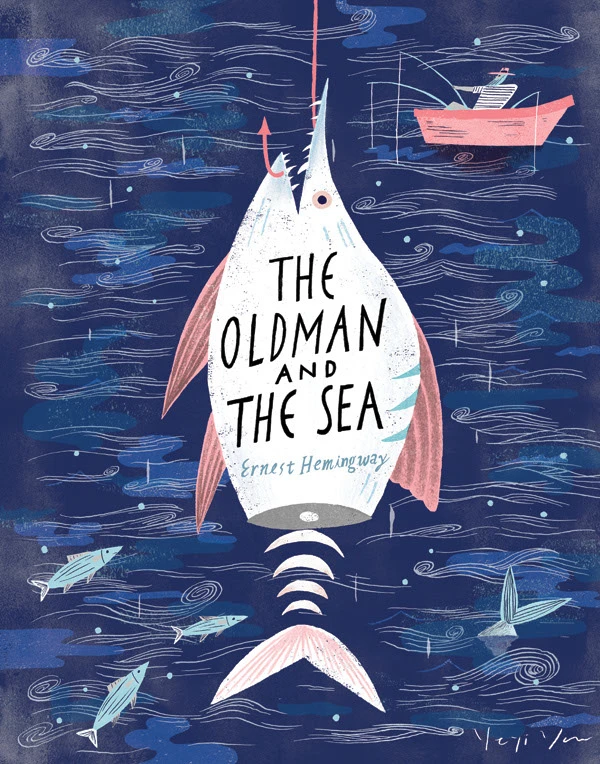
In the mid-twentieth century – when Western literature was confronting profound upheavals brought about by war, crises of faith, and deep skepticism about the meaning of existence – The Old Man and the Sea emerged as a quiet yet powerful work. Neither expansive in length nor complex in plot, the narrative revolves solely around a single fishing voyage undertaken by an aging fisherman in the waters off Cuba. Yet it is precisely this minimalism that opens up a vast space for reflection on humanity, willpower, and dignity.
Within the world of The Old Man and the Sea, the sea is not merely a natural setting but a harsh arena in which life is tested; the marlin is not simply a prize catch but a symbol of the longing to conquer; and Santiago is not merely an unlucky fisherman, but a condensed image of the human being confronting the ultimate limits of strength and age. The work places readers in what seems to be an exceedingly simple situation – an old man, a fish, an ocean – yet from this simplicity arise fundamental questions: What is victory? What is defeat? And what ultimately constitutes the true value of a human life?
Through its spare structure, restrained tone, and symbolic depth, The Old Man and the Sea transcends the boundaries of a conventional short story or novella to become one of the most representative works of twentieth-century world literature.
1. An Overview of the Author and the Genesis of The Old Man and the Sea
The Life of Ernest Hemingway
Ernest Hemingway was born on July 21, 1899, in Oak Park, Illinois, United States, into a middle-class family with a serious educational background. His father was a physician, and his mother had a deep love for art and music. From an early age, Hemingway was introduced to nature through hunting and fishing trips with his father – experiences that profoundly shaped his artistic world later on, especially in the way he portrayed the relationship between human beings and nature.
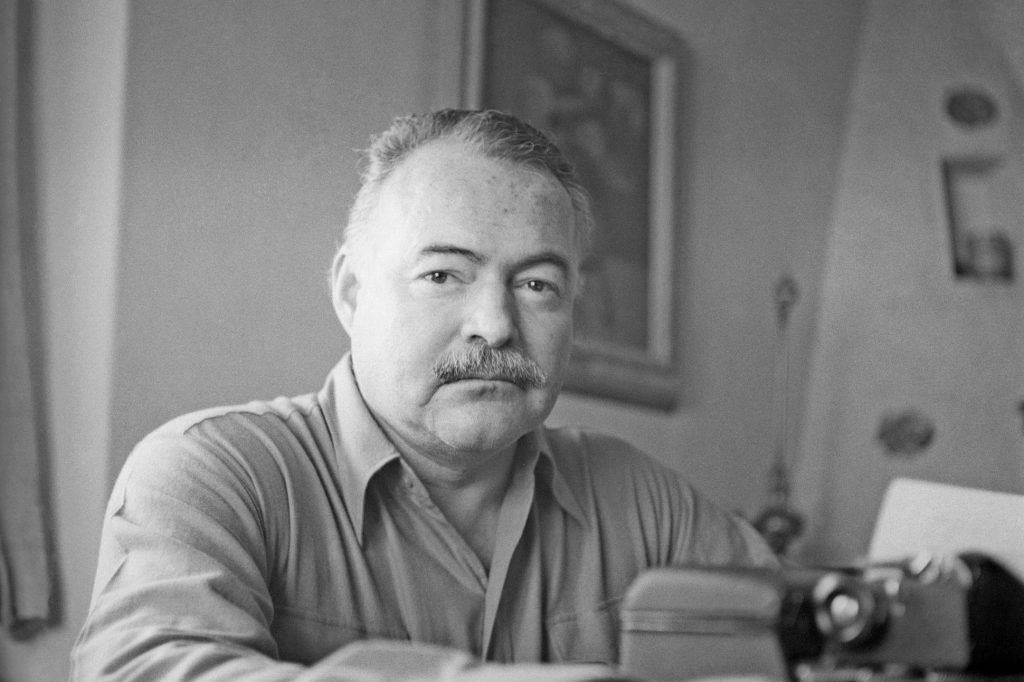
After graduating from high school, he did not attend university but instead worked as a reporter for The Kansas City Star. The journalistic environment trained him to write in a concise and precise manner, to restrain the use of adjectives, and to avoid emotional exaggeration – principles that later became the foundation of his “iceberg theory” style.
In 1918, he participated in the First World War as an ambulance driver for the American Red Cross in Italy. He was seriously wounded on the battlefield and received a medal from the Italian government. The experience of war, physical injury, and psychological trauma shaped in him an existential view of the fragility of human life.
After the war, Hemingway lived for many years in Paris, becoming part of the “Lost Generation” – a group of American writers and artists living abroad after World War I. He interacted with major figures such as Gertrude Stein and F. Scott Fitzgerald, who had a certain influence on his artistic direction.
Hemingway’s life was marked by constant travel – to Spain, France, Africa, and Cuba. He was passionate about bullfighting, big-game hunting, and deep-sea fishing. These experiences were not merely personal hobbies but became vivid material for his literary works. However, his life was also full of turbulence – four marriages, repeated injuries, prolonged depression, and ultimately his death in 1961 in Ketchum, Idaho.
Literary Career and Position in World Literature
Hemingway is considered one of the most important figures in twentieth-century American literature. He is renowned for his minimalist prose style, short sentence structures, concise dialogue, and the principle of the “iceberg theory” – in which the visible surface of the text represents only a small portion, while the true meaning lies beneath what is left unsaid.
His major works include:
- The Sun Also Rises – portraying a generation disoriented after the war.
- A Farewell to Arms – a love story set against the backdrop of war and personal tragedy.
- For Whom the Bell Tolls – a novel about the Spanish Civil War, combining ideals and sacrifice.
In 1953, The Old Man and the Sea earned him the Pulitzer Prize. A year later, he was awarded the Nobel Prize in Literature for his “mastery of the art of narrative and the influence he has exerted on contemporary style.” The Nobel Committee emphasized that The Old Man and the Sea was a representative testament to the peak of his artistic style.
Within the trajectory of modern literature, Hemingway is regarded as the writer who redefined American prose – eliminating the ornate embellishments of the nineteenth century and moving toward concision, directness, and high symbolic density.
The Circumstances Surrounding the Creation of The Old Man and the Sea
The Old Man and the Sea was published in 1952, first appearing in Life magazine. Within just two days, millions of copies were sold – an extraordinary phenomenon in publishing at that time.
The work was created at a time when Hemingway was facing considerable doubts about his literary vitality after several works that had received lukewarm critical reception. He was living in Cuba, near Havana, in his home Finca Vigía. His years spent in close connection with the Caribbean Sea, his long fishing trips, and his friendships with local fishermen directly provided the material for the story of Santiago.
The image of the old fisherman is believed to have been inspired by Gregorio Fuentes, a Cuban fisherman who once served as captain of Hemingway’s boat. However, Santiago is not a replica of any specific individual; he is a synthesis of real-life experience, humanistic philosophy, and a matured artistic vision.
More importantly, The Old Man and the Sea can be seen as a metaphor for Hemingway’s own creative journey. Just as Santiago persistently struggles with the marlin in the open sea, the writer remained steadfast in his artistic ideals amid critical pressure and personal crises. For that reason, the work not only marked his convincing return but also reaffirmed his position in world literature.
On the level of literary history, The Old Man and the Sea stands as the pinnacle of minimalist style and the crystallization of the recurring obsessions throughout Hemingway’s body of work.
2. Summary of the Plot of The Old Man and the Sea
The plot of The Old Man and the Sea is constructed on an extremely minimalist structure: a fishing voyage, a giant marlin, and the journey back. However, beneath that simplified surface lies a tightly developed progression of psychology and action – with climax, conflict, tragedy, and even spiritual transcendence.
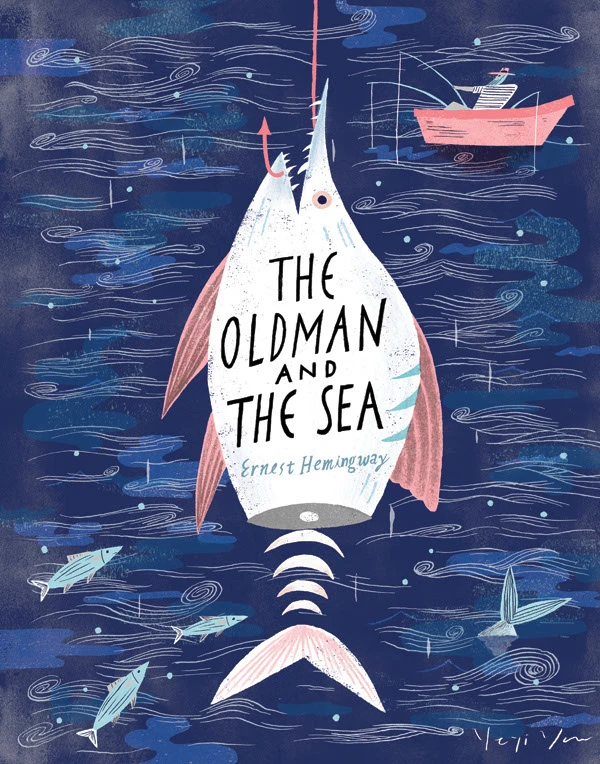
Eighty-Four Days of Failure and the Decision to Sail Far Out
The story opens in a fishing village on the coast of Cuba. Santiago – an old fisherman – has gone eighty-four consecutive days without catching a single fish. Within the fishing community, that number is not merely bad luck but a sign of being “finished.” Others whisper that he is salao – the unluckiest of the unlucky.
The boy Manolin – who once learned the trade from him – has been forced by his parents to leave Santiago’s boat because they believe the old man no longer brings good fortune. Nevertheless, a deep bond remains between them. Manolin cares for him, brings him food, and helps prepare the fishing lines. In their conversations about baseball and the player Joe DiMaggio, we see that Santiago is not a helpless old man, but someone who still preserves his self-respect and faith.
On the morning of the eighty-fifth day, Santiago decides to go farther than ever before – out into the deep waters where “the big fish swim.” This is not merely a fishing trip, but a final act of trial: either to prove himself or to accept decline.
The Encounter with the Giant Marlin
In the vast open sea, Santiago lowers his lines to different depths. By noon, one of the lines begins to move. The fish does not jerk violently and release like smaller fish; it pulls steadily and powerfully.
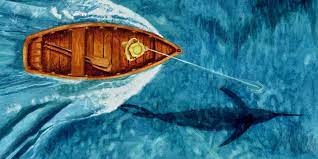
Santiago realizes that he has hooked a giant marlin. The fish does not surface but instead tows the skiff farther out to sea. From this moment begins a struggle that lasts three days and two nights.
He cannot tie the line to the boat for fear it will snap; he must hold it with his own body. The line cuts into his back and slices his hands. The pain is constant, yet he does not let go. He speaks to the fish as to a worthy opponent – with both respect and determination to conquer.
The sea becomes a space of severe stillness. There are no witnesses, no cheers. Only the old man, the fish, and the silence of the ocean. In these moments, Santiago’s interior monologue grows profound. He thinks about old age, about the boy, about the times when he was stronger. He acknowledges his loneliness but does not allow himself weakness.
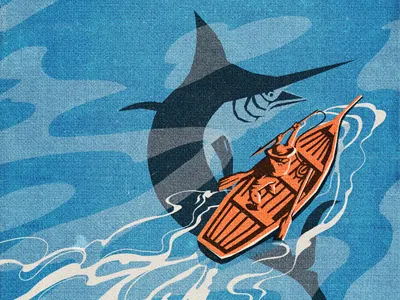
On the third day, the fish begins to circle and finally rises to the surface. For the first time, Santiago sees its full, immense body – longer than his boat. That moment brings not only astonishment but also understanding: he is facing a magnificent, beautiful, and proud creature.
At last, summoning all his remaining strength, Santiago drives his harpoon into the fish’s heart. The marlin dies, and he lashes it alongside the skiff because it is too large to haul aboard.
The Journey Back and the Tragedy of the Sharks
If the climax of the story is the struggle with the marlin, the true tragedy lies in the return journey.
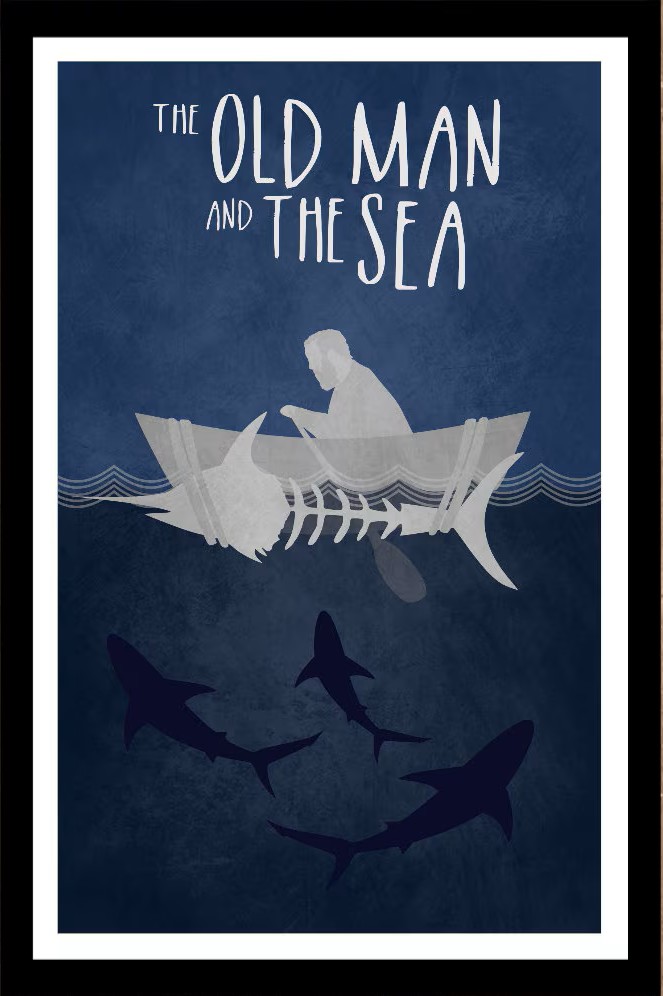
The marlin’s blood spreads through the sea, attracting sharks. The first shark appears – powerful and ferocious. Santiago kills it with the harpoon, but the harpoon is lost with it. More sharks follow.
He fights with a knife lashed to an oar, then with the oar itself, then with the tiller. With each attack, another portion of the marlin’s flesh is torn away. Santiago understands that he cannot win this battle, yet he does not give up. He does not fight to preserve the prize intact; he fights to defend his own honor.
When night falls and the skiff reaches shore, the giant marlin is reduced to a white skeleton – long and impressive, yet bare. Santiago, exhausted, carries the heavy mast on his shoulder and walks step by step back to his shack. The image suggests a symbolic journey: a human being bearing on his shoulders the burden of the very challenge he chose.
The Ending – The Dream of the Lions
Santiago lies down and falls into a deep sleep. He dreams of lions on the beaches of Africa – memories from his youth when he was a sailor. That dream is not mere nostalgia; it symbolizes an inner vitality that has never faded.
The next morning, the villagers see the enormous fish skeleton and are astonished. They recognize the magnitude of the feat he achieved. Manolin weeps when he sees the old man’s torn hands and resolves to go fishing with him again.
The story closes not with material victory, but with the restoration of faith and dignity. Santiago loses the fish, but he does not lose himself.
3. The Value, Role, and Distinctive Qualities of The Old Man and the Sea
If The Old Man and the Sea is read merely as a story about fishing, the reader will miss the deeper intellectual layers that Ernest Hemingway meticulously constructed. The work is a synthesis of multiple strata of meaning – from existential philosophy, religious symbolism, and reflections on labor, to a revolutionary minimalist narrative art in twentieth-century prose. It is precisely this condensation that establishes the special position of The Old Man and the Sea in world literature.
A Symbol of the Human Being Before the Limits of Existence
The greatest value of The Old Man and the Sea lies in the way it redefines the concept of “failure.” On the surface level, Santiago fails: he cannot bring the fish back to shore intact. Yet on the spiritual level, he triumphs – because he fights to the end, does not surrender, and does not diminish his dignity.
The work places the human being in a space of absolute trial: the vast ocean, complete solitude, no social support. No family by his side, no fellow fishermen assisting him, no community witnessing his struggle. In such a context, every action becomes existential – a human being confronting himself.
Santiago clearly understands the limits imposed by age. He admits that he is no longer as strong as before. However, the weakening of the body does not equate to the collapse of the spirit. This is the core of the humanistic philosophy in The Old Man and the Sea: human value does not reside in physical strength, but in willpower and endurance.
The story therefore transcends the framework of an occupational tale. It becomes a metaphor for the journey of life – where aspiration always exceeds capacity, and where true victory lies in one’s attitude toward adversity.
The Sea and the Marlin – A Multi-Layered Symbolic System
In The Old Man and the Sea, no detail exists in isolation. The sea is not merely a geographical setting; it is a symbol of life itself – vast, indeterminate, harsh, yet also beautiful and governed by its own laws.
Santiago refers to the sea in the feminine form, as if addressing a woman – with both affection and caution. This reveals that the relationship between human beings and nature is not purely antagonistic. He does not hate the sea; he lives by it and accepts its rules.
The giant marlin carries a dual meaning. On one level, it is a professional goal – a prize that proves the fisherman’s worth. On another level, it is a worthy opponent, a symbol of beauty and nobility. Santiago both wants to kill the fish and respects it. He calls it “brother” and “friend.” Here emerges a paradox: human beings must destroy what they admire in order to survive.
The sharks, by contrast, symbolize destructive forces – neither noble nor idealistic, but purely driven by instinctual greed. If the marlin represents a great challenge, the sharks embody harsh reality. At this level, The Old Man and the Sea poses a question: are all great achievements ultimately eroded by forces beyond our control?
The “Iceberg Theory” Brought to Perfection
Ernest Hemingway’s style in The Old Man and the Sea stands as a quintessential example of the “Iceberg Theory.” The surface text is simple, sentences are short, dialogue is sparse, and there is no lengthy psychological analysis. Yet the submerged portion – what remains unsaid – carries immense intellectual weight.
For example, the work hardly engages in explicit philosophical discussion, yet through Santiago’s actions, readers perceive a clear existential perspective: human beings cannot control the final outcome, but they can choose how they act.
The rhythm of the narrative is also tightly controlled. The opening section proceeds slowly, establishing setting and character. The middle section – the struggle with the marlin – is prolonged and tense, creating a sense of time dragging heavily, much like the fishing line cutting into the old man’s hands. The final section – the journey home – carries a tragic and subdued tone. This structure forms a distinct emotional arc without any theatrical display.
Such minimalism is not deficiency, but refinement. Every detail serves a function. There are no superfluous characters, no extraneous events. This is one of the reasons why The Old Man and the Sea is regarded as a model of the modern novella.
Humanistic Value and Philosophical Depth
The work elevates labor as an expression of character. Santiago does not sail out driven by ambition for wealth; he goes because it is his way of existing. Labor in The Old Man and the Sea is not merely economic activity, but a means of self-affirmation.
A remarkable aspect of the work is the way it confronts failure without self-pity. Santiago returns with only the skeleton of the fish – an image that may be seen as “remains.” Yet that skeleton proves the scale of his achievement. It is the trace of extraordinary effort.
On a deeper level, many scholars discern religious associations in Santiago’s journey – the image of him carrying the mast like a cross, the wounds on his hands, his solitary endurance. Although the work does not explicitly preach, it opens reflection on sacrifice and dignity.
The Role of The Old Man and the Sea in Hemingway’s Career and in World Literature
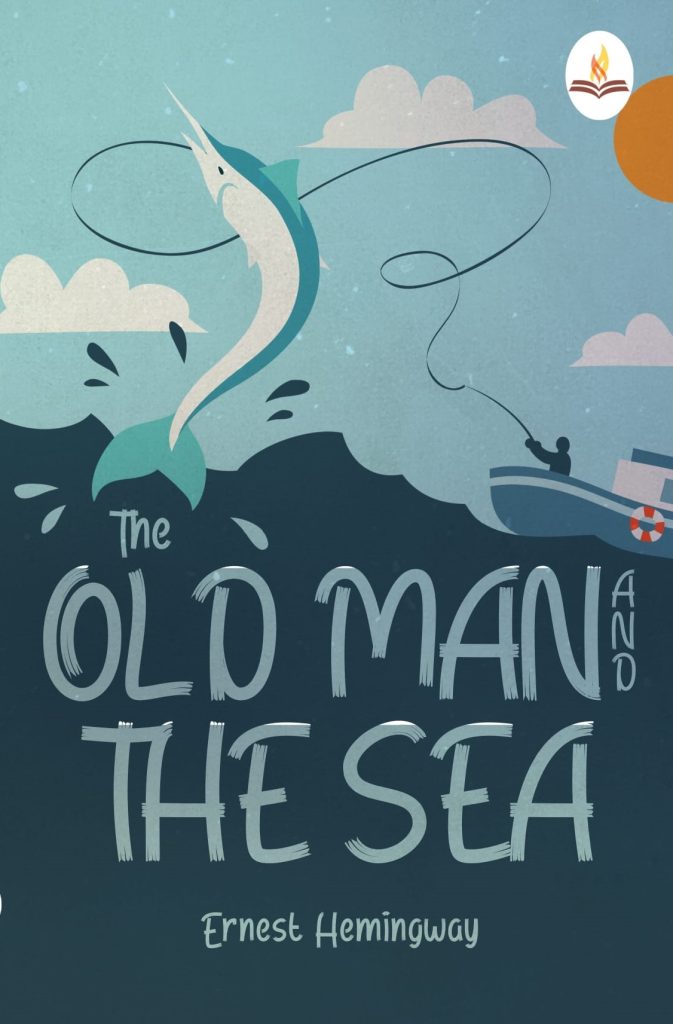
The Old Man and the Sea marked Ernest Hemingway’s convincing return after a period in which critics claimed his powers were declining. The work brought him the Pulitzer Prize in 1953 and contributed significantly to his receiving the Nobel Prize in Literature in 1954.
Within the trajectory of twentieth-century literature, The Old Man and the Sea stands as evidence of the power of minimalist prose. It demonstrates that a short narrative can contain grand ideas, and that restraint can create depth.
More importantly, the work retains its vitality more than half a century later. The story of an aging man who refuses to surrender to time remains universal. Each era can read The Old Man and the Sea differently – as a story of labor, of the crisis of old age, of willpower, or of the impermanence of achievement – yet its core value remains unchanged.
4. Reflections and Evaluation of The Old Man and the Sea
When reading The Old Man and the Sea, what leaves a lasting impression is not the complexity of the plot, but the intensity of spirit that the work generates. This is a text that is almost minimalist in terms of character and setting – consisting only of Santiago, the open sea, and the marlin – yet it opens up a vast field of reflection on the meaning of existence. The power of the work lies in the way it compels readers to accompany the character through every breath, every pain, every precarious moment balanced between exhaustion and determination.
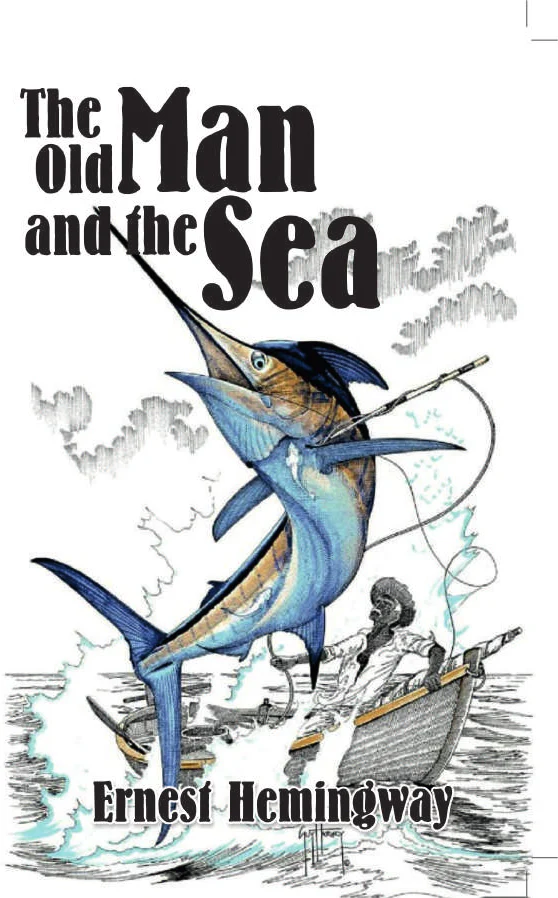
Santiago – A Figure of Dignity in Solitude
Santiago is not a hero in the traditional sense. He is old, poor, considered unlucky, and positioned at the margins of his community. Yet it is precisely this isolation that highlights his essential qualities: self-respect and an unyielding will that refuses to be erased.
What is noteworthy is that Santiago is fully aware of his old age. He does not deny the reality that he has grown weaker. He acknowledges that his hands are no longer agile, his back no longer flexible, his body no longer vigorous. However, he does not allow physical decline to determine his spiritual worth. Throughout his struggle with the marlin, Santiago never indulges in self-pity. He suffers, but does not lament his fate. He is alone, but does not see himself as a victim.
Here, The Old Man and the Sea presents a clear proposition: dignity does not depend on the gaze of others. When the fishing village regards him as unlucky, he still believes in his own ability. When no one witnesses his battle at sea, he still fights as if the whole world were watching. The value of action lies not in recognition, but in honesty with oneself.
Failure – Or Another Definition of Victory?
One of the elements that gives the work its philosophical depth is the way it handles the ending. Judged by material standards, Santiago fails. The marlin – the result of three days of struggle – is almost entirely devoured by sharks. He returns with only a bare skeleton.
Yet it is precisely this loss that underscores the meaning of the journey. Victory in the work does not equate to preserving the outcome intact. Victory lies in the fact that Santiago does not release the line, does not cut it to save himself when the fish pulls the skiff far out to sea, and does not surrender when the sharks attack.
The work reveals a paradox: human beings may not retain their achievements, yet they can retain their character. What ultimately remains is not the flesh of the fish, but the trace of an extraordinary struggle. The giant skeleton stands as evidence of the magnitude of aspiration.
From this perspective, The Old Man and the Sea carries a distinctly existential spirit. Human beings cannot control every event, but they have the right to decide their attitude toward those events. It is that attitude which defines victory or defeat.
The Sense of Solitude and Interior Dialogue
Another distinctive feature is the way the work explores solitude. Santiago is almost entirely alone for most of the story. There is virtually no real dialogue with other people; instead, there are the words he speaks to the fish, to the sea, and to himself.
These monologues are not merely a means of filling silence. They reveal a process of self-encouragement and mental fortification. Santiago reminds himself to be strong, to be patient, to be worthy of his profession. He thinks of the boy Manolin as a source of motivation, but he does not depend on him.
The solitude in The Old Man and the Sea is not pessimistic. It is the condition in which a human being confronts himself. In the middle of the sea, social layers fall away, communal roles disappear, and only the pure self remains. There, every weakness is exposed, but every strength is also tested to its utmost limit.
The Relationship Between Human Beings and Nature
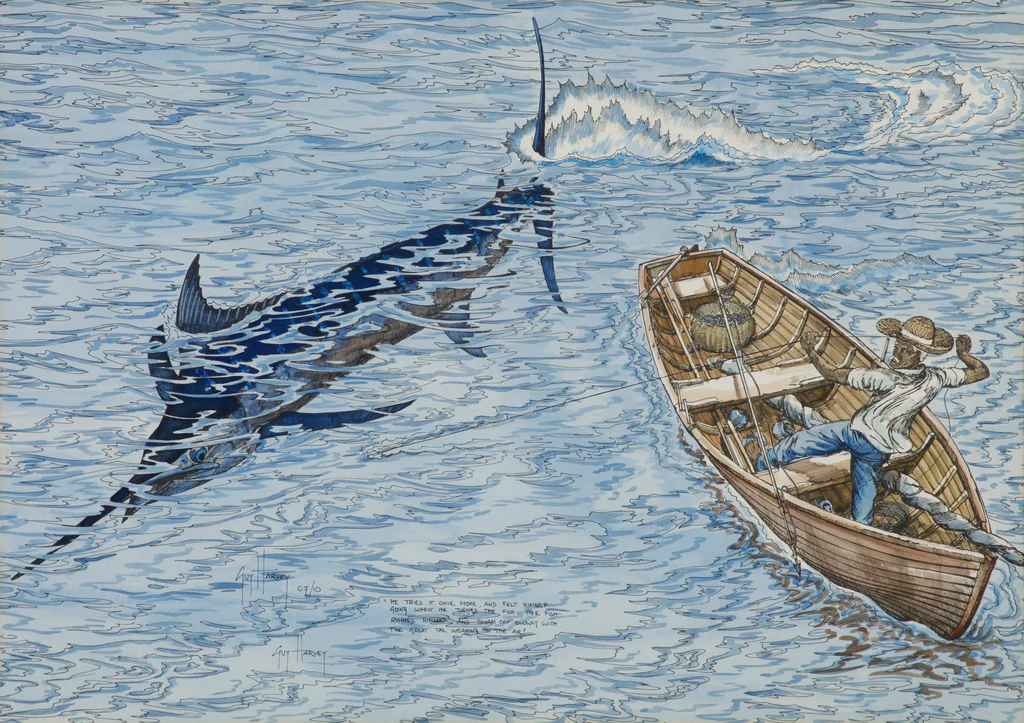
The work does not construct an absolute antagonism between Santiago and the sea. He does not regard the sea as an enemy. He refers to it in the feminine form, as if addressing a living being. He loves the birds, observes the dolphins, and senses the currents.
Even toward the marlin, he shows respect. He acknowledges the fish as noble, powerful, and worthy of admiration. This creates a human paradox: human beings are compelled to destroy what they cherish in order to survive.
It is this complexity that allows The Old Man and the Sea to transcend the framework of a conventional survival story. It raises questions about the ethical limits within acts of survival. Is it possible to exist without causing harm? And if not, how must human beings confront that contradiction?
The Haunting Power of the Final Image
The image of Santiago sleeping and dreaming of lions on the beaches of Africa is one of the most symbolically rich details in the work. The lions are associated with his youth – a time when he was strong and full of vitality. The dream appears both at the beginning and at the end of the story, forming a circular structure.
The dream is not an escape from reality. It is a sign that within the aged body there still exists a primordial life force. Though materially defeated, Santiago is not spiritually eroded. He still dreams.
At a deeper level, this image suggests that human dignity is not erased by time. Age may weaken the body, but it does not necessarily exhaust aspiration.
5. Memorable Quotes in The Old Man and the Sea – When Language Becomes a Declaration of Dignity
One of the reasons why The Old Man and the Sea by Ernest Hemingway has maintained enduring vitality in both academic discourse and popular readership is the density of its concise yet highly generalized sentences. True to the principle of the “iceberg theory,” many lines of dialogue in the work do not merely serve a specific situation but carry the force of philosophical declaration. They are placed within simple actions, yet they open profound reflections on humanity, failure, and the will to endure.
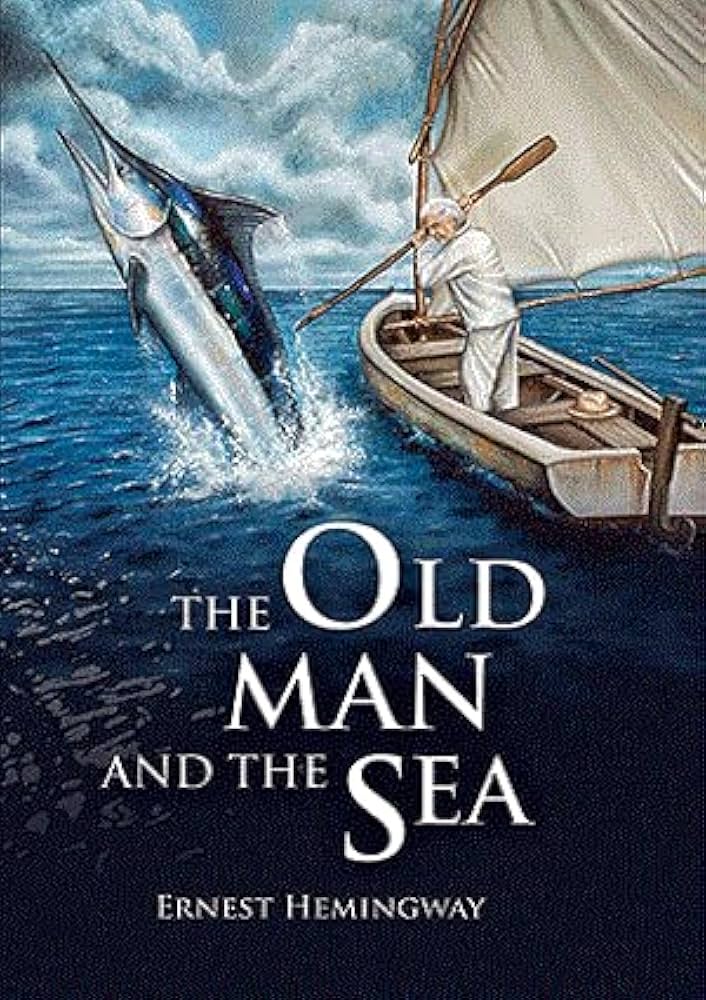
1. “But man is not made for defeat. A man can be destroyed but not defeated.”
→ This is the most famous line in The Old Man and the Sea, and it may be regarded as the central declaration of the entire work. The sentence clearly distinguishes between “destroyed” and “defeated” – being physically destroyed is different from being spiritually defeated. Santiago may lose the fish and may become exhausted, but he does not lose his dignity. This distinction is the key to understanding the philosophy of the work.
2. “Now is no time to think of what you do not have. Think of what you can do with what there is.”
→ This line appears when Santiago confronts his own limitations. It expresses a practical philosophy of action: instead of regretting the strength of youth or wishing for better tools, he focuses on his present capacity. This mindset reflects initiative and adaptability – essential qualities of the character.
3. “I may not be as strong as I think, but I know many tricks and I have resolution.”
→ This line reflects Santiago’s clear self-awareness. He does not harbor illusions about his strength, yet he trusts in his experience and determination. Here, wisdom and seasoned skill are placed on equal footing – perhaps even above – physical power. It is another way of defining human capability in old age.
4. “Fish, I love you and respect you very much. But I will kill you dead before this day ends.”
→ This line embodies the human paradox within the work. Santiago both admires and must destroy the marlin. There is no hatred here; only the law of survival. This makes the struggle not merely destructive, but tragic – where beauty and death coexist.
5. “Pain does not matter to a man.”
→ This is not a denial of physical pain, but a way for Santiago to reassure himself. The sentence reflects the notion of endurance as a measure of character. In solitude, he has no one to rely on but his own will. Endurance becomes a form of affirming inner strength.
6. “It is better to be lucky. But I would rather be exact. Then when luck comes you are ready.”
→ This line shows that Santiago does not place absolute faith in luck. He regards skill, preparation, and discipline as decisive factors. Luck has meaning only when a person is capable of seizing it. It is a clear philosophy of labor, reflecting the character’s serious professional attitude.
7. “A man can be destroyed but not defeated.”
→ The repetition of this idea in the work is not accidental. It functions like a spiritual refrain, appearing at a climactic moment. The repetition creates a deepening effect, emphasizing that Santiago’s greatest victory lies not in the fish, but in his refusal to surrender to circumstance.
6. Conclusion – The Enduring Value of The Old Man and the Sea and the Remaining Question Before the Sea of Life
As Santiago’s journey comes to a close, The Old Man and the Sea does not leave behind the noise of a triumphant feat, nor does it end in absolute tragedy. The work pauses in a state of stillness – the old man asleep, outside lies the giant fish skeleton, and within his dream are the lions of his youth. That stillness is not emptiness, but resonance. It is within that quiet space that readers are compelled to ask themselves about the true meaning of what they have just witnessed.
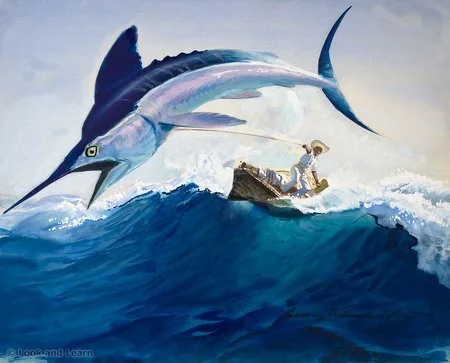
On the surface level, the story recounts a deep-sea fishing voyage and a material loss. Yet at a deeper level, The Old Man and the Sea is an inquiry into human limits. Santiago does not struggle to become a legend; he struggles so as not to be erased from his own life. He sails not merely for sustenance, but for the self-respect of a working man who once had a glorious past and refuses to fade into oblivion.
The enduring value of the work lies in its universality. Anyone, in any era, can recognize themselves in the figure of Santiago: a human being facing a challenge beyond his capacity, an individual who must bear the consequences of his own choices, a person who understands that results are not always proportional to effort. The sea in The Old Man and the Sea is therefore not only the Cuban ocean; it is a metaphor for life – vast, uncertain, and offering no guarantee of fair reward.
The work also reiterates an important proposition: victory does not always mean preserving the outcome. Santiago loses the fish, but he does not lose his dignity. He is wounded, but he does not diminish himself. The giant fish skeleton becomes evidence of extraordinary effort – proof that a human being once dared to reach for something immense.
From an artistic perspective, The Old Man and the Sea demonstrates the power of minimalism. Without a complex plot, without numerous characters, without noisy climaxes, the work still attains significant philosophical depth. It is precisely this restraint that allows the story to echo enduringly in the reader’s mind.
More than half a century later, the work retains its weight. In a modern world filled with competition and pressure for achievement, Santiago’s story reopens a fundamental question: if tangible results can be taken away, what remains to define the value of a human life? Is it visible outcomes, or the way a person persists to the very end?
The Old Man and the Sea does not provide a definitive answer. It leaves an open question, like the sea after a wave has passed:
When facing the “sea” of our own lives – the trials, losses, and inevitable limits – will we choose to let go in order to conserve our strength, or will we hold tightly to the line to the very end so as not to be defeated within our own spirit?