In the course of nineteenth-century world literature, as science and technology began to fundamentally transform humanity’s understanding of the universe and nature, literature simultaneously expanded the scope of its imagination. Within that context, Twenty Thousand Leagues Under the Seas emerged as a distinctive intersection between scientific knowledge and artistic inspiration. The work does not merely recount a magnificent voyage beneath the ocean’s depths; it also constructs an intellectual space in which human beings confront freedom, power, responsibility, and the moral limits of their own actions.
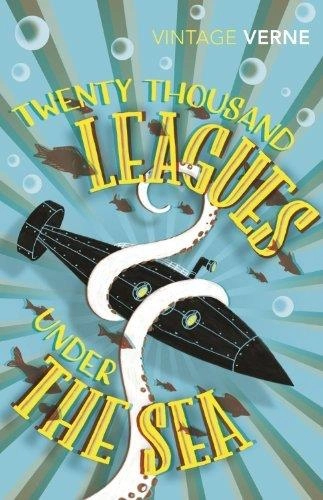
Written by Jules Verne – one of the foundational figures of modern science fiction – Twenty Thousand Leagues Under the Seas quickly transcended the boundaries of a conventional adventure novel. In the narrative, the ocean is not simply a geographical setting, but a symbol of the profound depths of knowledge and human psychology. The image of the submarine Nautilus and Captain Nemo therefore represents more than technological advancement; it embodies philosophical questions concerning individual freedom and the relationship between science and humanity.
It is precisely the fusion of scientific accuracy, a dramatically structured journey, and intellectual depth that has enabled Twenty Thousand Leagues Under the Seas to retain its vitality across generations of readers, securing its place as one of the most representative works in the tradition of scientific adventure literature worldwide.
1. The Author and the Emergence of Twenty Thousand Leagues Under the Seas
Jules Verne – His Life and the Foundations of a Scientific Mindset in Literature
The author of Twenty Thousand Leagues Under the Seas is Jules Verne (1828–1905), a French writer regarded as one of the figures who laid the foundation for modern science fiction. He was born on February 8, 1828, in Nantes, an important port city of France. The vibrant maritime environment of his childhood nurtured his imagination about the sea, ships, and voyages across the oceans.

Jules Verne’s family had a tradition of practicing law. In accordance with his father’s wishes, he studied law in Paris. However, instead of pursuing a legal career, Verne was drawn to literature, the theater, and the scientific forums flourishing in the mid-nineteenth century. He frequently visited the French National Library to read scientific, geographical, astronomical, and mechanical engineering materials. This accumulation of knowledge later became an essential foundation for his creative universe.
A notable aspect of Verne’s life is the combination of imagination and a serious research spirit. He did not write based on vague inspiration, but on scientific data available in his own time. This approach gave the inventions in his novels a distinctive credibility.
In 1863, Verne achieved major success with the novel Five Weeks in a Balloon. This work marked the beginning of the series Les Voyages extraordinaires – a large-scale literary project directed by the publisher Pierre-Jules Hetzel, with the aim of “summarizing all geographical, geological, physical, and astronomical knowledge of the age in the form of adventure novels.” Within this framework, Verne successively published works such as Journey to the Center of the Earth, From the Earth to the Moon, and later Twenty Thousand Leagues Under the Seas.
In total, Jules Verne wrote more than sixty novels along with numerous short stories and plays. He died in 1905 in Amiens, leaving behind a literary legacy that has profoundly influenced many generations of readers and writers.
His Career – When Science Became the Central Axis of Literary Imagination
A distinctive feature of Jules Verne’s career is that he did not regard science as a secondary element supporting the plot, but as the very center of his artistic world. His characters are often scientists, engineers, and explorers – figures who represent intellect and the aspiration to discover.
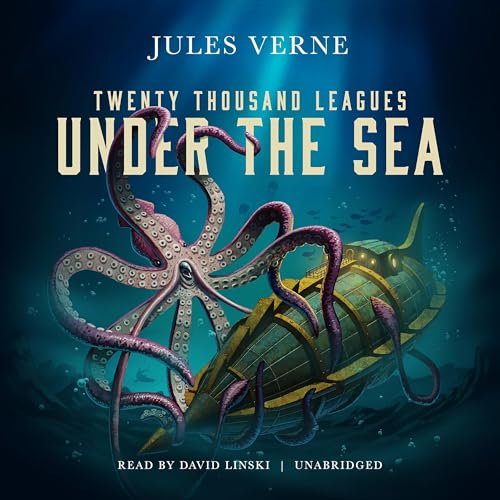
Unlike many purely fantastical works, Verne’s novels are grounded in plausible scientific foundations. For example, in Twenty Thousand Leagues Under the Seas, he describes in detail the structure, operating mechanisms, and energy source of the submarine Nautilus using the physics and mechanical engineering knowledge of the nineteenth century. Although many elements surpassed the technical realities of his time, they are not illogical; rather, they are constructed from scientific principles that can reasonably be inferred.
This creative method has led Verne to be called a “scientific prophet.” However, what ensures his enduring value is not merely his ability to anticipate technological developments, but also his engagement with ethical questions: whom does science serve? Can knowledge be separated from social responsibility? Can humanity completely control nature?
Throughout his career, Jules Verne contributed to establishing the fundamental structure of modern science fiction:
– A scientific invention or hypothesis as the foundation.
– A journey of exploration beyond ordinary limits.
– A conflict between scientific rationality and human instinct and morality.
Twenty Thousand Leagues Under the Seas is one of the most representative works that clearly embodies this structure.
The Emergence of Twenty Thousand Leagues Under the Seas – Historical Context and Significance
Twenty Thousand Leagues Under the Seas was first serialized from 1869 to 1870 in the magazine of the publisher Pierre-Jules Hetzel, before being published as a complete book in 1870. At that time, Europe was entering the height of the Industrial Revolution, with major advances in mechanics, metallurgy, and maritime engineering.
Submarines had already appeared in experimental forms, but they were still rudimentary and unstable. Verne drew upon existing research and real prototypes to develop the Nautilus into an almost perfect vessel: powered by electricity, capable of deep dives, able to regenerate air, and equipped to exploit marine resources.
Beyond the technical dimension, the nineteenth-century political context – especially wars and colonial conflicts – also influenced the construction of Captain Nemo. This character represents an individual who abandons the world above the surface out of disillusionment with violence and oppression. Although Verne does not explicitly identify Nemo’s nationality in Twenty Thousand Leagues Under the Seas, his later works reveal more about the character’s tragic past.
Thus, the emergence of Twenty Thousand Leagues Under the Seas was not merely the result of individual imagination, but also a reflection of the spirit of the age: faith in science, accompanied by skepticism about how humanity chooses to use that power.
2. Summary of the Plot of Twenty Thousand Leagues Under the Seas – An Oceanic Journey and the Depths of the Human Mind
The plot of Twenty Thousand Leagues Under the Seas is constructed around a journey – exploration structure, yet beneath its adventurous surface lies a complex process of reflection on science, power, and freedom. The narrator is Professor Pierre Aronnax, a French naturalist, through whom the entire underwater world is recreated with scientific precision and an objective observational tone.
The Appearance of the “Sea Monster” and the Global Pursuit
The story begins with shocking reports spreading across Europe and America: numerous ships have been attacked in the open ocean by a mysterious object, moving at extraordinary speed and causing severe damage. Public opinion is divided between two hypotheses – either it is an enormous, undocumented marine creature, or an unknown mechanical device.
The United States government decides to organize an expedition aboard the warship Abraham Lincoln to track down and destroy the “monster.” Professor Aronnax is invited to join as a marine biology expert. Accompanying him are his loyal servant Conseil and the Canadian whaler Ned Land – a character who represents practical instinct, courage, and a dislike of theoretical speculation.
After months of pursuit across the Pacific Ocean, the vessel finally encounters the mysterious object. In a violent collision, Aronnax, Conseil, and Ned Land are thrown into the sea. They soon discover that they are clinging to a metallic surface – the “monster” is in fact a massive submarine.
Nautilus and Captain Nemo – An Isolated World Beneath the Sea
The three men are taken inside the vessel named Nautilus and meet Captain Nemo – a mysterious figure of vast education, fluent in many languages and possessing exceptional scientific knowledge. Nemo declares that he has severed all ties with the world above and now lives entirely beneath the sea. For him, the ocean is a space of absolute freedom – a realm without laws, nations, or wars.
The Nautilus is described with astonishing detail:
– It is powered by electricity, generating energy from sodium extracted from seawater.
– It contains a library of thousands of volumes, an art gallery, a laboratory, and underwater observation windows made of thick glass.
– It is capable of diving thousands of meters deep and traveling at high speed beneath the ocean.
Aronnax is quickly captivated by the scientific discoveries Nemo offers. In contrast, Ned Land feels imprisoned and constantly harbors plans of escape. From this point onward, a latent conflict develops between the pursuit of knowledge and the need for personal freedom.
Magnificent Expeditions Beneath the Sea
The journey of the Nautilus spans multiple oceans and seas, each becoming a distinct chapter of exploration:
– In the coral reefs of the Pacific, Aronnax observes a rich ecosystem with countless species of fish, mollusks, and marine plants described in precise scientific terminology.
– In the Indian Ocean, the expedition takes part in a pearl-diving venture, where Nemo saves a native diver from a shark – a moment revealing the compassion hidden within him.
– They explore the ruins of Atlantis beneath the Atlantic Ocean – a detail that blends mythology with geological hypothesis.
– The Nautilus crosses the South Pole and becomes trapped beneath thick ice, creating one of the most tense episodes as the crew must break through the ice and struggle against the threat of oxygen depletion.
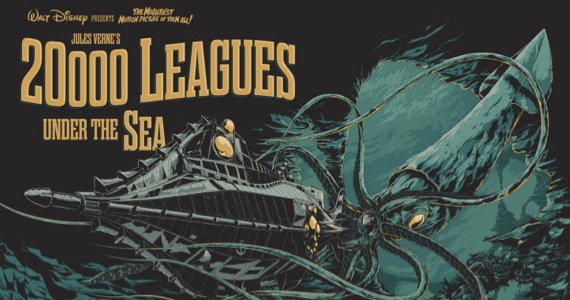
– In another dramatic scene, the vessel is attacked by giant squids, forcing the crew into direct combat on the deck.
These episodes are not merely adventurous; they function as a vivid treatise on oceanography. Jules Verne employs biological classification systems, data on depth and pressure, and descriptions of ocean currents to enhance the realism of the narrative.
The Dark Side of Nemo – Science and Vengeance
As the journey progresses, Aronnax realizes that Nemo is not simply a reclusive scientist. He carries within himself a profound hatred toward an unnamed nation. In certain episodes, the Nautilus deliberately attacks and sinks warships on the surface. Nemo regards these acts as justified revenge.
Such moments create an inner conflict for Aronnax. He admires Nemo’s intellect and his ideal of freedom, yet he is troubled by the use of science as a tool of destruction. This tension deepens the philosophical dimension of the narrative.
Climax and Open Ending
The journey reaches its climax when the Nautilus enters the waters off Norway and is drawn into the massive Maelstrom whirlpool. Amid the chaos, Ned Land decides to execute his escape plan. Aronnax and Conseil are forced to choose between loyalty to Nemo and the desire to return to the human world.
The three men escape the submarine during a stormy night and are swept into the violent vortex. When he regains consciousness, Aronnax finds himself rescued on the coast of Norway. The fate of Captain Nemo and the Nautilus remains uncertain.
This open ending not only creates dramatic resonance but also leaves space for contemplation: was Nemo engulfed along with his vessel, or does he continue his solitary journey beneath the depths of the ocean?
3. The Value, Role, and Distinctive Features of Twenty Thousand Leagues Under the Seas – When Science, Philosophy, and Art Converge
If considered only at the surface level, Twenty Thousand Leagues Under the Seas may be classified as a popular adventure – science novel. However, a deeper analysis reveals that Jules Verne’s work possesses a complex intellectual structure and plays a pivotal role in the development of modern science fiction. Its value lies not merely in entertainment or imaginative richness, but in its scientific depth, philosophical dimension, and enduring humanistic significance.
Scientific Value – A Vision Ahead of Its Time
The first remarkable feature of Twenty Thousand Leagues Under the Seas is the precision and systematic nature of the scientific knowledge integrated into the narrative. Jules Verne did not write in a vague “pseudo-scientific” mode; rather, he constructed the technical foundation of the submarine Nautilus based on genuine physical and mechanical principles of the nineteenth century.
At the time the novel was published in 1870, submarines existed only in experimental forms and lacked the ability to operate stably or dive for extended periods. Yet Verne depicted the Nautilus as a machine:
– Powered by electricity – an energy source that was still in its early stages of development at the time.
– Equipped with systems to regenerate air, recycle resources, and provide food directly from the sea.
– Capable of withstanding immense pressure at depths of thousands of meters.
The novel also contains an extensive body of oceanographic knowledge: classification of marine species, geological structures of the ocean floor, ocean currents, and coral reef ecosystems. This transforms the book into a kind of nineteenth-century “encyclopedia beneath the sea.”
It was precisely this methodical scientific approach that helped establish standards for the science fiction genre that followed. Writers such as H. G. Wells would later expand its social and philosophical dimensions, yet they inherited the principle of placing a scientific hypothesis at the core of the narrative.
Philosophical Value – Freedom, Power, and Isolation
Beneath its scientific framework lies a profound philosophical system of inquiry. Captain Nemo serves as the focal point of these reflections.
Nemo chooses to abandon the world above and live beneath the ocean. This decision stems from his disillusionment with war and oppression. The ocean becomes a symbol of absolute freedom – without borders, nations, or political laws.
Yet Nemo’s freedom is accompanied by isolation. He constructs a closed, self-contained world in which science serves entirely his personal will. This raises essential questions:
– When an individual possesses superior technological power, who is there to control them?
– Can science ever be neutral, or does it inevitably bear the moral imprint of its user?
In certain episodes, Nemo uses the Nautilus to attack warships. He regards these actions as just, yet from Aronnax’s perspective, they reveal unresolved hatred. This tension elevates the novel beyond mere adventure, transforming it into a work that interrogates the ethical responsibility inherent in knowledge.
Humanistic Value – Humanity Before the Vastness of Nature
Another distinctive aspect of Twenty Thousand Leagues Under the Seas is the way it repositions humanity in relation to nature.
In the novel, the ocean is not merely a setting, but a living, vast, and mysterious entity. Coral reefs, forests of seaweed, bioluminescent creatures in the depths – all create the impression of a world existing independently of humankind.
Pierre Aronnax represents the spirit of exploration and respect for knowledge. Ned Land embodies survival instinct and the longing for freedom. Nemo represents intellect combined with a will of resistance. These three characters form a triangular structure of ideas, through which the novel raises questions about humanity’s place in nature:
– Is humanity the conqueror of the ocean?
– Or merely a small component within a vast ecosystem?
Notably, despite the superior power of the Nautilus, it remains threatened by polar ice, gigantic marine creatures, and the Maelstrom whirlpool. This suggests that, regardless of technological progress, humanity cannot fully dominate nature.
The Art of Character Construction and Narrative Structure
From an artistic perspective, Twenty Thousand Leagues Under the Seas achieves a balance between:
– Detailed scientific description
– Dramatic action
– Psychological reflection
Captain Nemo is one of the most complex characters in all of Jules Verne’s works. He is neither a conventional hero nor a simple antagonist. He is a morally ambiguous figure, embodying both noble ideals and inner darkness.
The journey-based structure, divided into stages across different seas, gives the novel a flexible rhythm. Each stop becomes a distinct chapter of discovery, yet all remain connected to the central theme: the ocean as a realm of freedom and mystery.
The open ending further enhances the artistic depth of the work. By leaving Nemo’s fate unconfirmed, the novel allows him to persist as a symbol rather than merely a concrete individual.
Its Role in Literary History and Popular Culture
Within the course of world literature, Twenty Thousand Leagues Under the Seas holds significance in three principal respects:
- It contributed to establishing the model of science fiction grounded in plausible scientific foundations.
- It introduced the image of the submarine and the undersea world into the global popular imagination.
- It exerted a lasting influence on cinema, comics, and popular culture.
The images of the Nautilus and Captain Nemo have become cultural symbols extending beyond literature. For many generations of readers, the ocean was first encountered through the pages of Jules Verne.
4. Twenty Thousand Leagues Under the Seas – When a Journey of Exploration Becomes a Journey of Self-Interrogation
Reading Twenty Thousand Leagues Under the Seas, one’s initial impression may stem from its spectacular expeditions – from radiant coral reefs to the icy regions of the South Pole, or the violent battle with giant squids. However, upon delving more deeply into the intellectual structure of the work, what lingers is not merely a sense of wonder before the vast ocean, but also the quiet questions it raises about freedom, power, and human responsibility in relation to the knowledge one possesses.
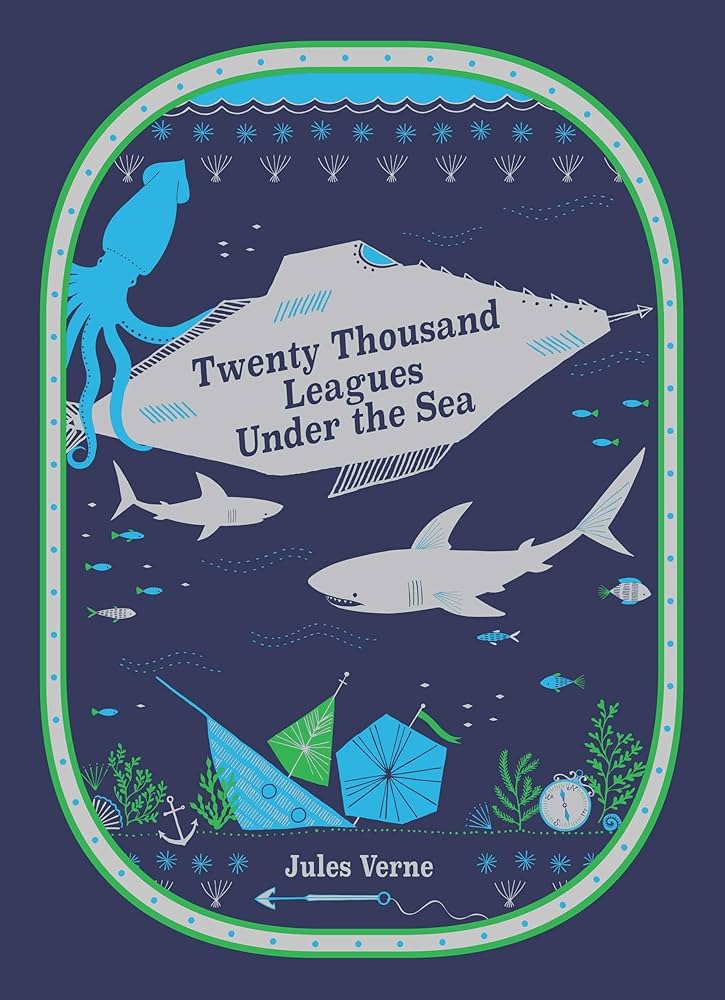
The most striking aspect lies in the way Jules Verne constructs Captain Nemo. In many nineteenth-century adventure novels, the central character tends to be linear in nature – either an idealized hero or a clearly defined antagonist. Nemo belongs to neither extreme. He possesses extraordinary intelligence, organizational ability, and remarkable scientific vision. He loves art, knowledge, and the sea. Yet at the same time, he is haunted by his past and does not hesitate to use technological power as an instrument of revenge.
It is precisely this complexity that gives Nemo a psychological depth rarely seen in adventure literature of the same period. He does not merely represent technical progress, but also stands as evidence of the danger that arises when science becomes detached from a universal moral foundation. As the Nautilus silently glides beneath the sea, it symbolizes not only freedom, but also the enclosed realm of an absolute personal will.
From the perspective of modern readers, the conflict between Nemo and the world above carries a clear contemporary resonance. Although the novel was written in the nineteenth century, the questions it poses remain urgent: does an individual or a small group possessing superior technology have the right to define justice on their own terms? And when humanity reaches a high level of control over nature, does it possess sufficient capacity for self-control?
Another dimension that contributes to the lasting appeal of Twenty Thousand Leagues Under the Seas is its sense of space. The ocean is described not only through scientific data, but also as an aesthetic world. Forests of seaweed, luminous creatures in the deepest darkness, submerged ruined cities – all evoke a realm that is at once majestic and desolate. Such a space compels humanity to reconsider its position: small before nature, yet persistently driven by the desire to conquer and understand it.
For the character Pierre Aronnax, the journey aboard the Nautilus is a journey of knowledge. He begins as a curious scientist, captivated by every new discovery. Yet toward the end, he increasingly recognizes the complexity of Nemo’s choice. Knowledge is no longer purely a matter of exploration; it is inseparable from ethical consequences. Aronnax’s shift in perception mirrors the reader’s own maturation – from fascination with marvels to reflection on the value and limits of progress.
Ned Land, in contrast, represents a primordial instinct for freedom. He is not captivated by the library, laboratory, or art collection aboard the Nautilus. What he longs for is the open sky and solid ground. The opposition between Ned Land and Nemo forms an axis of intellectual tension: simple personal liberty set against radical yet isolating freedom.
From an artistic standpoint, what deserves recognition is the author’s ability to maintain narrative rhythm. Despite containing numerous detailed scientific descriptions, the story never becomes dry. Action-driven chapters – trapped beneath polar ice, confronting gigantic marine creatures, entering the Maelstrom whirlpool – create dramatic climaxes that balance the reflective passages.
From an overall evaluative perspective, Twenty Thousand Leagues Under the Seas succeeds not only in stimulating imagination, but also in expanding the reader’s intellectual horizon. It is a work that invites readers to explore the external world while confronting the deeper layers of the human psyche. The ocean in the novel thus becomes not merely a geographical space, but a metaphor for the light and shadow within humanity itself.
The enduring value of the work lies in this: although modern science has far surpassed the predictions of the nineteenth century, the question of the ethical responsibility of knowledge remains pressing. As humanity gains the ability to dive deeper, fly farther, and connect globally in an instant, it must increasingly confront the problem of limits and control.
Taken as a whole, Twenty Thousand Leagues Under the Seas is not only an outstanding adventure novel, but also a text rich in reflective significance. The work demonstrates that science fiction, when built upon solid knowledge and profound humanistic depth, can transcend its era and become an enduring dialogue between humanity and itself.
5. Memorable Quotations from Twenty Thousand Leagues Under the Seas – When Words Reveal the Depths of the Ocean and of Thought
One of the elements that ensures the enduring vitality of Twenty Thousand Leagues Under the Seas lies not only in its adventurous plot or scientific vision, but also in its highly generalizing, symbolic sentences imbued with philosophical depth. In the work of Jules Verne, each statement made by Captain Nemo or each reflection of Pierre Aronnax is not merely dialogue, but a crystallization of viewpoints on science, freedom, and humanity’s position before nature.
1. “The sea is everything. It covers seven-tenths of the globe. Its breath is pure and healthy.”
This statement by Nemo may be regarded as the opening declaration of his entire worldview. The ocean is not simply a space of survival, but a symbol of natural magnitude and power. The emphasis on “seven-tenths of the globe” reflects a scientific mindset, while simultaneously expressing an almost absolute reverence for the sea.
Here, the ocean is elevated into a living entity – it has “breath,” it possesses a purifying force. This forms the foundation for Nemo’s decision to abandon life on land.
2. “Under the water, I am completely free.”
This is one of the most concise expressions of Nemo’s philosophy of life. Freedom, in his understanding, is not citizenship or social recognition, but the ability to escape all structures of power on land.
Yet this statement also contains a paradox: absolute freedom is achieved by separating oneself from the community. Such freedom is accompanied by isolation, and it is precisely this condition that shapes the character’s inner tragedy.
3. “The sea does not belong to tyrants. On the surface, they can still enforce unjust laws; but thirty feet below the water, their power ceases.”
This declaration most clearly reveals Nemo’s resistance to contemporary political structures. The ocean becomes a space beyond national borders and legal systems.
At the same time, it shows that Jules Verne was writing not only about science, but also about the political and social issues of the nineteenth century. The ocean in the novel therefore carries metaphorical meaning – a space in which humanity seeks a new order.
4. “I love the sea as others love their homeland.”
This comparison carries deep emotional resonance. The sea is no longer merely a physical environment, but an identity. Nemo does not consider himself a citizen of any nation, but rather a “citizen of the ocean.”
This statement explains why the Nautilus is not simply a vehicle of transportation, but a complete world – containing a library, works of art, and accumulated knowledge. It is a homeland that Nemo has created for himself.
5. “Science, Professor, has no homeland.”
This statement reflects a universal conception of knowledge. According to Nemo, science should not be confined by political borders. It belongs to humanity as a whole.
Yet the paradox of his character lies here: although he believes science has no homeland, he uses it to serve a personal objective driven by revenge. This sentence therefore stands not only as an ideal, but also as a point of contrast for his inner contradiction.
6. “Man may conquer the ocean, but he will never dominate it.”
This idea reflects the balanced attitude of the novel toward technological progress. The Nautilus symbolizes human capability, yet the ocean – with its polar ice, whirlpools, and gigantic creatures – always remains beyond complete control.
It serves as a reminder of limits – an element that contributes to the enduring humanistic depth of Twenty Thousand Leagues Under the Seas.
6. The Enduring Value of Twenty Thousand Leagues Under the Seas and the Unanswered Questions of the Age
Bringing to a close its long journey across vast oceans, Twenty Thousand Leagues Under the Seas does not end merely as a marvelous adventure, but opens up a broad space for reflection on science, freedom, and human nature. From the brilliantly illuminated coral reefs to the harsh Antarctic ice fields, from moments of tranquility in the depths of the sea to the violent whirlpool of the Maelstrom, each stage of the voyage of the Nautilus contributes to portraying a world in which human intellect directly confronts the forces of nature.
The work of Jules Verne reveals a central paradox: science can open unprecedented horizons of freedom, yet at the same time it grants humanity a power great enough to destroy the very order from which it seeks escape. Captain Nemo, with all his talent and tragedy, becomes the embodiment of that paradox. He constructs a world separate from human society, yet carries within it the wounds of the past and an unextinguished desire for revenge.
From a literary perspective, Twenty Thousand Leagues Under the Seas established a standard for the science fiction genre: a rigorous scientific foundation, a dramatically structured journey, and enduring philosophical depth. The novel not only anticipated technological achievements such as the modern submarine, but also foreshadowed contemporary debates on technological ethics, individual power, and the social responsibility of knowledge.
What has enabled the book to maintain its vitality for more than a century and a half does not lie in its predictive quality alone, but in its ability to raise questions that remain relevant:
– How far can humanity go in conquering nature?
– Should science serve the common good, or can it be governed by individual will?
– Does absolute freedom truly exist if it must be purchased at the cost of isolation?
The ocean in Twenty Thousand Leagues Under the Seas therefore functions not merely as a geographical space, but as a metaphor for inner depth and for the unexplored regions within human beings themselves. As the Nautilus descends into the deep blue darkness, the reader is likewise guided into layers of reflection that transcend the boundaries of conventional adventure.
Viewed as a whole, Twenty Thousand Leagues Under the Seas stands as one of the most representative works of world science–adventure literature. It connects knowledge and imagination, action and contemplation, the exploration of nature and ethical self-examination. The value of the novel lies not only in expanding spatial frontiers, but also in expanding intellectual frontiers.
And when the final page is closed, one question continues to resonate: if humanity today possesses modern “Nautiluses” with technologies far surpassing those of the nineteenth century, are we ready to confront the ethical responsibility that accompanies such power, or are we still descending into the unresolved contradictions within ourselves?